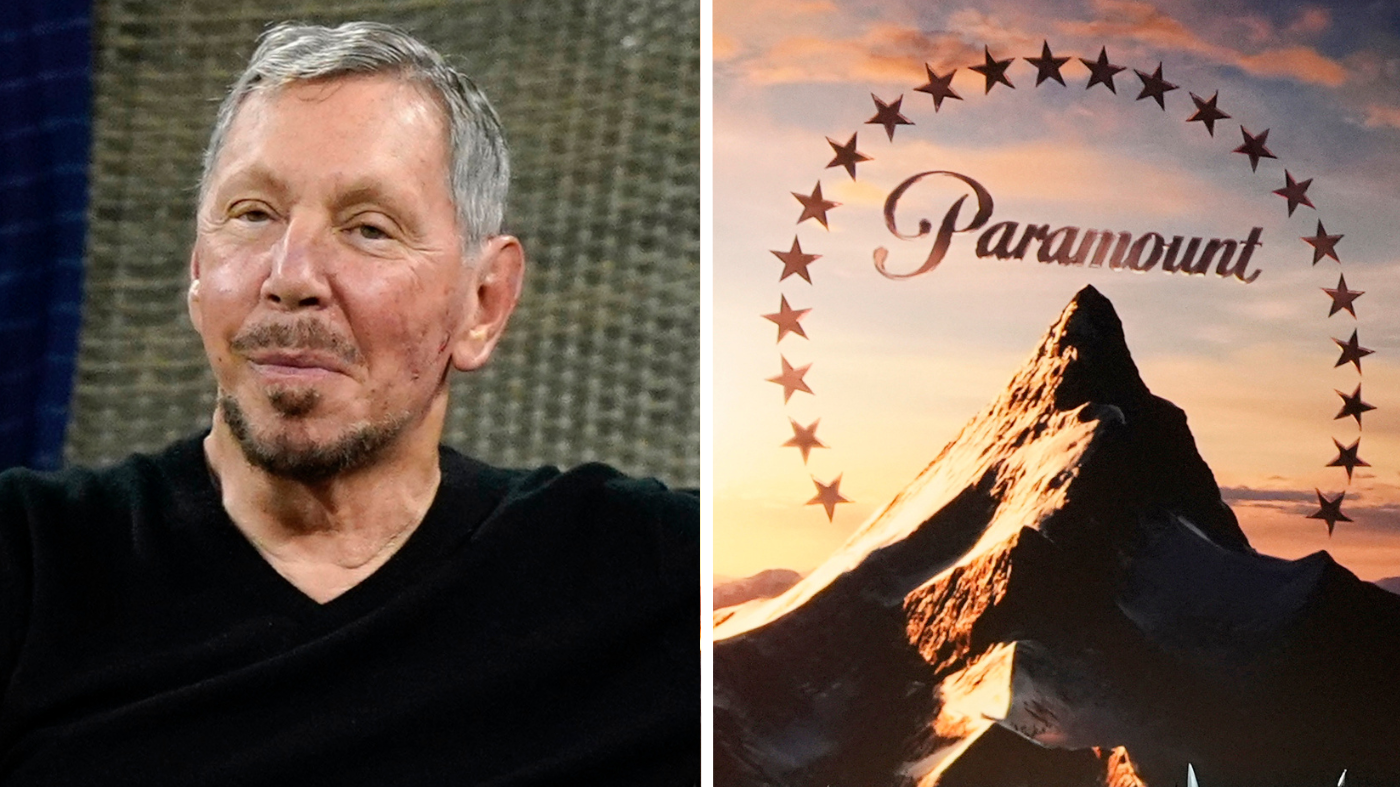
As we watch the media concentration tighten, with either Netflix or Paramount about to own Warners with its extensive film but also television catalogue, this is a good time to reflect on what the last TV season hath wrought. I watched 89 series this year and valued about one-third of them, though I am selective and often won’t go near series I know I will not be attracted to. Although there was much to like, the ‘Worsts’ were more shocking in their betrayal of any standard of decency (though many were praised for maintaining it, can you say Adolescence?), while the best at times hardly stood out. Here is why:
The Middle-Class Phenomenon
Streaming television is everywhere a middle-class phenomenon in terms of its makers, though not in terms of its extremely rich owners (Larry and David Ellison, Paramount+; Jeff Bezos, Amazon Prime and MGM+; Ted Sarandos, Netflix). The Western and in some cases global middle class is mired in an ever-deepening imbroglio due to the crimes of its leaders (genocide in Gaza, proxy war in Ukraine, blowing up Nord Stream and releasing the world’s largest methane cloud, to say nothing of the movement before our eyes with Trump and Zelensky from an oligarchy to an open kleptocracy). That class needs to reconcile its tentative support for, or at least not violent objection to, these crimes by “seeing both sides.”
All this makes for weaker television where there are no villains or exploiters, only well-meaning but misunderstood individuals, and everyone has their reasons. Never mind that some people’s, or character’s, “reasons” are illegal and cause great harm.
Examples of Problematic Series
Some examples: the Spanish series Two Graves, which lionizes a crazed, murderous granny and in the end makes everyone share her guilt; and, similarly, The Danish Woman, which makes the sadistic antics of an ex-Danish intelligence agent in Iceland “cute”; The Task, by the writer of the far superior Mare of Eastwick, which here narrows the focus down to a cop and a criminal, equalized in the crosscutting and losing the focus on the entire working class milieu that made his former series so successful.
Finally, this phenomenon broaches parts of a series far superior to the other three, The Abandons, which equally keeps crosscutting between two matriarchs: one, the vicious head of a silver mining enterprise whose actions unleash violence and bloodshed on the town she claims to love; the other, defending her land and the group of misfits she has gathered around her. The problem again with the last is that the two keep being equalized to divide and confuse our sympathies, when in fact they are not, just as mainstream media often pretends to be confused over the antics of the corporate oligarchy who in the same breath it both criticizes and adores. Bad politics makes for bad television.
Top 10 Series
Matlock – Masterful series that managed in the first season to be both political and personal. Maddie’s (Kathy Bates) ongoing quest to hold the drug company Wellbrexa, liable for the overdose death of her daughter, also had her championing down-on-their-luck clients each week. The added bonus was that this series was also a powerful examination of the triumphs and tribulations facing seniors, appropriate because its network CBS has a largely geriatric audience. The second season was a disappointment and illustrates that the show should have ended after one glorious season but that doesn’t happen in network or streaming TV where a profitable series must go on until the audience deserts it.
American Primeval / The Abandons – The first, by far the superior of these two Netflix series, charted American savagery with the Mormons as equivalent to our modern fundamentalists, Christian and Zionist, prattling on about “the promised land,” and behaving, in their violent eradication of anyone who stands in their way, like today’s settler-colonialists. The second had The X-Files’ Gillian Anderson and Game of Thrones’ Lena Headey squaring off against each other in a tale about silver mining in the state of Washington in the 19th century with the silver baron not above fueling a tribal war to secure the property rights to the mineral lode. Episode two about the shifting loyalties of a priest stood out above the rest.
Prime Target – From the opening ATM explosion in Baghdad duplicating the Israeli beeper attack on Lebanon, to the nefarious darkness shrouding and linking Cambridge tech to a group of Brit intelligence, American NSA and financial interests, this Apple TV+ series stood out, not only for its take on the interconnections in this linkage but also for its ability to make mathematics sexy, focusing on the power of prime numbers, here harnessed to Western power. Its Cambridge grad student who bucks the security state is aided by an NSA agent who must overcome her own allegiance to her intelligence godmother which she does in an elegant statement when accused of betraying a plot that involves assassination and global domination: “I don’t want your forgiveness; I don’t need it.”

Common Side Effects – Mike Judge in satirical Silicon Valley mode in this HBO Max biting anime of drug companies ruthlessly pursuing an Asian homeopathic specialist who has discovered a cure for the world’s diseases using a type of mushroom. That cannot be allowed to stand because it exposes the companies not as purveyors of wellness but as profiting from the perpetuation of sickness. Episode two has a company exec taking an assistant to lunch, complaining about all the lawsuits because of the “common side effects” of its drugs and when asked if the company has actually accomplished anything, shrugging and saying, “We stopped some arthritis.” The innovative look of the show is somewhere between Miyozaki-type Japanese manga and Bob’s Big Boy with a hearty dose in the laid-back quality of the lead characters of Beavis and Butthead.
A Thousand Blows – Steven Knight continues his recounting of the savagery of British capitalism (Peaky Blinders, A Christmas Carol, Taboo) in this Disney+ series which recounts a partially true story of a Jamaican boxer, Hezekiah Moskow, and his relationship with Mary Carr, the “queen” of a gang of all-female thieves in London’s working-class melting pot, the East End in the 1880s. The “savagery” of the East End is constantly contrasted to the “civilized” West End, where the profits of 19th-century British mercantile and factory capitalism, wage slavery at home and actual slavery abroad, have accrued. In detailing a black man’s rise through the ring, and the actual and enduring antagonism that surrounds that rise, Knight is providing an alternative to woke fairy tales like Bridgerton.
The White Lotus – Season 3 of this HBO Max series, set in Thailand, largely abandons the focus on the colonial aspect of Club Med type luxury vacation resorts but amps up the violence and fraud that the American tourists bring with them when “at leisure.” The group consists of one killer, one swindler who contemplates doing in himself and his family because his corrupt business practices have been exposed at home, a sexually incompetent son who covers his incompetence with aggression and a masterful turn by Parker Posey as a pill-popping matriarch oblivious to it all. This is to say nothing of a female threesome whose supposed renewal of their friendship consists mainly of backbiting and betrayal. Nice example of how the sins of the American home front accompany Americans abroad, as series creator Mike Young continues his tour de force.
The Long Bright River – (Peacock) Oscar winner Amanda Seyfried shedding her blonde trophy wife Marion Davies image (from Mank) and instead embracing a role as a working-class Philadelphia cop who, on her beat in Baltimore’s Kensington, due to her empathy for the street women because of her sister being a victim of the streets, is able to spot a serial killer who the rest of the force simply ignores. The series, in the Mare of Eastwick mode, has a street worker’s eloquent denouncement of the real perils of her surroundings: “We don’t need protection from each other; we need protection from the police.”
Dark Winds – Third season of this Lakota crime series on AMC+ has officer Lighthorn (Zahn McLarnon) pursued by Jena Elfman’s FBI agent for last season’s dumping in the desert of the rancher who killed his son while he tracks two missing boys. In the stronger plot, Jessica Matten’s border agent uncovers a trafficking outfit tied to a prominent rancher while taking up with a fellow agent who may not even be half of what he seems. Ingenious linking of the two plots as all roads lead back to the reservation.
Nautilus – Politically astute reimagining of Jules Verne’s 20,000 Leagues with the British East India Bay company, described as 19th-century Nazis, the villains, and the heroes, a group of multi-culti misfits escaped from a company prison in Bombay. The series restores the original anti-imperialist thrust of Verne’s novel and its sequel, The Mysterious Island, with Nemo as an Indian prince whose village was sacked by the company. Disney cancelled then sold the series in a company retrenchment and we have AMC+ to thank for its seeing the light of day.

Rainmaker – This series based on a John Grisham novel that was first a film is a welcome return to liberal values now abandoned by most contemporary liberals. A smart young lawyer takes on a corporate law firm in a case involving the death of an African-American woman’s son, reinvigorating the old liberal alliance between a white enlightened middle class and a black working class, an alliance which has since Grisham’s novel all but been shattered as white elites campaign for war not social justice under the guise of “human rights.” Lana Parilla (Snow White’s evil queen in Once Upon A Time) as the young lawyer’s vivacious and hard-bitten but ultimately ethical boss is spectacular and contrasts nicely with the cruel efficiency of the head of the corporate firm. Streaming on Amazon Prime.
Special Top Series: The Lowdown Episode 9 – (Hulu) The rest of this Ethan Hawke series set in Tulsa, Oklahoma with the lead actor as a Jim Thompson-reading, muckraking though mawkish Hunter S. Thompson “truthstorian” is good enough to watch but Episode 9, written by Walter Mosely, is superior to any hour of television this year. Mosley cross cuts between a white supremacist preacher calling his congregation “warriors for God” to a joyful reenactment by the town’s children of the Oklahoma land rush, a monstrous theft of Native American land. Graham Greene appears as a partially demented, partially truth-telling Osage deed holder that a developer is trying to swindle, warning the developer’s agent that “land will drive you crazy,” echoing the perpetual thirst for land and resources that still motivates much of today’s imperial thieves. The episode ends on a cliffhanger as Hawke’s journalist breaks into the church and is ordered by the preacher to be shot by an armed congregation.
Honorable Mention
Black Snow – Wondrous second season of this Australian series set in Queensland with a mixed detective agency of an indigenous Va’natu female ex-con and a falsely accused Anglo ex-cop. This season involves the town’s former mayor, now a senator, a developer and a murder victim who seemingly got in the way of that development. Streaming on AMC+.
Lioness – (Showmax) Twisty South African thriller where an embezzling husband traps his wife in his crime and she, after serving eight years, has to work her way through the maze of men in her life who betrayed her. A look behind the gated walls of Afrikaner society at its enduring patriarchal structure.
Billy The Kid – Final season of this Michael Hurst’s MGM+ reworking of the legend, characterizing Billy not as a wily gunman but as an Irish immigrant battling against conspiratorial Anglo power entrenched in New Mexico and the West. Reworks both the Pat Garrett killing of Billy myth and suggests an alternate and welcome ending to Billy’s struggle for justice.
Sheriff Country – CBS nearly duplicated the success of last season’s Matlock with this series starring a superb Morena Baccarin (of Firefly fame) as a sheriff of a small town who acts more like a social worker than a typical CBS FBI-franchise law enforcer. The pilot is superb with a murder in sight but then the network likely intervened and required the series to conform and now the town is overrun with murder, but the social work and domestic aspect of the show remains and makes it worth watching.
The Gone – (AMC+) Season 2 of this joint Irish-New Zealand series features a deepening of the connections between the Gaelic rowdiness of the Irish cop and female journalist and the indigenous Maori, both victims of British colonialism which persists in the present as two Maori women feud because the tribe of one joined the British in massacring the tribe of the other.
Skeleton Crew – Star Wars series which follows the Spielberg Goonies format, which has also propelled the inferior Stranger Things, as a band of misfit kids take on both pirates and dangerous remnants of the empire who attempt to plunder their home planet. (Disney+)
Andor – Season two begins slowly with a diversion that wastes the first three episodes but then picks up steam as its parallel between a planet being ravaged for a mineral that will propel the Star Wars empire emerges. A speech by a female senator in the legislature uttering the word “genocide” drives home the parallel between the attempt to eradicate the planet’s inhabitants for minerals and the Gazan genocide, to finally steal that planet’s water and access to offshore oil. (Disney+)
Washington Black – A Jules Verne-type boys’ adventure series but involving here a boy escaped from plantation slavery in Barbados with a past narrative also set there, and a present in Halifax, Nova Scotia, where his scientific mind is given freer rein as he pilots a dirigible for a Verne around-the-world adventure. (Hulu)
Marked – Netflix South African heist series about a female armored car driver whose daughter will die if she does not come up with a million dollars for an operation. Hence the heist from her company. Great moment when she visits a gangster in the ghetto who points out that in the poorer neighborhood of Soweto, they eat cabbage while the rich across the way dine on caviar.

Beneath the Undertow / The Long Way Back – This season has featured Chinese series, attempting global relevance with these two entries. The first follows a socially awkward detective as he pursues the murder of a young girl, and as the trail leads him to the dark corners of society including the exploitation of Chinese cam girls, factory owners who profit from closures, and developers who care nothing for those they are displacing. The second marks the memory of the 80th anniversary of China’s defeat of a ruthless Japanese imperialism which cost the country 35 million lives. A Chinese platoon in the north is devastated as it attempts to sabotage the Japanese army with the series charting their struggle to meet at a predetermined site. (Both on YouTube)
Smila’s Sense of Snow – Sci-fi, horror, and mystery series, British/Scandinavian effort of ITV and Viaplay, set in a future Denmark whose populace is cold, alienated and hostile to their colony Greenland. Smilla, who holds a mathematics Ph.D., remains in touch with her indigenous Greenland heritage in this struggle between a murderous Western science and life-giving nature. Remake of the ’90s film but with far sharper, nicely updated thematics.
In the Mud – Netflix Argentine series begins with daring breakout of seven prisoners where one escapes and five go to a women’s prison, which illuminates the conditions behind bars. These include a doctor who drugs, sexually molests, then exterminates patients, a baby-trafficking warden, and a right-wing lawmaker who plays on both to engineer a political appointment. There’s a tender scene at the end between a Colombian prisoner and the governor’s wife who leaves her corrupt husband and then shares custody of the prisoner’s baby.
37 Seconds / Log Out – Two French series that keep alive the tradition of French socially inflected drama. 37 Seconds, an ARTE public TV series about an actual incident, follows the female friend of one of six Breton fishermen drowned mysteriously in the English Channel, in the 37 seconds of the title, even as the evidence points to the guilt of either the British or French military. Log Out features a wife and mother whose husband dies in a mysterious explosion but who then recognizes as a passenger in her cab, the last person she saw before the bomb. She has to flee, and the point of the series is how difficult it is, even if one’s life depends upon it, to escape the digital devices which track our every movement, that is, how it is impossible in today’s wired societies to literally or metaphorically log out.
Retro Series

The Adventures of Robin Hood – This series, which ran on British and American TV in the second half of the 1950s, with all 143 episodes available on YouTube and Dailymotion, featured most episodes written by blacklisted American writers. This Robin, whose goal of wealth redistribution, “robbing from the rich and giving to the poor,” matched in the same period the goal of the Third World and non-aligned countries, in the wake of the 1955 Bandung Conference, to throw off the yoke of colonialism, and begin the process of reclaiming their own wealth.
Worst of the Worst
The Ridge – A piece of Sky TV nastiness that begins as a typical and enervating woman returning to New Zealand from Scotland to find her sister’s killer but then morphs into the opposite with the Scottish anesthesiologist revealed as a serial killer, going in the blink of an eye from Florence Nightingale to Jeffrey Dahmer and with whom we are supposed to sympathize.
Adolescence – Long take, real-time Netflix series highly praised for its “understanding” of Britain’s youth. The problem is that, in Keir Starmer’s elitist, neo-liberal England, the source of the violence that is unleashed in the series is working-class men and the boys they raise, while the assigned role of its mostly passive and victimized women is to socialize this violence, neatly letting out that the violence is fostered by Starmer’s austerity.
Daredevil: Born Again / Robin Hood – The first Disney+ entry takes cross-cutting to an idiotic extreme as it compares Matt Murdoch’s blind attorney, given to righteous anger, to Vincent Onofrio’s murderous Kingpin. The creators think this pretentious lunacy is “complex high concept” which it was in Clint Eastwood’s Tightrope, comparing a cop with homicidal tendencies to a serial killer. Here it’s just ludicrous. Please retire Onofrio’s insufferable portrayal, chewing the scenery to the point that there is no scenery left. Worse yet, in the mythic hero mode was Amazon-owned MGM+’ Robin Hood, which reduced the legend to a tiff between Norman and Saxon lords, pretty much like the Republican and Democrat and Liberal and Conservative often fake debates with both sides making sure that no modern Robin Hood emerges to tax the wealthy to give to the poor. After Errol Flynn’s Robin Hood, the blacklistees’ Adventures of Robin Hood, we now have, in the oligarchic age, Jeff Bezos’ Robin Hood.
Black Rabbit – Noir version of The Bear with New York resto owner and his ne’er-do-well brother at odds. Romanticizes the biz, as all workers, blissfully unaware they are being exploited, rally around the cause of the owner. Tell that to the Starbucks employees struggling to unionize. (Netflix)
Imminent Threat – Israeli series about a terrorist threat in France combatted by an Israeli army official where the threat posed by taking over electronic devices, rather than being from an outside source, hues closer to the Israeli terrorists’ use of pagers to devastate Lebanese doctors and nurses. The air of menace, as the series cuts back and forth from Israel to France, reveals the heartbeat of one society perpetually at war and another on the brink of embracing perpetual war. (TF1+)

Bonus Worst: The Chair Company – (HBO) Ron Trosper, perhaps the least funny actor on television, whose literal fall from grace in front of his employees occasions his obsession with the company who made the chair. Humorless in the true sense of the word, that is, Trosper’s leaden performance is utterly without humor. Who on earth could have thought this was a good idea?