Camp of Sorrow
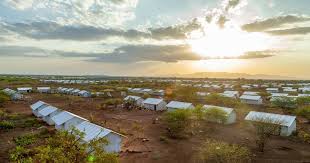
Behind the fences, wire cutting sky,
We’re not prisoners, yet we cannot leave,
They check our papers, make us wait and sigh,
While corruption festers, meant to deceive.
The proof of life they ask for, month by month,
As if our breathing weren’t enough to show,
We stand in lines, endure their bureaucratic brunt,
While aid intended for us doesn’t flow.
Officials profit from our misery,
Our rations stolen, sold for their own gain,
They speak of resettlement—a mystery,
While we remain here, drowning in our pain.
Murders happen in the camp at night,
Bodies found at dawn’s reluctant light.
The Unspoken Truth
They call us burdens, numbers, not our names,
They say we drain resources from their land,
But who ignited all these warring flames?
Who sold the weapons? Who gave the command?
The conflicts that displaced us from our homes,
Were fueled by others’ greed and lust for power,
Now scattered far, wherever sorrow roams,
We taste the bitterness of every hour.
Our children born in camps know not their roots,
They speak in languages of foreign ground,
Wear castoff clothes, donated shoes and boots,
Lost between the worlds, never truly found.
And still we hope, though hope is wearing thin,
That someday, somewhere, life can start again.
The Daily History
Each day arrives with promise, bright and fine,
Each day unfolds its story, yet untold,
A new account of humiliation’s gold,
A fresh despair that twists along the spine.
New tales of torment written line by line,
New narratives of bias, harsh and cold,
Discrimination in displacement’s hold—
I struggle to discern the grand design.
Who truly owns the right to define
Our fate, our lives, our stories manifold?
Can anyone bring the truthful answer?
Does someone hold the key to everything?
I seek to understand this paradigm,
But answers fade like echoes out of time.
About the Author
Mudadi Saidi is a Pan-Africanist poet, writer, and creative visual artist whose work explores displacement, identity, and the resilience of marginalized communities. An independent researcher and refugee advocate based in Kakuma Refugee Camp, Kenya, his writing raises consciousness around peace, Ubuntu, and African unity.
Mudadi draws deep inspiration from W.E.B. Du Bois, the pioneering scholar, writer, and civil rights activist whose literary work advanced Black identity and resistance against racial injustice, most notably in The Souls of Black Folk. Like Du Bois, Mudadi employs literature as a tool for liberation, dignity, and social
transformation, reclaiming African narratives while advocating for policy reform concerning refugees and displaced populations.
His work has received international recognition, including being named a Find Futures Contest Laureate for Refugee and Asylum Artists in Kenya, participation in the Art for Peace Exhibition in Washington,
D.C., and selection as a featured artist in Artist and Their Moneys. He is a co-author of A Breeze That Swept Me Away, From Here to There, and Canvas of Voices, Volume 5. In 2026, he was awarded the Golden Fold Winter Winner by Autumn Leaves Publication.
Mudadi’s education is shaped by lived experience in displacement contexts, self-directed study, and community engagement. He serves as a Youth Ambassador with the World Summit Award and works with the International Centre for Research on Peace and Development as a Field Research Facilitation, Languages, and Overall Advisor. He is also the founder of Bridge Builders Hub, an initiative dedicated to connecting young refugees and displaced communities with opportunities in education, fellowships, scholarships, internships, employment, and grants.
His aspiration is to contribute to Africa’s renewal through writing—awakening collective consciousness toward justice, peace, Ubuntu, and unity. He writes in Lingala, Swahili, French, and English, reaching diverse audiences while preserving and honoring Africa’s linguistic heritage.