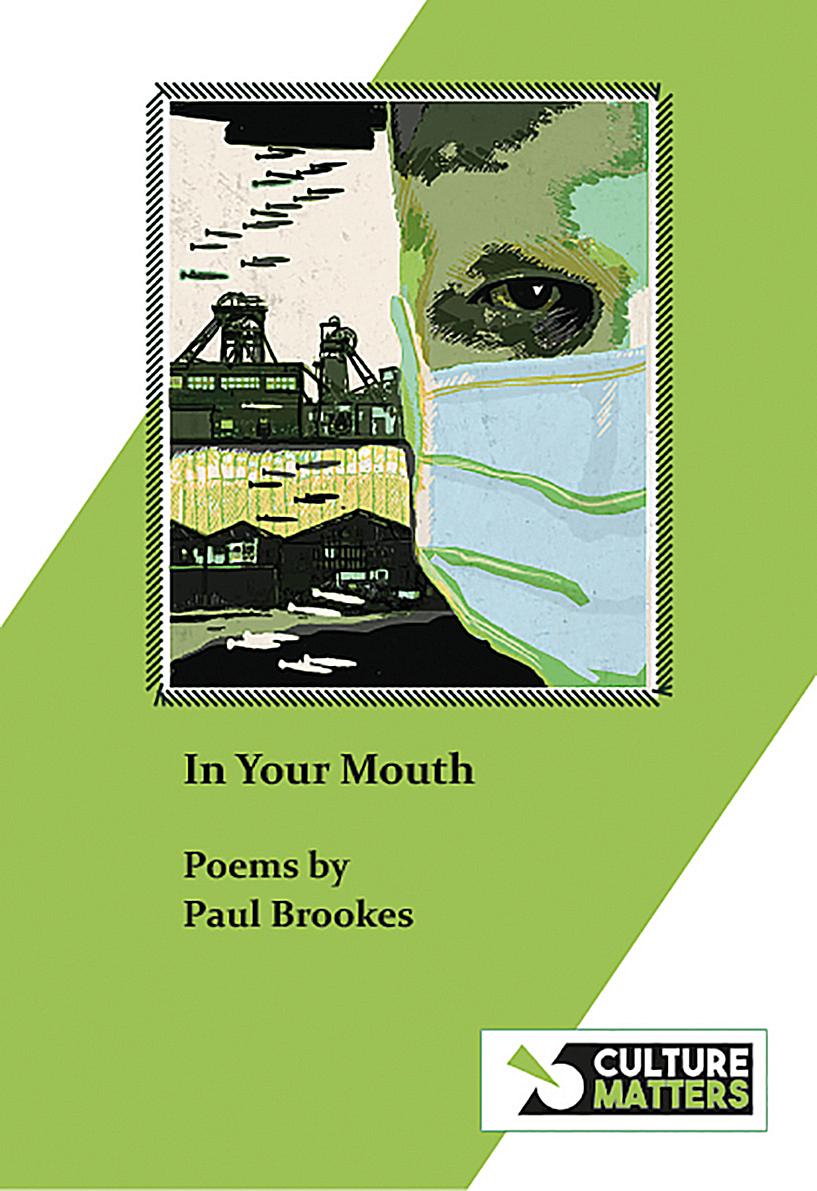
The first section focuses on the repetitive tasks of key workers previously (and currently, it could be argued) underpaid and undervalued by employers and the general public. The poems bring into sharp focus the difference between the haves, and the have nots, and although we were told we are all in the same boat, some people’s boats were significantly less leaky. In the second section ‘Daily Self-isolation Sonnets’ the tension that existed around the ‘test and trace’ system is explored within the confines of the sonnet form. The form of the poems becomes a metaphor for the act of self-isolation. The third section takes the reader to the theatre of war, again within the confines of the defined structure of a series of sonnets.
By focusing on the intimate, domestic, day-to-day existence of the working class, in a working-class town, during the pandemic, this collection politicizes the injustices inflicted on the public during the pandemic. More than that, it celebrates the risks that key workers faced and did so with (mostly) good grace whilst the middle classes made banana bread and took up cycling. The pandemic was a war, the key workers the foot soldiers and the enemy came from within, as much as from a virus. ” – Jodie Platts
During the pandemic certain workers were renamed ‘key workers’ or described as ‘essential’. Applause rang out for healthcare staff. For a moment the people who stocked shelves at midnight or cleaned public spaces were acknowledged as necessary to the functioning of society. But the change was brief. As restrictions lifted, so did the language. The term ‘key worker’ faded. The old hierarchies returned.
This is why ‘In Your Mouth’ matters. It resists that forgetting. The poems remember the days of early uncertainty. The taped arrows on the floor, the plastic screens at the till, the way customers watched one another over the tops of masks. They document work often described as ‘replaceable’, yet which is indispensable. These poems insist that such labour, and the people who perform it, remain visible.
ISBN: 978-1-918132-02-1, 82 pps., £10 inc. p. and p.