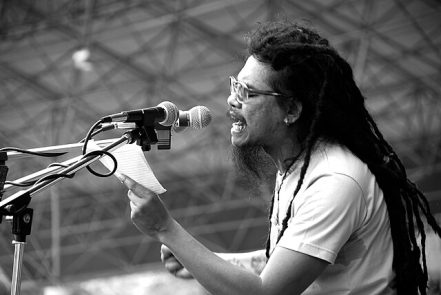
This speech was given by Francis Combes at the House of poetry of Rhône-Alpes (near Grenoble) on the 24th of January 2026.
The Honour of Poets
In July 1943, Paul Éluard published the anthology L’Honneur des poètes with the clandestine Minuit editions in Occupied France. The book was prepared by Paul Éluard and Jean Lescure in the office of Jean Paulhan at Gallimard, not far from the office where the pro-fascist novelist Pierre Drieu La Rochelle directed the NRF (the Nouvelle Revue Française). Despite its very modest initial print run, this clandestine anthology of Resistance poetry played an important role. It was reprinted several times and also circulated as leaflets, which Jean Lescure and his wife distributed by bicycle across Paris. Sent to Pierre Seghers in Villeneuve, he took responsibility for distributing it in the south of France and passed it to Jean Lachenal, who published a second edition in Switzerland. The work then reached Canada, the United States, and even Mexico, where the Surrealist poet Benjamin Péret wrote a pamphlet, Le Déshonneur des poètes, criticising Resistance poets, particularly the communist and Catholic writers, whom he accused of betraying poetry by putting it at the service of the patriotic cause.
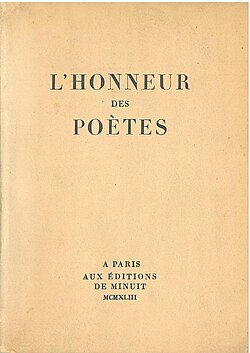
L’Honneur des poètes gathered under pseudonyms twenty poets, many of whom are significant in the history of French poetry: Aragon, Éluard, Robert Desnos, the Catholic poet Pierre Emmanuel, Francis Ponge, Jean Tardieu, Eugène Guillevic, André Frénaut, as well as Pierre Seghers, Lucien Scheler, Vercors, Claude Sernet, Charles Vildrac, Edith Thomas, Georges Hugnet, Loys Masson, René Blech, and two anonymous contributors.
For practical reasons (notably the difficulty of contacts), not all Resistance poets were included. For example, René Char, ‘Captain Alexandre’ of the maquis, Max Pol Fouchet, who ran the review Confluence, Henri Michaux, Pierre Jean Jouve, Georges Emmanuel Clancier, Jean Marcenac, René Lacôte, André Verdet, Jean-Pierre Voidies (who returned from deportation and became Ovida Delect), Pierre Gamarra, Rouben Mélik, Jacques Gaucheron, and journalist Madeleine Riffaut, who fought during the liberation of Paris, were absent. Another absence, for a different reason, was Jacques Prévert, whose famous collection Paroles was not published until 1945.
In fact, the vast majority of French poets of the time were, to varying degrees (sometimes opting for silence), on the side of the Resistance. This was not the case for many prose writers, or for those who, alongside true fascists like Brasillach or Céline, collaborated to varying degrees and were able to continue publishing. There was also an anthology of German poetry published by Stock, which included Heinrich Heine’s famous poem ‘The Lorelei’ without naming the author (Heine being both Jewish and a friend of Marx), alongside poems by Baldur von Schirach, André Gide and Armand Robin.
This strong Resistance commitment in French poetry had begun much earlier. During the Spanish Civil War of 1936–1938, many French, European, and American intellectuals and writers (like Hemingway and Pablo Neruda) felt the urgent need to oppose fascism and war, defending freedom and democracy. This manifested in congresses of writers for peace, delegations to Spain, and translations and publications of Lorca, Machado, and other Spanish Republican poets, for instance in Commune or Europe. As Éluard wrote in November 1936:
‘Watch the builders of ruins at work
They are rich, patient, ordered, black, and beastly
But they do their best to be alone on earth
They are at the edge of man and fill him with filth
They bend brainless palaces close to the ground.’
After Franco’s victory, which presaged the victory of Nazi Germany and Fascist Italy in Europe, poetic voices rose during what was called the Phoney War, notably Aragon with Le Crève-coeur. After a long period of silence following a poetic crisis caused by his break with Surrealist friends, Aragon returned to verse, transformed and reconnecting with poetic tradition. This transformation of Aragon’s poetry took shape after a meeting with the PCF leader Maurice Thorez. Aragon had just published a brochure of anti-clerical songs, Aux enfants rouges, in the revolutionary anarchist, anti-militarist, and anti-patriotic vein favoured by the Surrealists. Thorez argued that this was opposed to the policy of the Popular Front, which included ‘extending a hand to Christian workers.’ Thorez believed that since the bourgeoisie could no longer ensure the country’s destiny, the working class should take up the challenge, claim the heritage of national culture, and speak in France’s name. This prepared the ground for the unity in the Resistance between the FTPF (originally communist) and others from different political and ideological backgrounds.
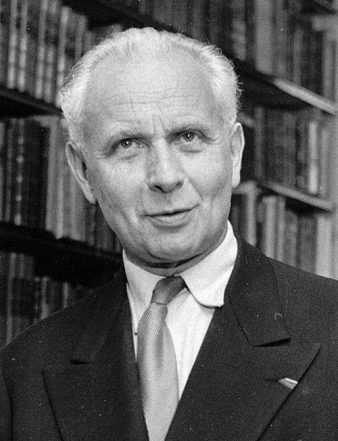
As Aragon later wrote, ‘My party restored my eyes and my memory, my party restored the colours of France’. Riding the wave of this political shift, he revisited the French poetic tradition, from the troubadours to Victor Hugo, transforming and enriching his poetry.
‘We are in 1940. I raise my voice and say it is not true that there are no new rhymes when there is a new world… So rhyme regains its dignity because it introduces new things into the old and elevated language that is an end in itself and called poetry.’
‘Perhaps never has making things sing been a more urgent and noble mission for Man (sic) than at this hour when he is more deeply humiliated, more entirely degraded than ever. And there are undoubtedly many poets who are aware of this, who will have the courage to maintain, even amid the crash of indignity, true human speech and its orchestra to make nightingales pale.’
Here, the programme of much Resistance poetry emerges: renewing tradition to reconnect with readers and the people, where song is essential. This partly explains why Aragon was widely set to music after the war, widening the audience for his poetry. This is from Aragon’s Les lilas et les roses, written after the fall of France:
‘O mois des floraisons mois des métamorphoses
Mai qui fut sans nuage et Juin poignardé
Je n’oublierai jamais les lilas ni les roses
Ni ceux que le printemps dans les plis a gardés
Je n’oublierai jamais l’illusion tragique
Le cortège les cris la foule et le soleil
Les chars chargés d’amour les dons de la Belgique
L’air qui tremble et la route à ce bourdon d’abeilles
Le triomphe imprudent qui prime la querelle
Le sang que préfigure en carmin le baiser
Et ceux qui vont mourir debout dans les tourelles
Entourés de lilas par un peuple grisé…
…Bouquets du premier jour lilas lilas des Flandres
Douceur de l’ombre dont la mort farde les joues
Et vous bouquets de la retraite roses tendres
Couleur de l’incendie au loin roses d’Anjou’
This was intolerable to Benjamin Péret, who had fought alongside the Trotskyist POUM during the Spanish Civil War and with Durruti’s anarchist column. In Le Déshonneur des poètes, written in Mexico in February 1945, Péret attacked Resistance poetry, accusing it of betraying poetry, which he defined as ‘the true breath of man, the source of all knowledge and that knowledge itself in its purest aspect.’ This idealistic view aligned oddly with the old notion of art for art’s sake. He also attacked Resistance poets for using metrical, rhymed verse – a betrayal in the eyes of this orthodox Surrealist close to André Breton.
Aragon responded ante rem to his former Surrealist comrade in Poésie et défense de l’Homme:
‘The question is doubtless not simple, but it is clear that poets’ audiences have grown. Consequently, their concern to be better heard has increased. Such concern, however, entails serious risks. It is always dangerous for poetry to seek explanation. But this risk restores the poet to the sense of dialogue, which is the very foundation of language… Language – described as dialogue – is the locus of human personality. Therefore, it is deliberately toward communication that poets, the best among them, have turned. Another word emerges here, which fractured France felt the obscure need for: community. As long as a nation preserves its language and the vital forces of its speech, it is not erased from History.’
Beyond Circumstances
What was the impact of Resistance poetry, and what remains? These are two distinct questions. It was noted – even in the collaborationist press – that the Occupation was a favourable time for reading poetry. When external circumstances are so adverse, one retreats inward, and poetry offers refuge – a classic function.
‘We do not flatter ourselves with illusory effectiveness,’ wrote Aragon:
‘Resistance poetry does not serve the current role of clandestine newspapers or Allied radio. Its power to restore language to action, and the hope it sometimes brings to prisoners, is not negligible. Yet it is less about the present than the lasting nature of the form; it claims its place in history and addresses the future.”
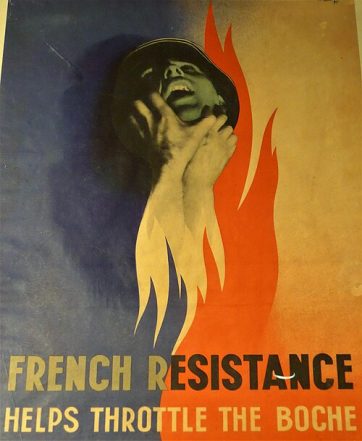
Before full clandestinely, there was a ‘smuggled poetry’ phase, when poems could still appear in newspapers, journals, or reputable publishers, often with double meanings. Aragon’s Les lilas et les roses was published in Figaro. Other journals sometimes eluded censorship temporarily, including Poètes casqués, Confluences, Messages, Fontaine, and a few others.
During this phase, poets embedded hidden meanings in their work to escape censors while alert readers would detect them. Jacques Gaucheron has noted that this aligned with the nature of the poetic text, inherently cryptic, presuming shared references between author and reader. As Desnos said, poetry exists where there is double meaning.
The use of allusion by Aragon resembled the trobar clus of certain troubadours, reflecting his interest in them. But this didn’t last; not all censors missed the hidden meanings. For example, in October 1941, Drieu la Rochelle accused Aragon of referring to a red knight. In 1942, Paul Marion suspended Confluences for publishing Aragon’s poem ‘Nymphée’, because it referred to the Red Army.
When poetry went completely underground it gained freedom of speech at the cost of its wide readership. The distribution of poems remained limited but reached beyond the usual poetry audience, especially in the clandestine press, with an estimated total circulation of a million readers. Éluard’s Liberté was dropped over France by RAF planes in 1944. Most poems were simply mimeographed or hand-copied, offering readers and writers pride and comfort. In the darkness of the Occupation, poetry kept a small flame of dignity alive.
Resistance poetry was produced by well-known poets and by many anonymous ones, creating a bond between people and poetry. There remain poets to discover or rediscover, like Arlette Humbert-Laroche; a liaison agent, she was arrested in 1943, imprisoned in Jauer, and died in Bergen-Belsen. Her last known poem (July 1944) ends:
‘Everywhere fear, night, death.
Yet the sun is here.
I saw it this morning,
young, strong, demanding.
It flowed over the roofs.
It bit the hearts of trees,
Seized the city by the shoulders
and demanded the earth awaken.
It is here,
deep in all things,
and before this world that opens, collapses, folds,
there is the mysterious, latent energy
that refuses darkness
and will not let life be killed.’
The Legacy of Resistance Poetry
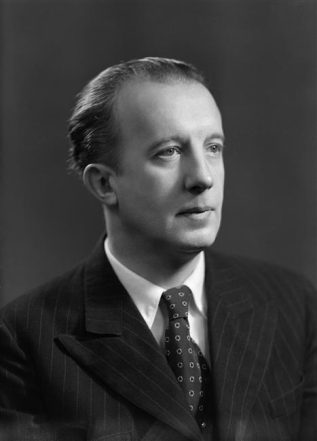
Some poems have aged less well than others. Occasion-specific poems must survive beyond their immediate context. Not all – but many do. Aragon’s La Diane française, Éluard’s Rendez-vous allemand, and Pierre Seghers’ anthology La Résistance et ses poètes testify to enduring works. For example, Robert Desnos’ This Heart that Hated War:
‘This heart that hated war now beats for combat and battle!
This heart that beat only to tides, seasons, day and night,
Now swells, sending burning blood of saltpeter and hatred
Through the veins, making such noise in the brain that ears ring,
And this noise must spread through city and countryside
Like a bell calling to riot and combat…’
Éluard’s ‘Courage’ attains universal grandeur:
‘Paris is cold, Paris is hungry
Paris has no shortage of chestnuts in the streets
Paris wears old woman’s clothes
Paris sleeps upright, airless in the metro
More misery is imposed on the poor
And wisdom and folly
Of unfortunate Paris
It’s the pure air, it’s fire
It’s beauty, it’s kindness
Of its starving workers
Do not cry for help, Paris
You live a life without equal
And behind the nakedness
Of your pallor, your thinness
All that is human is revealed in your eyes
Paris, my beautiful city
Fine as a needle, strong as a sword.’
After 1945, poetry emerged strengthened, and some poets gained fame and popularity. Yet, by 1947 and into the 1950s, Cold War shifts led many poets away from political engagement, focusing on language experimentation, with movements like OULIPO. Poets continuing the Resistance lineage – Marcenac, Mélik, Gaucheron, Monjo – became marginalized.
Today, political poetry has returned to schools; engagement is almost fashionable, often for just causes but rarely risking life, integrity, or literary reputation. Political poetry still faces justified suspicion.
The Challenge of Circumstantial Poetry
Poets should not be forbidden from writing on any subject. Every poem engages the poet, expresses the individual yet transcends them, reaching others. It is unique, singular, and avoids clichés and worn-out words. The poem conveys individuality and community – it is the song of being. Opposing war, oppression and injustice does not betray poetry’s essence. Paul Éluard said that ‘true poetry is included in all that refuses the unspeakable face of death.’ Every poem attempts to eternalize the moment, preserving sensation, emotion, thought. The myth of Orpheus reflects this: poetry is a heroic, repeated attempt to save life and love.
It is without a doubt a vain endeavor, but an endeavour that is always renewed and that defines the dignity of the human adventure. This applies to the Western tradition, but it is the same in Eastern, Chinese, or Japanese poetry, where the goal is to capture in the moment the impermanence of nature and of life, the eternal in the ephemeral, the infinite in the finite.
All poetry is triggered by external circumstances. Goethe said, ‘All my poems are poems of circumstances.’ A love poem or a haiku about Spring can be triggered by the encounter with a smile or a flowering tree. Regarding historical circumstances, Aragon preferred to speak of ‘poetry in circumstances.’ Jean Marcenac, who was the author of the Oradour Scholl Manifesto, spoke instead of ‘poetry against circumstances.’ Which indeed seems a felicitous expression. For there are circumstances and circumstances. The circumstances of collective history pose problems of a particular kind. And there are certainly talented poets who fail when they attempt to write a political poem. It is first necessary, as Eluard pointed out, that the external circumstance harmonizes with the internal movement of the poet. Which raises the question of sincerity, of authenticity.
A poem that would be dictated from the outside, to comply with a request without really corresponding to what the poet thinks and feels, would have a high chance of being artificial, conventional, and therefore of missing its goal. Many poems have been written to please kings, the great figures of this world, and even party leaders. This rarely produces good poems, even if a great Arab poet like Al-Mutanabbi made a specialty of this kind of panegyric. Then the poet must find the words and the form. From this point of view, one should not disguise the difficulty. The urgency of circumstances and their brutality can make poetic treatment very difficult. And can even leave the poet stunned and silent. In the case of most poems, time does its work. The poem feeds on memory, on sensations that have accumulated and that have created in the poet’s mind a kind of deposit of images in both his conscious and unconscious memory.
For in every poem, the unconscious and the conscious collaborate, to varying degrees. When emotion, anger, or even enthusiasm compel you to react on the spot, you cannot rely on this to make a poem. Historical circumstances require sincerity: forced poems risk being artificial. Poets must find the right words and forms. The Russian poet Vladimir Mayakovsky draws attention to this problem for any revolutionary poet. He recommended compensating for the lack of time by using reserves – poetic reserves of words and images, the creation of which occupied most of his time, by noting in notebooks that he always carried with him all sorts of material that he knew could be useful to him when the time came. This may seem anecdotal, but it is not. It is the question of craft that is at stake, or in other words, of art. Of the necessity to find, for each circumstance, the appropriate aesthetic detour.
The image, the parable, the shaping… which will introduce a distance from the event, will make it possible to master it emotionally and will turn this alloy of words into an object usable by others. And from this fragile object, into a durable object. Memorable, even unforgettable. For if poetry is an emotion, the poem itself is made of words, as Mallarmé emphasized, and it belongs to a practice, to an art, without which it can provoke neither emotion nor reflection. This remark may seem obvious, but I must admit that recently I have read quite a few more or less ‘committed’ poems, prompted by a legitimate feeling of indignation, for example regarding the fate of migrants drowned at sea, yet where the poem itself seemed to drown in the helplessness of good intentions.
Palestinian Resistance Poetry
Of course, Resistance poetry is not limited to Occupied France. Earlier French examples include Agrippa d’Aubigné’s Les Tragiques, Hugo’s Les Châtiments, and 19th-century workers’ poets like Pottier, Clément, Jules Jouy, and anarchist Gaston Couté. Resistance poetry often used satire and humour.
Globally, Latin American poets like Pablo Neruda (Chile) and Roque Dalton (El Salvador) exemplify this. Neruda, moving beyond the oppositions of pure versus impure poetry, proudly claimed the role of a ‘poet of public utility, that is, a pure poet.’
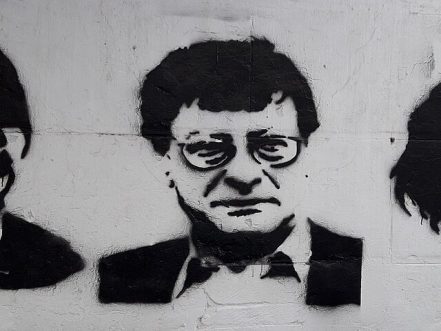
Today, Palestinian poetry is a striking example of poetry of public usefulness. Mahmoud Darwish’s poetry, complex and universal, emerged from his people’s tragedy. Mahmoud Darwish’s poetry is more or less well-known, and we now know that he is certainly one of the major poets of the 20th century. His case shows that there can be resistance poetry that is also great poetry. Even a poem like ‘Write down, I am an Arab’ is not a pamphlet. It carries a complex meaning which, while being very rooted in the drama of his people, tends toward the universal, beyond borders. Mahmoud Darwish was from a Christian family. He himself was a communist before becoming a leading figure in the PLO. I do not know if these origins are related, but one of the keys to his poetics is the motif of resurrection, which appears through a multitude of metaphors generating one another in a completely innovative way. His writing, which is part of the great tradition of Arabic poetry, at the same time transforms it.
Palestinian poetry is unique for two reasons: poets emerge from an epicentre of global suffering, compelling urgent expression; and exile/diaspora brought them into contact with other languages and literary traditions, broadening their scope.
Other notable Palestinian poets include Fadwa Tuqan, Samir Al Qassim, Mourid Al Barghouti, and Ahmed Dahbour. Much Palestinian poetry parallels 20th-century Yiddish poets, sharing a comparable fate. In, Gaza Hell@, Abu Abed Moghaisib documents the war in Gaza. A physician and MSF coordinator, he uses free verse as documentary poetry, echoing American Objectivist poets like Reznikoff.
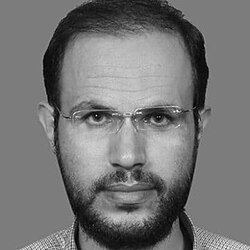
The other example is that of the poet Rifat al-Arir. A Muslim intellectual known for his essays on the effects of colonization, he was targeted by a drone while taking refuge in his sister’s apartment. His poem ‘You Are Me’ says: ‘I do not hate you… I would like to heal you from your hatred, because when you kill me, you kill yourself.’
For an Anti-Fascist Front of Poets
Finally, is it possible to create a poetry of resistance today against the brown wave that is sweeping over the planet today? From Washington to Moscow or Kiev, through Rome or Budapest, as well as from Santiago de Chile to Tokyo, we see nationalist and sometimes clearly xenophobic discourses asserting themselves, and far-right politicians rallying popular support and taking power. France is no exception. For lack of a better term, I think we are facing a form of neo-fascism across the entire planet.
The first challenge is to understand what is happening. This neo-fascism, authoritarian, nationalist, racist, and often supported by religion, differs, even if it shares some traits, from the historical fascism of the 1930s-40s. Like historical fascism, it is often accompanied by violence. It is a factor of war and potentially a bearer of a third world war. Moreover, as always, God is on its side. Indeed, there are all kinds of fascisms, on the side of the powerful as well as on the side of the weak. There is certainly an Islamist fascism as shown by ISIS/Daesh. But there is also a Zionist fascism as shown by the violence of Israel’s state terrorism and the settler movement. From the Indian subcontinent or Southeast Asia, we sometimes also hear news of a Hindu fascism or a Buddhist fascism. There is also, of course, a Christian and Evangelical fascism, notably in North and South America, and there can also be forms of secular fascism among us, in the intolerance towards others. But overall, and whatever its multifaceted aspects, this neo-fascism differs from its ancestor in the circumstances and the general reasons that see it born and develop. In the 1930s, fascism and Nazism were the parade with which the ruling classes of imperialist countries in crisis (and humiliated by the defeat of 1914-18) had chosen to assert themselves in the international arena, while avoiding the risk of a socialist revolution. Hence – while crushing the workers’ movement – an anti-capitalist and even socialist rhetoric that today’s new fascists dispense with.
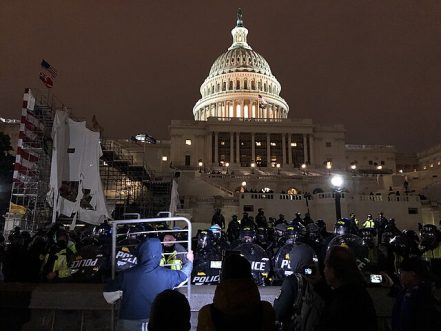
It must be said that currently, socialism is not a threat to the system anywhere. On the contrary, we are experiencing the backlash of the failure of the socialist experiments of the 20th century. And this is a major fact to take into account to understand the backward push everywhere. But if there is no immediate danger of revolution, there is everywhere a failure of the ultra-liberal globalization that capitalists have imposed for several decades, through right- and left-wing governments. This globalization of the deregulated market has had the effect of considerably increasing social inequalities and has abruptly put peoples in competition. This causes a widespread feeling of rejection everywhere. Peoples, shaken by this globalization and unable to find a perspective for the future, tend to take refuge in the idea of going back to a mythical past – nation, religion, and even family, as they might have seemed to be, before the advances of feminism and the emergence of gender issues, linked to an individual emancipation that can often appear troubling. Hence reactionary responses across the board: questioning the climate emergency and the common fate of the planet’s inhabitants, rejecting parliamentary democracy and parties, rejecting immigrants, rejecting all those who seem different. Today, these neo-fascist ideas are spreading.
Competing with the extreme right, the neo-liberal centre parties are increasingly ready to implement the programme of the extreme right even before it can come to power. It is increasingly common to hear from the mouths of people we thought were close to us racist remarks that would have seemed unbelievable a few years ago. (The war in Gaza, during which an Israeli minister calmly declared that the Palestinians should be treated like animals, has obviously been a crossing of a threshold on the path of racist dehumanization.)
In this general context, a part of the ruling class, today embodied by certain major capitalists are making the choice of a new type of government, authoritarian, limiting democracy and freedoms. Far-right billionaires who control transnational groups sometimes more powerful than states, are at the same time at the head of powerful modern media, and they can control the social networks they helped establish. Hence the influence of violent far-right ideas in information but also in mass culture, entertainment, and everything that contributes to shaping the mentality of individuals and peoples. Their investment in the field of culture is obviously not a coincidence. For them, it is not only a profitable market but also a means of imposing social consensus. It is noteworthy in this regard that the far right in France does not hesitate to claim Gramsci and adopt his notion of cultural hegemony.
In this situation, what can we do, as poets? Not much, perhaps. But the little we can do, we should do. With the means that are ours — those of reflection, of satire, and of lyricism as well. I believe we must take initiatives to help in the formation and expression of an antifascist cultural and poetic front, a cultural convergence bearing other values, those of openness to others and to the world, the values of empathy, of solidarity. Those of peace against the warlike madness they want to drag us into. Those of dialogue, of speech, even of love. Those of a lucid hope in our collective capacity to prevent humanity from killing itself. In fact, it is a question of defending the life instinct against the death instinct. The times require us to choose, as Edgar Morin has written, Eros against Thanatos.
Saint-Martin d’Hères, 24 January 2026