by Paul Laughlin
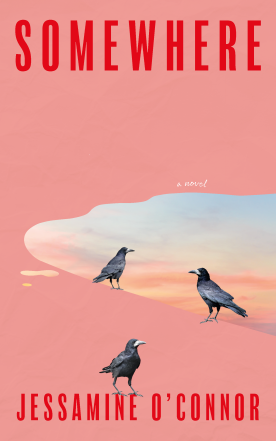
Somewhere by Jessamine O’Connor
Lilliput Press € 16.95/ £14.99 pp356; ISBN: 978-1-84351-979-9
Jessamine O’Connor is a poet from Sligo and if you have read any of her finely crafted poetry you will not be surprised that her debut novel is such an assured piece of work.
Somewhere published by Lilliput Press suffers from none of the pitfalls that often mar a first novel. It maintains narrative cohesion throughout as it links together a series of episodes in the lives of its characters in lean prose and vivid imagery.
The central character Clodagh is an addict and over a span of several months she navigates the fallout from eviction, joblessness and the breakup with her partner Seamus while struggling with her addiction.
Now back living in her mother’s box room she interacts with friends and fellow users, some of whom are homeless in the wake of their own failed relationships and drug dependency. Each of these damaged people is seeking in some way to escape the chaotic existence they are leading, each of them struggling to be somewhere else.
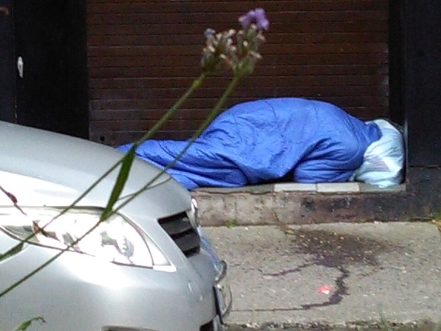
As they try to survive in a world that is hostile or indifferent towards them the ‘somewhere’ that they are seeking is often nothing more than a stairwell, a doorway or a dry spot under the bushes in a city centre park.
There are other forms of urban isolation. Ireland’s housing crisis or, more accurately, catastrophe places many thousands under the strain of exorbitant rents and the attendant fear of suddenly being made homeless. Communities, individuals and families have been damaged, some irreparably.
We return again and again to the novel’s central theme of relationships, some of which have been ruptured catastrophically and others which, in the end, literally provide a lifeline.
The complexities and exasperations of the fraught relationship between Clodagh and her mother Sylvia which, despite its high and low points, remains a source of affection and mutual support, is perfectly captured.
By contrast, James who “hadn’t grown up with friends and family falling in and out of the same trap” and who “had never even met a real heroin addict until he became one” is increasingly desperate to be reconciled with his estranged family, but is repeatedly rejected by his Garda father whenever he approaches him.
In the wake of a final brutal rejection when he is offered cash to stay away rather than compassion his life slips away in a lonely and pitiful manner on a canal bank.
Seamus is finally hauled back from the precipice by his sister Pat who stubbornly refuses to be deterred by his reluctance to be helped and takes charge of arranging accommodation and treatment in spite of him.
By now rejecting the monotony of the everyday as an addict Clodagh, “sick to death of it all, …….sick of having nothing to do”, repairs the fractured relationship with her mother, resolves to free herself from addiction and to break with her old life.
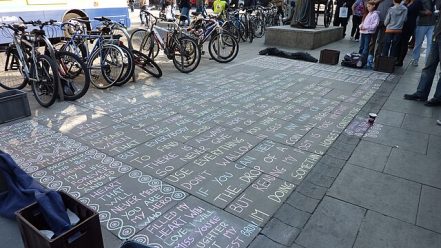
Somewhere is set in contemporary Dublin, a city with 12,000 homeless people in emergency accommodation. The dysfunctional property market is so firmly in the grip of vulture funds that the median price of a home is now €500,000 with the result that of the 4,521 houses and apartments brought on stream last year, only 208 were sold to individual buyers.
While Clodagh and her fellow users are existing outside society, the spiralling cost of food, energy and rent means that the situation for many people who are in work or in rented accommodation is almost as precarious. Under the Fianna Fáil/Fine Gael coalition tenants have so little protection that 2025 saw the highest level of evictions since the Great Famine during British colonial rule.
As Seamus joins a queue for hot food run by charity workers, “the line makes him feel almost normal. Here with families and workmen and people from all over. It’s the situation for everyone that is fucked, not just him”.
O’Connor chooses not to turn her gaze from the darker side of life but to look directly at it. The Republic of Ireland has one of the highest rates of opioid addiction in the EU with the highest percentage of those addicted concentrated in Dublin.
The lives of the characters she portrays are harsh and yet they contain within them the possibility of transformation. Clodagh retains her individuality and displays artistic talent which might yet be nurtured. Seamus, despite all the personal indignities he is enduring, still has the political awareness and social conscience to close down the anti-migrant racism expressed by a fellow addict:
“It’s hardly fresh-off-the-boat’s fucking fault that the rents are mad, that everywhere’s a rip-off. It’s not any one of them lads that’s evicted me or fucked me over, or fucked any of us over, is it? It’s the fucking banks, and them landlord bastards in the Dáil, so you’d want to cop on there. Right?”
The novel offers Clodagh and Seamus no neat endings and the only certainty is that they still face significant challenges which they may or may not overcome.
Within Irish literary practice there is an enduring strand of writing that is actively engaged with social and political issues. It is now one hundred years since Seán O’Casey transformed Irish theatre by dramatising the lived experience of Dublin’s marginalised and impoverished urban working class as they struggled to survive. More than just its theatrical innovation, his Dublin Trilogy embodied a critical examination of Irish society during that period.
With Somewhere Jessamine O’Connor has written a compelling novel that not only sits within that important tradition but makes a significant contribution to it.
You can buy the book from the publisher here.