In this issue of Our Culture, series editor Alan McGuire reflects on the BBC’s historical role and explores how decades of mismanagement and market-driven objectives have reshaped one of Britain’s most important public institutions. This is a call to reclaim the BBC as a cultural commons, able to educate and inspire the public in the twenty-first century.
The BBC is one of Britain’s most recognisable cultural institutions, often acting as a mediator of what is and is not culturally acceptable. It once aspired to serve the “greater good”, but the truth is that it has always upheld the ideology of the British state. It is both treasured and mistrusted. It has been cherished for its public service: bringing communities together for moments such as watching EastEnders on Christmas Day, broadcasting national football, and breaking major world events. However, it is also criticised for elitism, for platforming certain viewpoints (cough Nigel Farage cough) more than others, for shielding sex offenders, and for protecting the status quo.
Today the BBC finds itself once again embroiled in controversy. In November 2025, legal threats from Donald Trump made headlines over the Beeb’s editing of one of his speeches in a documentary, giving the right more ammunition to push for the privatisation of yet another public institution. Following this scandal, both BBC Director-General Tim Davie and CEO of News Deborah Turness resigned. At a time when the UK has such low trust in its public institutions, the BBC’s survival cannot be left to market logic and political scandal alone. We need a fully democratised public broadcasting service.
From Reith to Today
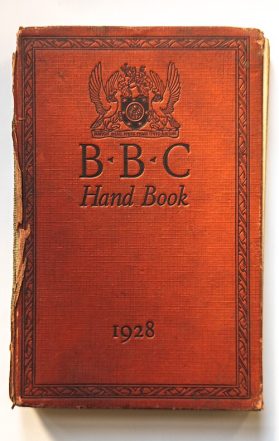
The BBC was founded in 1922 and given its Royal Charter in 1927 under John Reith, its first Director-General. Reith spoke of the BBC’s mission to “inform, educate and entertain”. His vision was paternalistic and conservative, typical of post-Victorian Britain. He believed the BBC should educate and uplift the public by showing them what “good culture” was. Yet did this hierarchical model accidentally lay the seeds of something more radical, the idea that broadcasting, and thus culture, could be shared by everyone, not just those who could afford opera tickets?
The BBC grew during and after the Second World War, becoming a national voice in moments of crisis but also serving as a propaganda arm of the British state. Later, in the 60s, 70s and 80s, it played a central role in cultural democracy: bringing radio and later television into homes and commissioning drama, music, and documentaries that reflected changing times. In those decades, the BBC was far from perfect: women and minorities were marginalised, working-class accents were excluded, and as the Jimmy Savile scandal revealed, it protected the powerful. Yet for the general public, the institution had a sense of common purpose that commercial media such as ITV couldn’t replicate. Sadly, that has changed.
The Problem of Market Logic
Today the BBC, much like the NHS, feels less like a public service and more like another corporation competing in the market. Executives use the language of CEOs: “global markets, ratings, talent retention”. This market logic has led to presenters and executives earning six-figure salaries, justified by claims that “the market” would snap them up. But the BBC was never meant to imitate private American broadcasters. Its purpose was not to compete with LA, but to serve Britain.
There comes a point when you must review what you are measuring, because what you measure shapes what you value. The BBC seemed to be counting the wrong eggs. Instead of asking “How many views did this get?”, it should be asking “How many minds did this change?” Instead of chasing the tabloid press, which has its own motives for pushing divisive and sensationalist stories, the BBC could focus on journalism that holds power to account and matters to ordinary people.
Political interference has further undermined the institution. Since its inception, governments of every colour have used the BBC for their own ends: squeezing funding, appointing inexperienced friends, diluting coverage. The result is a corporation with no teeth, too scared to speak out against “mummy and daddy” in case its pocket money is taken away.
Even in the recent Trump scandal, why did programme makers resort to editing his speech? It is not as if there isn’t enough crude material already in circulation. But was there political influence? Although they have admitted the mistake, Trump may still sue. And this is only the tip of the melting political iceberg. Richard Sharp arranged a loan for PM Boris Johnson weeks before his own appointment. Then there is the biased coverage of the genocide in Gaza. I could go on.
Despite all this, the BBC’s regional radio services still demonstrate what a public broadcaster can be. Local stations offer news and weather, but also culture and a voice for communities. For many, regional BBC output still provides something private competitors struggle with: a sense of belonging and community service. Perhaps I’m being idealistic, but there is something about the regional BBC both television and radio that the national BBC struggles to deliver. I believe this difference comes from proximity to the community, distance from central power, and less political interference.
With the founding of the BBC, people recognised the value of being informed and entertained by local and national media. It helped knit communities and the country together but, as we have recently seen, it can also pull us apart. By enthusiastically platforming Nigel Farage, exaggerating the “small boats” issue, and undermining popular movements such as Black Lives Matter, Corbynism, and the movement against the genocide in Palestine, the BBC has eroded much of the trust and faith it once held.
A revived democratic BBC should double down on the local and the participatory. Imagine programming made with and by communities, not merely for them. Imagine town halls where programming decisions are debated.
More Than Accents
It’s not enough to have northern accents on the One Show. Structural change is needed. A substantial amount of academic research has shown that the BBC, and the wider UK media sector, is structurally hostile to working-class people looking to break into the media. A major report from the Creative Industries Policy and Evidence Centre (PEC) found that only one in four workers in the UK’s screen industries come from working-class backgrounds, despite making up almost half the working population. Higher up the food chain from writers and commissioners to directors and producers, this figure rises to 61% coming from privileged backgrounds, making the media one of the most class-ridden sectors in the country.
There has also been further research from the Sutton Trust who argue that class inequality in the creative industries is as bad today as it was in the 1960s. The Sutton Trust found that young people from working-class backgrounds are four times less likely to get jobs in the media and culture sector than their middle-class peers even when as equally as qualified.
Researchers consistently found the same structural causes: unpaid internships, dependence on informal networks i.e family connections, London-centric hiring, and cultural biases “fitting in”. These are all things that significantly disadvantage working-class applicants. Then if the BBC is full of public school, Oxbridge educated types, is it any wonder that they struggle to make meaningful content on a national level?
Towards a Democratic BBC
The BBC’s glory has always been in its willingness to take creative risks. The Radiophonic Workshop, founded in 1958, brought avant-garde sound design into ordinary living rooms, most famously with the Doctor Who theme tune. This was not just entertainment but a statement of values: experimental art could be mass culture.
The same can be said for its long tradition of sitcoms and serials. From the slapstick of Fawlty Towers in the 1970s to the deadpan mockumentary of The Office in the 2000s, from the rural realism of This Country to the institution that is EastEnders, the BBC has influenced British life in ways no other broadcaster has. These shows offered laughter, drama, and social commentary, culture that was funny and political. It has also helped make the careers of hundreds of British actors, comedians, presenters, directors, writers, and technical staff.
Yet this tradition is now threatened by managerial anxiety and fear of risk. Commissioning too often favours the predictable and market-friendly. A democratised BBC could create more space to experiment, to fail, and to surprise, which is precisely what culture needs (we certainly don’t need more remakes).
What Would It Mean to Democratise the BBC?
End inflated salaries.
No public servant should be paid like a Hollywood production manager. The BBC must stop chasing “big sparkly things” and break with market logic altogether. Redirect resources away from celebrity wages and towards local production, training, and community media.
Protect independence.
Remove direct government control over appointments. The BBC should belong to the public, not to whichever party is in power. Hold a democratic convention every five years where staff and community shareholders vote on the corporation’s direction.
Strengthen regional voices.
Expand and properly fund regional radio and television. Devolve real decision-making to local artistic and journalistic community councils. A democratic BBC must be grounded in everyday Britain, not just the editorial priorities of London.
Reinvigorate experimentation.
Create new Radiophonic-style labs for sound, film, digital, and interactive media — places where ordinary people can experiment, learn, and create. A more diverse BBC, in terms of class, ability, race, and gender, will produce richer, more surprising culture.
What Democratisation Actually Requires
• Increase accessibility.
A democratic BBC must lower the barriers that stop working-class people entering the industry. This means:
– Paying all trainees and apprentices a real living wage.
– Reopening regional training centres to end London-only gatekeeping.
– Offering non-degree routes into journalism, production, and technical roles.
A public broadcaster should not reproduce the same exclusion as the private sector.
• End classism in recruitment and career progression.
Research consistently shows that working-class applicants are filtered out due to accent bias, networking expectations, or assumptions about “polish”. A reformed BBC would:
– Ban unpaid internships and make hiring fully transparent.
– Actively promote working-class staff into editorial and commissioning roles.
– Train managers to challenge cultural bias.
• Transform representation on screen and in newsrooms.
Working-class Britain is still misrepresented or invisible. Democratisation means:
– Investing in drama, comedy, and documentary rooted in real working-class life.
– Platforming working-class journalists, writers, and presenters.
– Commissioning stories that show communities in their full complexity rather than as political talking points or stereotypes.
Representation is not a luxury or a buzzword. It shapes the national imagination and keeps the public informed.
Tell More Stories, Belong to More People
A democratic BBC would support drama, comedy, and documentary that reflect ordinary lives and heal communities rather than divide them. Instead of demonising refugees, it would amplify their stories. Instead of platforming sensationalism, it would invest in understanding.
The BBC should not be left to die in the marketplace it was never designed to enter. Nor should it become a propaganda machine for the government of the day. It should return to its founding mission: to inform, educate, and entertain, but with the added features of democracy, diversity, and participation.
The BBC is ours. It can help ordinary people imagine a better future, speak honestly about their present, and reflect on their past. It can be a cultural commons rather than a cultural corporation. The opportunity is there.
Read the rest of the editions from the Our Culture series:
Culture as Class Struggle: An Interview with Jenny Farrell
Our Culture: RIP British Working-Class Cinema (1935 – 2025) by Brett Gregory
Our Culture: The Uncomfortable Truth About Public Libraries
Our Culture: Breaking through the Class ceiling with bread and roses
Our Culture: Games and Class Struggle – with Scott Alsworth
Our Culture: Prize-winning Poetry Only Please! with Andy Croft