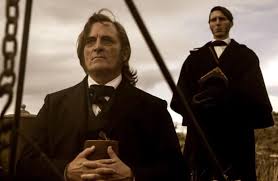
Hannah Starkey, Untitled 2022, 2022
In this instalment of the Our Culture Series, writer and artist Stefan Szczelkun traces the hidden history of how radical working-class culture. From the Chartists to rave culture, working-class culture has been repeatedly washed by middle- and upper-class mediators. Here Szczelkun asks what these patterns of cultural control mean for rebuilding a democratic, socialist culture today.
The Chartists nurtured a rich radical working-class culture with poets and ceremonies; but what happened to it? By 1850 more people in England were living in towns than in the country. When the Chartist artists and poets moved to the cities, the conditions of life were radically different. They adapted culturally with forms like the inclusive ‘Free n Easy’ with its radical toasting and improvised performance. This subculture developed into early music hall. British performers, like the six Hanlon Lees Brothers, were legendary for their comedic surreality and for the punk-like violence of their performances.
As this burgeoning urban working-class culture arose from the 1850s, the middle class panicked. They didn’t really know what was going on! They reacted, it seems, on their ‘instinct’. All this stuff was disgusting! Just too vulgar! They also must have felt the threat of the intense audience responses. Discerning upper-middle-class gentlemen took on the task of regulating this lawless culture. Well, it didn’t deserve to be called ‘culture’!
Unfortunately, these men of means were largely successful in defusing an anarchic and radical new working-class urban culture. They had the tools of the literary, publishing and commercial world at their fingertips. They also had their old boys’ networks, to quietly access regulatory bodies. Music hall was defused and commercialised. I discovered the sledgehammer power of this repression from my research in the 1980s. I was not in any literary world and I had organised a network of working-class artists coming out of the unbridled energy of the huge open Brixton Artists Collective and its gallery in three railway arches (1983 – 86).
There was a heady sense of creative freedom. I’ve written elsewhere on Culture Matters about the collaborative imprint ‘Working Press: books by and about working-class artists’ which came out of it.
The final book I self-published with this imprint was Conspiracy of Good Taste in 1993, after studying certain individuals who had taken leading roles in mediating the vital new urban cultures that were rising up from below.

Clough Williams-Ellis was one of the main campaigners against the spread of the plotland housing movement in the period 1920s-1930s. He was not experiencing them as jouissance, for him they were more ‘a blot on the English landscape’!
Cecil Sharp was another gentleman who had packaged up an acceptable form of working-class music, transposing ‘traditional’ songs he heard into piano keys, and editing out lyrical vulgarities.
This was fed back to the population through the new state school system. School programmes were broadcast on BBC radio. I sang along to them in my school in Feltham in the 1950s.
Even our beloved socialist hero William Morris, was, on close inspection, treating his working-class wife with horrible classist attitudes and giving short shrift to the working-class poets that came to him for support.
Each of these three middle-class mediators had a chapter, although of course they were my chosen ‘scapegoats’ of a much wider phenomena of cultural control by the good and the great.
The posh boys
of publishing
More recently I became aware of the posh boys who managed and contained the publishing of proletarian male literature in the 1930s. Look out for Jack Hilton’s ‘Caliban Shrieks’ which was recently republished. A list by Howard Slater is here:
More recently I learnt from Frances Hatherley that working-class artists who were taken up by the art world (and the lucrative art market) were not written about in terms of their class, even when that was the dominant theme of their work. The artists treated in this way were Jo Spence with her Class-Shame series, the photographs in Richard Billingham’s Ray’s a Laugh series and Carol Morley’s film The Alcohol Years:
The only breakout from this pervasive repression was the upsurge of live amplified rock music bands in the 1960s. This was left to whatever control could be exerted through commercial management and the mass media DJ selectors, who still bowdlerise and thin out the political contents of their broadcasting.
When even these commercial strangleholds were challenged by illegal Techno Raves, legislation and even police brutality was wheeled out to stamp out the innovators:
One of the biggest mass arrests in UK history was at the Love Decade rave held near Leeds in July 1990. 836 arrests that night as people battled to prevent coppers from shutting down the party. In the end only 17 were charged.
– 56a Infoshop, X post, 1-12-25
The posh boys of the visual arts
Other areas of high culture seemed to have quietly battened down their hatches, as if they hoped to ride out the storm. The main fine arts institutions in London and the provinces have no democratic governance and are still run entirely by a coterie of upper-class men and women that nobody seems able to challenge. These protect and work in cahoots with a burgeoning global art market. Big money is at stake.
In the 1980s I had a visceral insight into oppression of the working class, which reinforces the exploitation of the wage system. The core of this oppression is to persuade working-class people of their ongoing intellectual inferiority. My insight was gained through some support groups I went to, where this idea was engaged with through telling life stories and with the honing of our mutual attentions with a high degree of discipline – ie not through reading books of theory.
Classist oppression is a traumatic invasion of selfhood on an epic scale. We still don’t understand the nuts and bolts of how this thing actually works. We sure as hell are not born inferior! Nonetheless, even when we are aware of it we seem to be restrained with gossamer threads, like Gulliver, unable as artists to find the solidarity to challenge this on an adequate scale.
The other thing that one would have thought might have threatened the stability of class oppression was the mass entry of the working class into tertiary education from the 1960s onwards. The contradiction between the conferring of a university degree, and the basic tenet of class separation that ‘you are of inferior intelligence’ was extraordinary, and has needed some perverse manoeuvres by the state to neutralise its revolutionary potential.

Diane Reay and Valerie Walkerdine both wormed their way into the academic establishment and have chewed away at this problem in their many papers and books. Diane Reay has just had her classic Miseducation: Inequality, education and the working classes, 2017, reissued in a substantially revised and updated second edition. Valerie Walkerdine’s Schoolgirl Fictions, 1990 is still a vital read.
Oppression was (and is) understood by most socialists in the most vague, shallow and abstract way. The idea of listening to each other’s life stories was anathema to most men in the 1990s, as I found out when I tried to introduce Social Class Awareness Training for school teachers, with Tracy Davidson, in 1993. Then, to think clearly about how this oppression worked through culture seemed mind-boggling.

However, this is what I have tried to do in a series of books following on from the 1993 Conspiracy of Good Taste. There was an extended essay thinking about how: Can Working Class Culture Be Knowledge,
and then a more graphic approach with Silence! The great silencing of British working-class culture. These can still be bought as cheap ebooks or as paperbacks.
Other book studies take on specific aspects of the subject. There are two poetic photographic books on the plotlands, and another one of radical selections of music with the title: Agit Disco, which enjoyed a luxury Japanese edition.
One answer to the closure and exclusivity of British high culture may be to organise as open and independent artists’ and writers’ collectives. I documented one of these in Exploding Cinema: 1991-1999 as a doctoral study at the RCA
(2002). That thesis also exists as a self-published paperback and an ebook that nobody reads – I’m not on any ‘required reading’ lists. Not surprising when you think that there are no degrees on class liberation, or even on working-class culture. Hmmm.
Supporting and promoting working-class culture
: a manifesto
So what are the lessons for a new, democratic and socialist culture?
* An education in understanding class oppression through doing seminars and workshops. Listening to each other’s life stories must be at its core, and it should be led by artists and writers trained in basic counselling.
* Working-class culture (in all sense media, and in literature) should be made central to innovating our thinking about human futures. We must go beyond its short-circuiting commercial forms and find the exhilarating pathways to the future of humankind through a class-conscious art and performance that is followed by discussion.
* Opening access for working-class thinkers, writers and artists to publication and critical review, following the example of Culture Matters. Unions should support their artists and embrace culture. Nurturing a critical reception for art, music and poetry amongst members is perhaps the most important aspect of this.
* Support for grassroot small music venues and art centres run by not-for-profit artists’ collectives and local co-operatives supporting working-class cultures and openly challenging bourgeois culture.
* State funding should be available for all working-class artists, eg learning from the recent Irish example.
* Set creativity free to renew, enrich and embolden social movements.
* Public and school libraries to celebrate working-class authors with displays and readings. I have made a form email to send to your local library which links to a list of C20th working class women authors – many of which can be found in the stock of most public libraries.

Photo by the author, Crystal Palace Library
* Tertiary education courses designed for critical reflection on working-class arts and literature, past and present.
* Most revolutionary of all would be the democratisation of all publicly funded national art galleries.
Read the rest of the editions from the Our Culture series:
Culture as Class Struggle: An Interview with Jenny Farrell
Our Culture: RIP British Working-Class Cinema (1935 – 2025) by Brett Gregory
Our Culture: The Uncomfortable Truth About Public Libraries
Our Culture: Breaking through the Class ceiling with bread and roses
Our Culture: Games and Class Struggle – with Scott Alsworth
Our Culture: Prize-winning Poetry Only Please! with Andy Croft