Image by the author
‘The Last Olive Tree’ is an allegorical short story by Dr. Abdulghani Al-Shuaibi that captures the endurance of the human spirit in Gaza amidst destruction and despair. At its core, it tells the story of Kareem, a young boy whose act of watering a dying olive tree becomes a metaphor for preserving hope when everything else has collapsed. The story transcends its geographical and political context, speaking universally to the resilience of humanity under oppression.
The Last Olive Tree
The dawn broke quietly over Gaza, though nothing was quiet beneath it. The air trembled with the echo of last night’s bombing, and dust still hung like unspoken grief. The sea, a witness to everything, lapped softly against the wounded shore as if whispering prayers too tired to be heard.
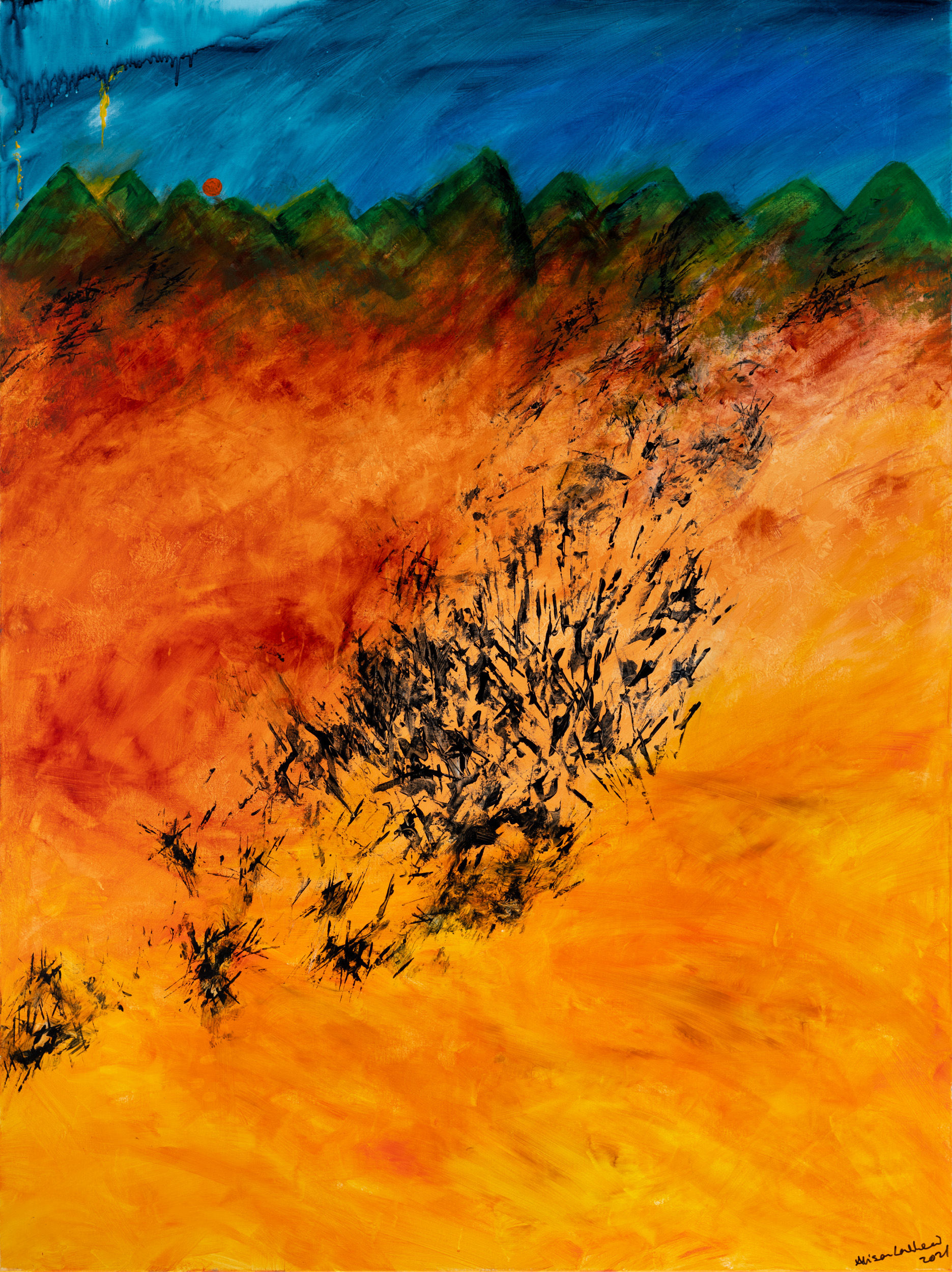
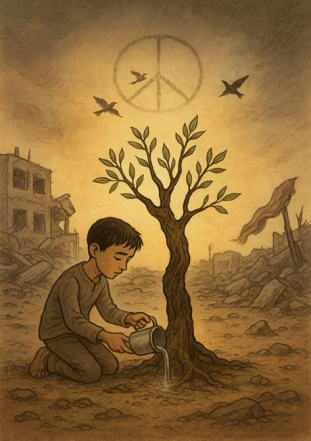
In what remained of Beit Lahia stood an olive tree – old, gnarled, and half-burnt. Its roots clung stubbornly to the dry earth, the same way the people clung to life. Under it sat a boy named Kareem, twelve years old, thin as a reed, tracing patterns in the dirt with a piece of twisted metal. His school had once stood behind the tree. Now it was a flattened scar.
Kareem waited for his father to return. Every morning, since the first explosion took their home, he waited. His father had gone to find water – or hope, which in Gaza meant the same thing.
When the sun rose higher, Kareem’s mother called from the tent they now called home.
“Come eat, habibi.”
But there was little to eat – just a handful of lentils and the memory of bread. Still, she smiled. She always smiled, because mothers in Gaza knew that hope was not optional; it was inherited like the olive trees themselves.
After eating, Kareem walked to the tree again. Its trunk was blackened, but one green leaf clung to a branch. He thought of his father’s words before leaving:
“Promise me, Kareem. No matter what happens, you’ll keep the olive tree alive.”
Kareem nodded then, as children do when they believe promises can stop wars.
That afternoon, a drone buzzed overhead – like an angry insect that everyone pretended to ignore. The ground shook once more, and the sky opened into a sudden cloud of fire. Kareem covered his ears, but the world had already entered him through sound. When the dust cleared, a group of neighbours were running toward the street, shouting names into smoke.
His mother’s name was one of them.
Kareem ran too. He saw the tent torn apart, his mother’s scarf caught in the debris, waving as if trying to escape the war itself. He didn’t cry. In Gaza, tears are a luxury; the earth drinks enough blood already.
That night, he sat under the olive tree again. The stars above Gaza flickered like restless souls. He placed his hand on the soil. It was warm – not from the sun, but from what it had taken.
He whispered, “I’ll keep you alive. I promise.”
He fetched a tin cup, filled it with water from a cracked pipe nearby, and poured it at the tree’s roots. The leaf trembled. Maybe it was the wind. Maybe it was something more.
Days passed. Aid trucks came and went. Journalists arrived with cameras that captured ruins but not the smell of loss. They asked questions like “How do you feel?” – as if the answer could fit in a headline.
Kareem kept watering the tree.
Then one morning, as dawn returned like a weary visitor, he saw something new – a small sprout pushing through the ash. He stared at it, not daring to blink. A leaf. Another. Life, stubborn and absurd, rising from the rubble.
At that moment, a man appeared on the horizon, limping, covered in dust. Kareem froze. The man called out, his voice trembling.
“Kareem!”
It was his father.
The boy ran to him, clutching his arm, feeling bones and heartbeat and disbelief. His father knelt, eyes wet. “You kept your promise.”
Kareem looked at the olive tree, its tiny leaves glimmering under the fractured sunlight. “It kept me, too.”
The next day, someone painted a sign on the charred wall near the tree:
“Here, life refused to die.”
And when foreign visitors asked what it meant, an old woman said simply,
“It means Gaza still dreams.”