By Alan McGuire
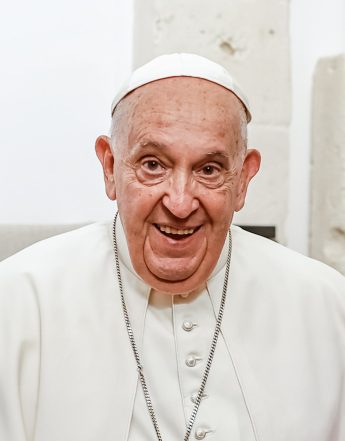
When Argentinian Cardinal Jorge Mario Bergoglio stepped out onto the Vatican balcony in 2013, the world was already in crisis: ecological breakdown, rising inequality, and a multi-generational distrust for governments, and both global and local institutions.
The newly elected Pope Francis, the first from the Global South and the first Jesuit, was immediately cast as a figure of change. Humble and lighthearted, outspoken on injustice, and coming from a continent that has been on the front line of disaster. Francis offered the possibility of a different kind of papacy.
Twelve years on, what has he achieved? First, we need to look at how we understand his significance within the wider struggles of our and his context. The Roman Catholic Church is a Eurocentric top-down bureaucracy that continues to grow in the Global South and decline in the Global North. It’s also said that it is an institution that never changes. With its own context changing, Francis had to manoeuvre the church for its future journey.
His deliberate reorientation of the Church’s leadership has been a success, but it could also be argued this was part of the reason why he was elected. By appointing cardinals from Latin America, Africa, and Asia, he has shifted the centre of gravity away from the historically dominant European and North American blocs.
These new appointments bring with them different life experiences, those of colonialism, debt crises, state violence, and the aftereffects of neoliberalism, all of which Francis was also witness to. Their presence challenges an ancient theological and cultural hegemony within a church often shaped by the priorities of the Global North.
In a world where power has long flowed from colonial Europe and North America, this reorientation within the Church is notable. It makes a recognition of the history of colonialism much closer. A history that is often not spoken about in the Global North is the exploitation and oppression of people in the South for the lifestyles of the middle and upper classes at the expense of the working class and the poor. The recognition of voices historically marginalized or excluded is a must, and the Church recognizes this.
Francis became well known for his criticism of global capitalism. He has described an “economy that kills,” spoken out against the worship of money, and called for a new ethic of solidarity, a new cultural logic not based on the values of neoliberalism and individualism.
His encyclical Laudato Si’ remains one of the most important critiques of environmental issues, linking the climate crisis with social injustice, extractivism, and inequality. For many campaigners and movements, Francis has given moral legitimacy to struggles against privatization, precarious labour, and environmental destruction.
Of course, these interventions remain in a moral critique. Oppressive structures of class and the role of imperialism were seldom taken on with full force. Francis offered a compassionate vision of society, one that seeks dignity, but he didn’t dare promote full systemic transformation. Yet, his concern for the poor, the outcasts, and the planet itself gave way to more moral arguments, ones that people in the spotlight rarely make today. It has allowed Catholic social teaching to be heard by many for the first time, and proved that it is not a thing of the past.
Trying to frame a Pope as left or right wing is very difficult, but also necessary in a time of overly simplified populist clickbait politics. He was walking proof that you can be economically and socially progressive in some areas, whilst also holding views – common to many Catholics of course – that abortion is wrong and women are not equal to men when it comes to being priests.
Francis’s attempts to reform the Church from within have not gone unchallenged or unnoticed. There has been resistance from conservative bishops, particularly in Europe and North America, who have accused him of weakening doctrine. They even organized campaigns and media briefings against him.
Francis has responded in many ways to this, but he has also played the long game, which is still in play after his death. Appointing some like-minded bishops and cardinals and building support for a more inclusive culture, whilst aware that change within one of the world’s oldest institution – along with the Chinese state, interestingly enough – is slow to happen.
However, given all his reform flavored gestures, many structures remain unchanged. Women remain excluded from ordination. LGBTQ+ Catholics hear more inclusive language, but see little change, sometimes even less so in their home parishes. It could even be argued that Francis’s changes from the top have made more conservative church goers at the base more resistant to change. Furthermore, the Vatican’s financial institutions, while they have been subject to some reform, still operate in the shadows. His biggest failure of all, has been the lack of action on the Church’s biggest scandal in years: clergy child sex abuse.
12 years is long enough to make meaningful structural reform on such a grave issue, however many survivors claim that Pope Francis’s action were a reaction to external pressures and did not eradicate the problem. For example the defrocking of Cardinal Theodore McCarrick was a reactive measure. Moreover, the summit held at the Vatican in early 2019 (Meeting on the Protection of Minors in the Church) was seen as merely symbolic, with very little policy or measurable outcomes delivered by the end of the event.
Pope Francis’ papacy shows the contradictions of our time: a longing for more justice within unjust systems, the search for community in egocentric times, and the need for compassion in a world of competition and commodification.
We could describe his papacy as a type of passive revolution. He responded to the need for change and reshaped the institution just enough to continue its legitimacy. A revolution from above, that was acceptable (just about!) to the ruling classes. This does not mean the changes are useless. There have been real shifts in culture, image, language and more importantly representation. However, culture and aesthetics can change quickly with the election of a new Pope.
The real battle for the heart of the church is multifaceted. You have the progressive-reformists from parts of Latin America, Europe and Africa who make up about 70% of the electorate that will elect the next Pope, all of whom are sympathetic to continuing Francis’ legacy of openness and mercy. Then there are the traditionalists who are not as ambiguous as Francis when it comes to matters of sexuality. They also remain strictly anti-abortion and pro top-down management and are orthodox theologically. Many of these come from North America and Africa. Of course there is a group in the middle that are sympathetic to Francis’s changes at the Vatican but remain wary of his woolly approach to doctrine.
We will know who the next Pope is soon, but will they reflect the changing face of the church? One thing we do know is that Francis’s legacy will be shaped by the future actions of those who buried him and seek to take his place.