The Nowhere Man
By Dennis Broe
In both Man on Fire and The Nowhere Man, the genre and the basic plot is the same, but there is a more individualized oligarchic and paternalistic version of the black hero in the American Man on Fire, and a more socially grounded and collectivist version in the South African The Nowhere Man.
The genre is the action series and both are loosely based on the Denzel Washington film Man on Fire with the Netflix American series remake explicitly acknowledging this lineage.
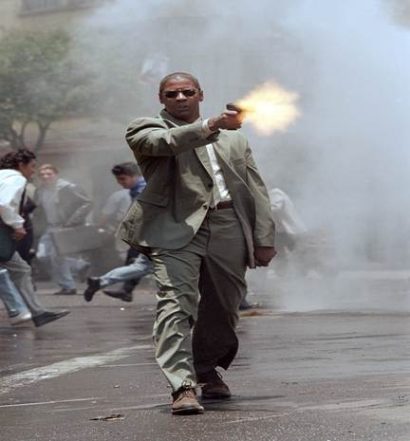
Denzel in Man on Fire
The basic plot of each treads the well-worn platitudes of that genre. Each lead is laid low by a mission that in the Netflix firmly fixed pattern is a required action sequence in the opening minutes. In the American, the CIA outsourced agent fails in the endeavor, resulting in the death of his Mission Impossible-type team and in the South African version the army special forces agent, in a more taunt action sequence, detonates a device at the last minute which gets him out of harm’s way. The African American and African male leads in each then wander the streets, seemingly lost, though reclaimed and then reluctantly drawn back into new missions of vengeance.
The pattern of course is problematic, with the genre needing to supply adequate reasons for the carnage that is to follow so that the audience can wallow in it. It’s the same kind of twisted and inaccurate logic, with the hero as victim, that Pete Hegseth, Trump and previous American administrations use every day as they present themselves, with the largest armed force ever assembled, including the greatest nuclear arsenal, as righteous victims of one country after another be it Iran, China or Russia as the endless wars rage, always justified by some revenge motif fostered by bruised masculinity. And so went the films of Sylvester Stallone, Chuck Norris, and some of the films of Clint Eastwood, all forgetting in their bloodlust that the moral of the original revenge film Fritz Lang’s Nibelungen is that revenge exhausts not only itself but also the revenger.
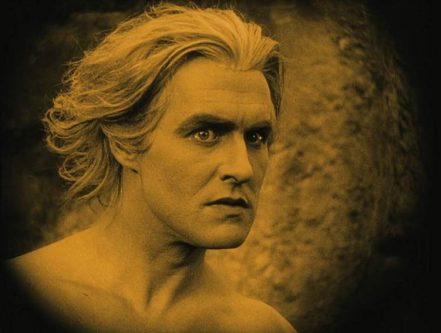
Lang’s Die Nibelungen: Revenge consuming the revenger
There are major differences though in the execution of these similar stories. The American version at first appears to be the more global, set initially in Mexico, then in the U.S. and finally in Brazil’s Rio, while the South African version is set in Cape Town. However, the global locales featured in Man on Fire are viewed through the eyes of the privileged. The Mexico opening sequence is set in one of that country’s exploited free trade zones and the Brazilian locale is the upscale neighborhood of the gleaming business offices and condos of Leblon, with the mercenary John Creasy remarking that he thought Brazil would be tougher and his ex-CIA handler replying “not this neighborhood,” while explaining these operatives, hired to secure this extravagant wealth, are there because, in CIA lingo, “home is where the coup is.”

Netflix’ Creasy in Man on Fire: Alone and proud of it
Creasy’s handler Rayburn, though he is expert at undermining regimes, is presented as a family man whose attitude towards his wife, two youngsters and rebellious teenage daughter is described as loving, and which justifies his wrecking of other ways of life. His sanctimonious fatherhood of course is an excuse that will later serve to sanction Creasy’s killing spree.
The “terrorists,” focused on rampant destruction for seemingly no reason—as terrorists are wont to do—are, to read between the lines, actually incensed with the inequality of the ultra-rich condo dwellers, but we just view them as villains since we are given no reference point or insight into the actual poverty of the favelas, the slums of Rio.
Creasy is described as the ultimate loner, always solitary in his grief over the failed mission though he will eventually learn to allow for at least one other person in his life in his protection of the privileged and precocious teenage daughter Poe, but that is the extent of his commonality and community.
Lucas in The Nowhere Man, on the other hand, in retreat from a sad experience with the South African army, falls into the same type of isolation but is rescued off the street by Ruby, who, in a poor section of Capetown, heads a shelter for women, children and victims of violence. Lucas, no longer a loner, embeds himself in this community outside the limited bourgeois family structure depicted in the American series. Lucas is called back into action when Neo, a female member of a drug family, is threatened because she will testify against her drug lord uncle. His rescuing of Neo and eventual invasion of the drug lord’s compound entails a good deal of black-on-black violence but drug dealers are a menace to the community and their evil is distinct from the obscure “terrorists” of Man on Fire.
Lucas becomes enamored not of a protected and sheltered teen, but of a medically challenged girl who he and Ruby attempt to save. Neo is a doctor who, when rescued, helps out at the shelter, though Ruby, the shelter originator, ultimately functions as the revenge and bloodletting motif. There are American comparisons; Lucas has been called a South African John Wick, but the more apt comparison of Lucas’ daring feats is to the black Marvel superhero Luke Cage.
Likewise, Neo in her speech, affect and appearance seems to be channeling Scandal’s Keri Washington. Finally, there is a reformed addict at the shelter who ultimately functions as Robin to Lucas’ Batman. But, these allusions are woven into the fabric of a version of the genre where the hero battles for the humanity around him.
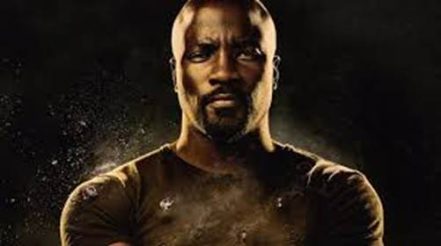
Marvel’s Luke Cage
Lucas then, moves away from being the ultimate individual, first inserting himself into a community and then building a community in his protecting the shelter, whereas the American protagonist Creasy, pledged to safeguard the teenage Poe, otherwise continues on his individual path in defense of Rio’s rich and privileged. Two black action heroes, but in contexts and circumstances that differ substantially and tellingly in the way they illuminate the values of each society that produced these figures; one about the myth of individual and isolated achievement in the service of the rich, the other about collective and communal engagement in the service of the poor.
This review is a preview of Lies, More Lies and Damned Media Lies on Substack and Patreon