Let’s talk about gatekeepers.
You meet them everywhere. In restaurant kitchens, they’re a classically trained chef who sneers at the taco truck, who did three years in Lyon and won’t let you forget it, who will lecture you about technique while there’s a two hour line of people at the taco truck who are, in all measurable sense, happier than anyone eating his food. In publishing, they wear better shoes. But the contempt is the same.
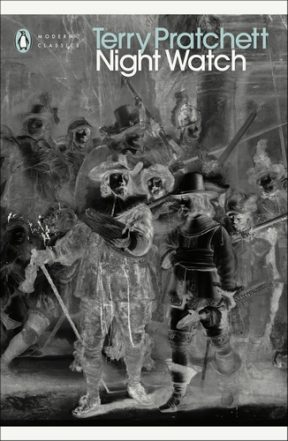
The news that Terry Pratchett, Sir Terry Pratchett if you please, who sold upwards of one hundred million books and was loved by readers on six continents, was to be inducted into the Penguin Modern Classics series in 2025 was received in some literary circles with the pained expressions of those who have just been informed their neighbourhood is changing. Penguin Modern Classics, they wailed, as though the words themselves had been violated. As if that green spine had been cheapened. As if a series which includes Raymond Chandler, Phillip K. Dick and Agatha Christie had maintained some sort of previously unsullied fortress of high culture that Pratchett was about to storm with his wizards and footnotes and deeply unfashionable humanism.
It didn’t. It never would. And those people making that argument know that. Or they would, if they were willing to honestly look at what they believe instead of what they’ve been credentialed to perform believing.
The thing about Terry Pratchett that his detractors, those who never read him, which is pretty much all of them, could never quite deal with is: the man was doing philosophy. He was doing sociology. He examined the nature of the narrative itself, how stories shape reality and how we humans use archetype and myth to build meaning out of the chaos of existence. And he was doing it in a series of novels about a flat world carried on the backs of four elephants standing on the shell of an enormous turtle.
Take the Death character himself, the skeletal, scythe-carrying figure speaking in small capitals who has, over the decades of Pratchett’s writing, developed real curiosity and something close to love for the human he harvests. He constitutes one of the more sophisticated philosophical inquiries into mortality in late 20th Century prose. Death tries to understand why humans laugh, he goes fishing. In the extraordinary Reaper Man, he is told he himself will die, works as a farmhand and discovers the terrifying beauty of having limited time. It’s Heidegger for people who find Heidegger, rightly, unreadable. It’s Camus without the self-satisfaction.
But, it was also funny. And in the literary establishment, funny is a serious problem. It’s suspect. Funny suggests you are pandering, not taking things seriously enough. That you lack the requisite grimness that highlights depth. Charles Dickens was funny, of course. So was Franz Kafka and Jonathan Swift. But they are safely dead and safely canonised, so their humour has quietly been reclassified as satire. The word we use when we want to admit something made us laugh but not admit we enjoyed it.
If you’re willing to look at it, the class coding here is not subtle.
Historically, genre fiction; science fiction, crime, romance, horror, has been the literature of those who travel on buses. Fiction of the three-for-a-pound paperback carousel at the pharmacy, or library book with the cracked spine. A dog-eared mass-market edition passed around between friends and colleagues who work with their hands and read on their lunch-breaks. It’s fiction that understood from the very beginning that its first obligation was to be read, and an unread book is not a cultural achievement, but a very expensive doorstop. By contrast literary fiction, and I mean the consecrated kind, those that win the Booker and are reviewed in the London Review of Books by someone also with a novel out, has positioned difficulty as a virtue. A readers willingness to push through, do the work and accept prose that is deliberately opaque and structure which is consciously demanding, has been reframed as a moral seriousness. Reading these books is seen as a class performance as much as an intellectual one. It’s a signal that not only do you have the education, you have the leisure, patience and economic freedom from urgency that lets you read a 400 page novel in which not a lot happens, and described in sentences that circle the subjects like a nervous dog circles a suspicious piece of furniture.
Raymond Chandler, who is now safely canonised, but in his lifetime was considered roughly equivalent to a talented but suspicious carnival barker put it best: that the mystery novel is “an honest” attempt to give the reader “a picture of the world they live in.” It wasn’t considered literary ambition, but genre limitation. The same critics who contemporaneously said this were also praising novels set in country houses that contained no world anyone really lived in.
Shall we do a brief inventory?
The Left Hand of Darkness, written by Ursula K. Le Guin in 1969 imagined a world without gender and used that premise to explore with surgical precision every assumption Western culture had ever made about identity, sex and power. A science fiction novel. Le Guin had decades of receiving awards from sci-fi institutions, and polite dismissals from those in the literary mainstream. There was occasional acknowledgement that she was “transcending the genre” and this is the critical establishments way of telling someone they’re “articulate.” A compliment containing its own insult.
Or Shirley Jackson. The Haunting of Hill House is one of the most psychologically exact novels ever written about mental dissolution. It’s a haunted house narrative, a ghost story, genre as genre could be. Jackson was brilliant, and dismissed, and died relatively young and barely recognised by the institutions that should have known better. Today her name is used, with cheerful hypocrisy, by the same literary culture that ignored her. Because she is dead, and it costs nothing to honour the dead.
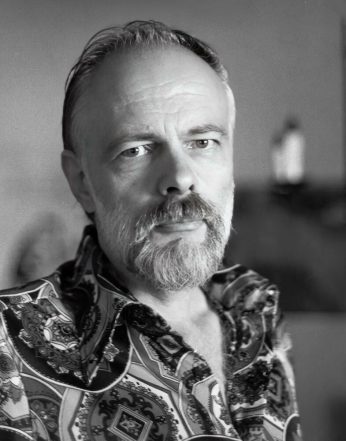
Phillip K. Dick. A man who basically invented our current cultural vocabulary for thinking about identity, consciousness and the ontological slipperiness of reality. He wrote some of the most prescient fiction of the 20th Century and was, I cannot stress this enough, functionally broke for most of his working life. The literary establishment had decided he was a sci-fi writer, and science-fiction writers simply do not receive fellowships, grants or respectful prizes in publications of note. Now, he is referenced in academic philosophy papers. During his life, he lived on beans.
George Pelecanos. Kames Ellroy. Elmore Leonard. Sara Paretsky. Patricia Highsmith, God love her, an author of such exquisite and sustained psychological menace that she makes most modern literary fiction look like children’s drawings of emotions, spent her career being called a crime writer. She was really writing about the frightening ease with which a person can become something they can’t recognise. About identity and guilt, and the porousness of the self. Tom Ripley is one of the greatest characters in modern literature. Technically, he is also a murderer in a thriller, and this apparently meant something once, to people who believed the categories meant something.
Good story ≠ Shallow
Genre fiction has always understood something literary fiction occasionally forgets: story is not the enemy of seriousness.
The ancient Greeks sure didn’t have this problem. Sophocles wasn’t working in a tradition that distinguished between popular and literary drama. Their plays were performed for everyone, at a festival, outdoors and with music and masks. Shakespeare’s groundlings stood in the pit eating and shouting and the plays worked for both them and the nobility in the galleries at the same time, because the plays were about something, and being about something isn’t diminished by being entertaining. On the contrary, it’s strengthened by it.
The idea that a book is compulsively readable and must therefore be shallow, that a plot which turns is selling out, that characters who are immediately present and vivid are less serious than deliberately alienating characters, it’s an idea with a history, and that history isn’t as ancient as its adherents would like to think. It’s largely a 20th Century innovation, and a product of the institutionalisation of literary culture, the university creative writing programs, prize committees and review organs and literary festival circuits which created incentive structures that rewarded a certain type of fiction and punished others.
Terry Pratchett never won the Booker Prize. He sold a hundred million books. These two facts are related.
The argument we usually hear, if we corner one of the gatekeepers and demand a defence, will be something about craft, and the distinction between prose style as an end in itself and prose style as a vehicle for story. In my own experience, this is largely bad faith. Pratchett’s prose is extraordinary; comic, exact, morally serious and capable of creating a sentence that punches you in the chest with no warning. A sentence that makes you put the book down and sit with it, because it has said something true that previously you didn’t have words for. The prose of Le Guin and Chandler is extraordinary. The prose of Highsmith is so tightly wound and controlled that it works like a garrote on the audience’s nervous system, gradually and with extreme precision.
These writers do not lack craft. What they lack, in establishment eyes, is difficulty as performance. Their prose is doing something, building a world, telling a story, highlighting a character, instead of demonstrating its own complexity for the benefits of the readers credentials. By some, this is considered a moral failing. It isn’t. If anything, it’s a greater discipline. To write a sentence that is both useful and beautiful is harder than writing a sentence that is just beautiful.

The vindication of Pratchett matters not because he needed vindication, his readers always knew, but instead what it says about the decades-late, grudging, death-adjacent nature of recognition from mainstream institutions.
Pratchett was diagnosed with early-onset Alzheimer’s in 2007, and died in 2015. In the years between diagnosis and death, he worked with extraordinary purpose; writing, advocating for assisted dying, actually doing the work, and he did this without the comfort of being told by the institutions he had outlasted in a sense, that his work would endure. He knew it would endure, as he knew his readers. But wouldn’t it have been nice for someone in a position of institutional authority to have said this when he was alive?
This is the pattern. We wait until writers are dead, or dying, or so clearly vindicated by massive cultural weight that it becomes embarrassing to ignore them, then we anoint them. Call them classics. They are put into the canon and taught, essays are written about them and how they transcended their genre, as though genre was a prison they had escaped, instead of a tradition they had extended and enriched or, in many cases, basically invented.
I am certainly not arguing against literary fiction. I’m arguing against the hierarchy.
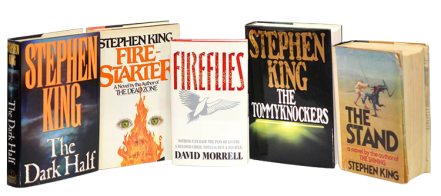
There is incredible work being done in the consecrated literary fiction. There are novels being written today in that mode that are doing things to language and consciousness that matter hugely. The issue isn’t that literary fiction exists; the issue is its insistence that it exists on a higher plane. That those who read the work of Cormac McCarthy are engaged in more serious activity than those who read Le Guin or Pratchett or Stephen King, who has also had a slow recognition by the literary establishment, similarly grudging, similarly predicated on his eventually becoming too big and obviously too serious to ignore.
That hierarchy exists only to maintain the hierarchy. It confers prestige onto those who confer prestige. It anoints the critic as a necessary mediator between the work and the reader, or the person who tells you which texts are worth your time and which enjoyment is legitimate. At the bottom line, this is a job protection scheme. Readers who trust their own responses don’t need some critic to tell them what they should value. The literary establishment doesn’t like readers who trust themselves; those readers are ungovernable.
What Pratchett’s readers knew from The Colour of Magic, the first Discworld novel back in 1983 to The Shepherd’s Crown in 2015, is what all devoted genre readers know: that the novels you return to and the books you live in, those works that give you language for the things you felt but couldn’t say, or made you cry on public transport and not care who saw you, they are the ones that mattered. Not the ones you read just to be that kind of person who reads them. The ones you read because you needed them.
It’s literature which does that. Not the spine colour or the category. Not the academic syllabus or prize shortlist. And definitely not the hedged and careful approval of someone whose payslip depends on your continued deference to their own taste.
That taco truck outside has a two hour line.
Maybe ask yourself why.