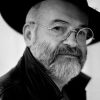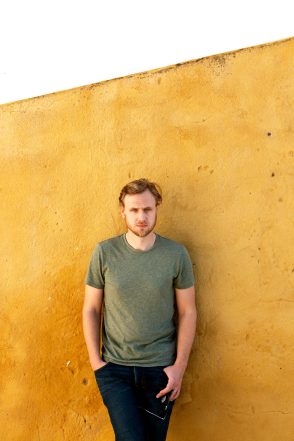
In an era where art and society are being shaped by technology and globalisation, composer Jan Foote represents an interesting dialectic: one grounded in working-class Yorkshire roots but also one that experiments with new sonic frontiers. Now based in The Hague, Foote’s work mixes jazz, classical, ambient, and digital forms, exploring how repetition, perception, and technology alter our experience of sound. His latest project, Half Broken Dreams for Synthetic Souls, pushes this even further — using AI not as a gimmick, but as a mirror to question what creativity means in a digital age.
In this conversation, composer Ben Lunn speaks with Foote about his journey from Leeds to The Hague, his compositional voice, and the meaning of being a Northern, working-class artist in a world that still privileges a select few. They discuss everything from the politics of opera to the power of collaboration across borders. Here is both a portrait of an artist and a reflection on the barriers that still shape Britain’s cultural landscape today.
For a long time I have felt a great affinity to the work of Yorkshire composer Jan Foote. This has been in part due to my sense of fraternity with another Northern composer, but also due to the fascinating quality of his music.
Based in The Hague, Jan’s music is deeply fascinated by evolution of sound material, often utilising repetition (and other devices) to invite listeners to consider what they are presented from multiple angles and points of view; this also includes utilising visuals. His newest work, Half Broken Dreams for Synthetic Souls utilises AI in a manner which creates a fascinating journey, but also asks the question how much of our own perception is stereotyped, or reliant on familiar cues; how different would the piece be, if a human followed the prompts? As well as asking what is AI doing to our understanding and learning?
Me and Jan sat down over Zoom to chat about life and music, in early October, wherein I started the conversation asking Jan about his journey into music. Growing up in Leeds, Jan reflected on how his family would have lodgers in their house, and one memorable figure helped start him on his musical journey with a guitar. Like many eager young people, he was filled with inspiration and passion but rarely had the discipline to practice or focus on one area to grow as an artist often flying from inspiration to inspiration. The role of jazz and classical music became a solid base for him. It wasn’t until secondary school, that he started to discover a bit of a knack for composing.
Winning an unconditional offer to study composition at Middlesex University, was what gave him the push to really dive into life as a composer, describing how his first two years clarified his fascination and love of it, but it was in his third year that felt quite foundational to wanting to be a composer. After graduating, he made the bold move to move to the Hague, and approached the then head of composition Martijn Padding, who encouraged him to start a masters in the conservatoire. He describes how his time in The Hague, it helped refined his craft, though doesn’t necessarily speak positively about works written during that time; but highlights how from 2018 it helped him be in a position to compose how he wanted having both the talent and curiosity, as well as the craft to support the ideas.
We briefly considered which composers, and other musical influences, he found during his early stages which shaped him prior to study. He noted Danny Elfman and Hector Berlioz were both formative influences, but also highlighted Sergei Prokofiev and John Williams, as well as jazz musicians like Miles Davies and John Coltrane.
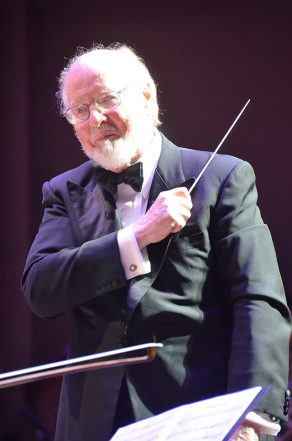

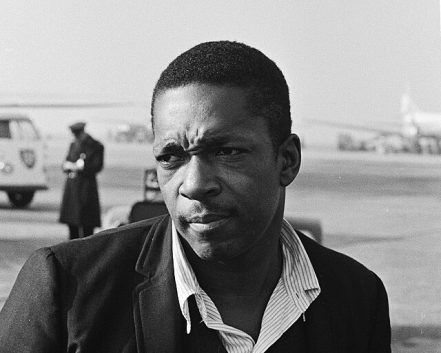
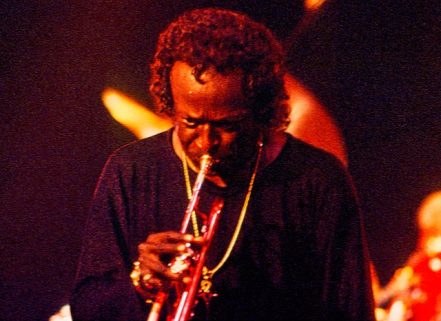
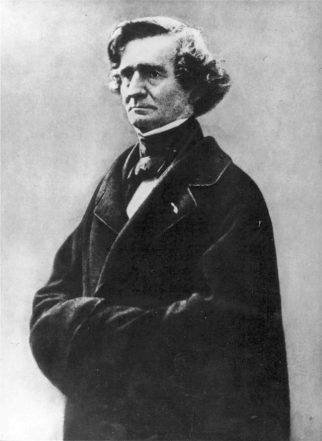
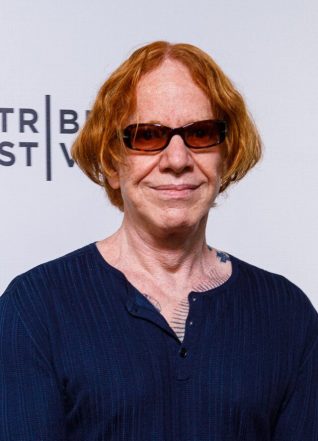
I then asked about his experience being in The Hague studying, and the musical life there. Jan described it as ‘Life changing in a good and a bad way’. He noted if you buy into what the Hague is (which he did), it is really difficult to leave it behind, noting that the musical environment is more a philosophical approach, over particular stylistic approaches. He described how he felt London was more traditionally classical, however the composers he encountered were extremely adept, whereas in the Hague it is slightly less technically intricate in comparison, without the same sophistication but has a certain energy which cannot be replicated easily. Jan noted how not only has The Hague shaped him, but his favourite jazz musicians and pop musicians are just as important an influence on him.
After many diversions and discussions down various warrens, I asked Jan about who he says are his biggest influences currently. He mentioned Harrison Birtwistle, Louis Andriessen, Luciano Berio, Joni Mitchell, Björk, and John Coltrane and late Miles Davis as great influences on him currently. He also mentioned how Peter Adriannz and Jonathan Harvey featured heavily in his PhD. Jan mentioned how Andriessen’s musical energy is something that inspires him, though he knows the political elements behind the work, the drive and energy of Andriessen is what fascinated him about Andriessen’s work. Similarly, Jan described how Birtwistle’s Earth Dances were what initially drew him in.
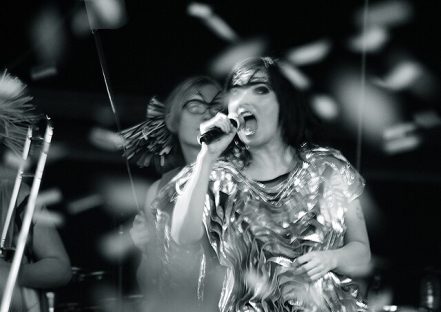
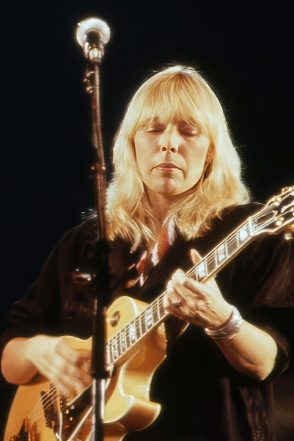
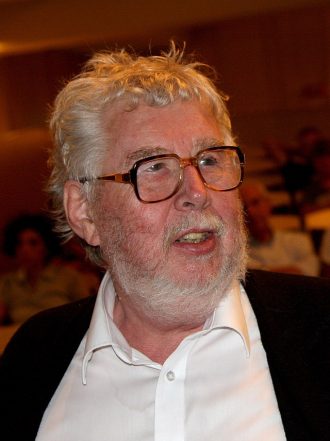
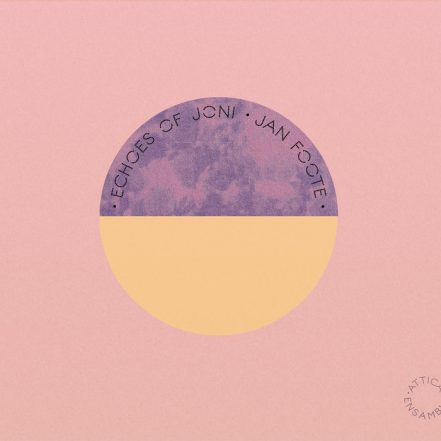
I asked Jan about his piece, Echoes of Joni, which is a loving homage to Joni Mitchell. He described how he was deeply impressed by her voice, but as he gotten older he was able to see her musical influences and style changed over time, almost in parallel. He then described how the likes of her choices of guitar tunings were directly used within his own work. He describes how the work is a stylistic, and musical nod, as opposed to using quotations from Mitchell’s work. Jan also noted how the chordal architecture of the work is rather simplistic, but the use of time stretch (and other effects) made the work feel more ambient and spectral. You can find the album here
We then considered his musical collaborations in Mexico. Jan described how he tried to bring a Mexican ensemble Attica to come to Scotland, though this was hampered by the pandemic. But undeterred he worked in a symposium called Face to Face which allowed them to collaborate long-distance and over a longer period of time. Jan described how important this process was, as it made his relationship with collaborators be filled with a greater sense of trust. Jan also described working with Black Noise ensemble, and how elated he was to be working with an ensemble who deeply appreciated the work and ‘wanted to do it justice’, something he has not always felt working with other ensembles.
After all our discussions about backdrop and growing up, I had to ask Jan about his feeling about being a composer and a proud Yorkshireman. He noted that he hasn’t explored this consciously, he is acutely aware of the feeling of a disconnect between his working-class social groups and ‘classical music’, during his youth in Leeds. Similarly, the feeling about how the North relates to culture, particularly noting how ENO disparagingly described there being ‘enough opera’ in the north because of Opera North, despite it being half the country, is a rather uncanny feeling. Similarly, when I asked about his feeling of his home county, the question of ‘what is Yorkshire culturally?’ is the core issue for Jan; though many would reduce it to ‘rolling hills’.
I then expanded the question into how it felt being English while living in The Hague. He noted how thanks to studying in Scotland, and his friendships in Scotland, he feels more musically connected to Scotland. He also highlighted the similarities between the Scottish environment and The Hague where there is a particularly unique energy. Jan highlighted John De Simone, Linda Buckley, Dave Fennesy, and Colin Broom are all extremely fascinating composers, which few people elsewhere in Britain and so on are doing.
We could have chatted for hours, and the parallels between each of us are extremely numerous, but it was a joy to sit down with Jan to discuss his music. His voice is both unique and is worthy of deep exploration. I also find him an excellent demonstration of what Northern people can do if given funding and opportunity; if the barrier to entry wasn’t what it is currently, there would be more figures like Jan around. The bold power and energy within Jan’s music is remarkably striking, and not comparable to the mainstays of Wigmore Hall or other mainstream classical institutions. Ultimately, those eager to find engaging voices within the communities of Britain, which are severely underrepresented in classical music, will be fascinated by Jan Foote.
More recordings from Jan can be found here