‘The face before you’ is available here
By Jim Aitken
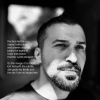
Mohammed Moussa’s latest poetry collection The face before you is published by Leamington Books of Edinburgh. His previous collection Salted Wounds came out in 2022 and was published by another Scottish publisher, Drunk Muse Press of Stonehaven.
Both publishers sought Mohammed Moussa’s work, and his international profile as a poet has clearly been enhanced by his Scottish link. Mohammed remains grateful for this as much as Scotland remains proud of their link with him. The website Bella Caledonia has also given Moussa’s work some valuable space for him to speak.
His latest collection is subtitled To write poetry on genocide, and this subtitle certainly prepares any reader for what lies inside. Theador Adorno once suggested there can be no poetry after Auschwitz, and one can understand the sentiment. Yet 80 years on from Auschwitz we have been witnessing another genocide perpetrated against the people of Gaza.
‘Never again’ should read ‘again and again’. And since no-one has come to the rescue of the people of Gaza, it has been left to poets to speak about the horror. It is a heavy task. Moussa’s poems seek to do many things. Obviously, they bear witness and give testimony, but they also enable the poet to contain his rage that must surely exist. Poetry is the outlet through which Mohammed Moussa has spoken out about the unspeakable.
Another Palestinian poet, Atef Alshaer, said that, ’Poetry is a duty because it records the last stand of the soul.’ This is exactly what Moussa has done in this collection. His poems can read like the last words, the collection a kind of poetic eschatology. Yet, how can the poet take on such an unenviable task and still have a collection that remains poetic and reveals the poet’s craft? This is a challenge that Moussa meets and manages to surpass.
The poem Poets of Gaza explores this challenge:
If you are a poet in Gaza
you must learn how to extract
a buried metaphor
from the rubble of your
demolished house.
These lines take the challenge head on. All the poet has is words and they must be assembled in such a way as to address the genocide but also create a poetic language that somehow rises above the horror. This combination of motives is made particularly clear in the last lines of this poem:
The poet in Gaza washes his hands
in blood and ink.
He hides his wishes and dreams
In fictional words and distant sleep.
Addressing the genocide is a compulsion; it simply cannot be side-stepped or ignored. And poetry is the means that Moussa has chosen to address this. As a journalist, he could have written articles or a book, but prose for him would have been words arranged in different ways, arguments built up and evidence provided in a wholly different way. Poetry, by contrast, is more fluid, more fragile and delicate and can convey the suffering by juxtaposing ideas and allow the reader to feel and experience much more acutely what genocide entails.
Moussa brings this to bear in a short poem, appropriately titled To write poetry on genocide. It reads like an instruction and command. To write poetry on genocide one must:
step on their poem twice a day, and soak their poems in the
blood that stains the hospital tiles. One must tread over their
grave daily, to write poetry about a genocide.
The poet aligns himself here with all the traumas that Gaza endures. He is in the rubble, in the graveyards and the graves, in the bombed hospitals. He is part of all the unbearable suffering, grief and death – but he is also the poet finding means to write about it, searching after metaphors in the rubble.
Recognising the limitations of his dual role as both Gazan and poet of Gaza, Moussa explains the dichotomy of his position. The concluding lines of Lost as an empty prayer on Friday seems to sum this up for him:
The sea cannot wash up our war-worn hearts
and return to us poems
untouched by
the horrors of war.
But we must keep writing, of course. You are compelled to, instructed to. Not only are Gazans dying but so too is Gaza itself. The demented level of destruction seeks also to destroy memory of Gaza altogether. All the bombed buildings, the destroyed schools and universities, the hospitals, shops, bombed out streets, all this devastation also destroys history, identity and memory. It is destruction by design. How do you now define yourself when your identification with your land lies in ruin and rubble?
In the poem Erosion Moussa attempts to address this. He tells us:
Methodically, they seek to obliterate your memories:
a country you once called home …
They chase down every memory you have cultivated or sown,
even if it is the memory of your own demise.
In 2018-19 Gazans became involved in what was called the Great March of Return. They would protest at the border with Israel and send kites over into the Israeli side. These kites would have the names of the towns and villages their parents and grand-parents came from, written in Arabic. This was memory in action. They had been expelled from their land during the Nakba of 1948 but memory had been retained. Memory as protest, memory as resistance.
What Gaza was lies now in the realms of memory. It is a memory that has to be nurtured and never eroded. It must be handed down. The Great March of Return was also the great march of memory. What has happened to Gaza is the attempt to obliterate Gaza completely. The pathology of the occupier seems to be what you cannot control you will seek to destroy. James Joyce lived in exile all his adult life yet he could remember every street in Dublin and would write about the city of his birth. Similarly, the memory of Gaza will be handed down to future generations through an oral tradition not yet in gear. That is a form of resistance to come. It will be the antidote to Trump’s plan for the real estate development he sees in Gaza, built atop the graves of thousands of Gazans. His master plan is a danse macabre.
Moussa’s poems also reveal in places forms of resistance even in genocide. He marvels at the mothers who continue to attend to their children while death is all around them. The poet dies every death in Gaza but can still say as he does in ‘This morning, I’m not ready’ that he is not ready ‘to die again’. This is resistance. Though Moussa feels lost and impotent at the atrocities inflicted on Gaza and her people, he still manages to call out those responsible, albeit indirectly in the poem After death:
I am lost as the street names in Gaza,
as quiet as its inhabitants,
and as hollow as the condemnations of the free world.
In the title poem ‘This face before you’ Moussa seems at his most personal. He says:
this face before you
marred with blood
and unseen wounds,
bears the scars of hope and peace that the world pledged to
me.
For us, not just as readers but as fellow human beings, we must seek through our solidarity that these scars can somehow be healed. Certainly, poetry can be a support, an ointment to cover the scars, and a balm to help us deal with such pain suffered by so many. Poetry can also aid the poet and help him through the dark nights. Poetry seems all that we have and in Mohammed Moussa’s work we have poetry of an exceptional kind. Moussa has confirmed that poetry is indeed the last stand of the soul.
It is a stand that has been written in English and not Arabic. English is the language of the oppressor who has made this genocide possible and it is written so that those responsible can read of their crimes. ‘The face before you’ is a book of lamentations, of dialogues with the self, of poetry as pain. It is also as beautifully rendered in the language of poetry as it is possible to be. If it could be turned into music it would be a pibroch on the bagpipes, as sad and painful as the poems on the page yet ultimately deeply moving with a peculiar beauty all of its own.