Facebook Twitter Instagram
  • Home
  • About Us
  • Arts Hub
    • Architecture
    • Fiction
    • Films
    • Life Writing
    • Music
    • Poetry
    • Theatre
    • Visual Arts
  • Culture Hub
    • Clothing & Fashion
    • Cultural Commentary
    • Eating & Drinking
    • Education
    • Festivals/ Events
    • Religion
    • Science & Technology
    • Sport
    • TV, internet and other media
  • Contributors
  • Books
  • E-books
  • Support Us
0 0
Shopping cart (0)
Subtotal: £0.00

Checkout

Free delivery in the UK.

  • Home
  • About Us
  • Arts Hub
    • Architecture
    • Fiction
    • Films
    • Life Writing
    • Music
    • Poetry
    • Theatre
    • Visual Arts
  • Culture Hub
    • Clothing & Fashion
    • Cultural Commentary
    • Eating & Drinking
    • Education
    • Festivals/ Events
    • Religion
    • Science & Technology
    • Sport
    • TV, internet and other media
  • Contributors
  • Books
  • E-books
  • Support Us
Facebook Twitter Instagram
0 0
0 Shopping Cart
Shopping cart (0)
Subtotal: £0.00

Checkout

Free delivery in the UK.

Return to previous page
Home Blog Arts Hub Films

The Third Man

The Third Man

14 December 2015 /Posted byMike Quille
Post Views: 2,428

Mike Quille unearths the radical politics and art in Carol Reed’s great thriller.

In an uncanny parallel with today, many in the Britain of 1949 were becoming increasingly disillusioned with the Labour Party’s policies for economic austerity at home and support for US imperialism abroad. Those concerns rumble below the surface in The Third Man, first screened that year. Written by Graham Greene and starring Orson Welles, the film is set in a post-war Vienna divided into zones of influence by the victorious but mutually suspicious Allies. It is a bombed-out, rubble-strewn city of darkness and disorder, emphasised by unsettling camera tilts and the distorted, wide-angle shots of landscapes, interiors and characters.

The film’s central character Harry Lime (Welles) is a US businessman criminally responsible for the death and chronic ill health of patients through diluting penicillin in the search for greater profits. Like transnational corporations, his business activities are lucrative and lawless — he avoids detection by using the city’s sewer system.

In a key scene, he literally employs high-flown rhetoric from the top of a Ferris wheel to justify making profits at the expense of the people far beneath him. Renaissance wars produced great art and philosophy, he argues, whereas “brotherly love, peace and democracy” in Switzerland brought “nothing but the cuckoo clock.” His words are a clear allegory of post-war US big business, a voracious, cynical capitalism cloaked — like its British forebear — in a veneer of culture and civilisation.

Writer Holly Martins, the film’s other main character, is a friend of Lime’s. The scripts he pens, where the classic cowboy strategy of solving problems with guns and calling it morality always prevails, implicitly reference US cold-war policy. Meekly followed by the Labour government, it dashed post-war hopes on the left that alliances with working people across Europe and the Soviet Union would be the best guarantee of lasting peace.

Lime has invited him to Vienna to write promotional publicity for his criminal enterprises — again, an allegorical expression of how advertising copywriters and other cultural workers were being commercialised and suborned to the US post-war project of promoting consumer capitalism while claiming the moral high ground of “freedom of the individual” over attempts in Europe to build fairer, socialist societies.

The Third Man is the Cold War in microcosm and a critique of its politics, accurately capturing the tension, mistrust and fear characteristic of Europe post-1945. Characters and their relationships assume the symbolism of economic and political forces without losing dramatic credibility as people in any way. The camerawork, the jaunty ambivalence of the music and the sombre shadows all create a sense of tension and uneasiness and the menacing, noirish atmosphere of betrayal and disappointment powerfully expresses the disappointment, disillusion and dissent amongst the British working class as the government drifts rightwards in its foreign policy and fails to challenge and change Britain’s rigid class structure.

Reed’s direction and all of the actors are outstanding but the most memorable performance is Welles’s brave portrayal of Lime, informed by his own radical politics and artistry, as was also the case with Greene. Lime’s persona brilliantly encapsulates the arrogance and violence beneath the surface of smooth-talking, charismatic capitalists. He’s a conscious recreation by Greene and Welles of Kurtz, the cynical and persuasive trader and tyrant in Joseph Conrad’s Heart of Darkness. Lime, who makes money from mutilated children in Vienna, personifies the predatory capitalism of post-war US big business just as Kurtz, who enslaves and mutilates workers in the Congo rubber plantations, personifies the murderous colonialism of European empires.

The Third Man’s protagonist is thus the perfect symbol of the rising power of US post-war corporate capitalism. It’s no wonder that the US authorities bundled Greene out of the country in 1952 as a suspected communist or that right-wing Hollywood studio bosses regarded Welles as box-office poison and blacklisted him for years afterwards. By behaving in fact as Lime does in fiction, they could not have chosen a better way of demonstrating the truth of the radical politics and art behind this great film.
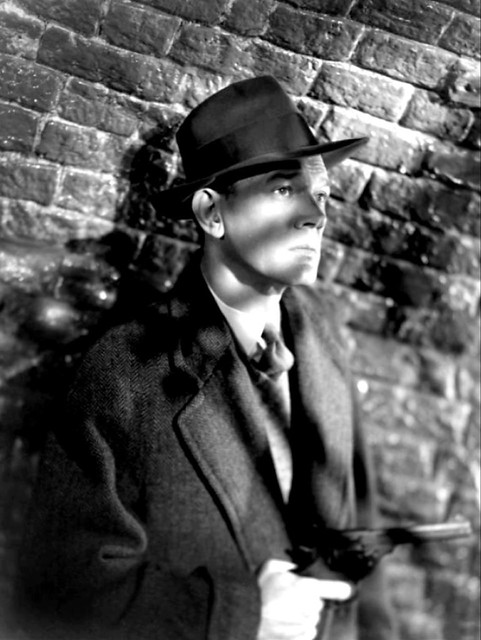
Joseph Cotton; in''The Third Man'' 1949
Tags: Graham Greene, Orson Welles, Third Man
Share Post
  • Twitter
  • Facebook
  • Pinterest
  • Mail to friend
  • Linkedin
  • Whatsapp
Art, activism and the cultural...
banksy
Little Mosque Poems

About author

Avatar photo

About Author

Mike Quille

Mike Quille is a writer, reviewer and chief editor of Culture Matters.

Other posts by Mike Quille

Related posts

Arts Hub
Read more

Exploring ‘The Silent Run’ by Marta Bergman: A Standout at This Year’s Cairo Film Festival

Posted byRita Di Santo
Post Views: 196 In cinemas late November/early 2026 By Rita Di Santo With a captivating poetic opening, director Marta Bergman chronicles the journey of a... Continue reading
Arts Hub
Read more

The 46th Cairo Film Festival: Review of ‘One More Show’

Posted byRita Di Santo
Post Views: 322 The Free Gaza Circus By Rita Di Santo As Israeli airstrikes in Gaza continue, claiming lives and escalating tensions following the ceasefire—a... Continue reading
Arts Hub
Read more

An incisive critique of Gilded Age capitalism: ‘The House of Mirth’ by terence Davies

Posted byAlan Price
Post Views: 180 DVD and Blu-Ray from BFI By Alan Price “Why can one never do a natural thing without screening it behind a structure... Continue reading
Arts Hub
Read more

Gaze, identity and memory: Review of “Portrait of a Lady on Fire”

Posted bySrijani Dutta
Post Views: 896 By Srijani Dutta The film “Portrait of a Lady on Fire” is a romantic movie that celebrates the homosexual love and sexual... Continue reading
Cultural Commentary
Read more

Our Culture: RIP British Working-Class Cinema (1935 – 2025)

Posted byBrett Gregory
In our ongoing Our Culture Series, we examine how art and media reflect, and too often distort, the realities of working-class life in Britain. In... Continue reading

Categories

  • About us
  • Architecture
  • Arts Hub
  • Clothing & Fashion
  • Cultural Commentary
  • Culture Hub
  • Eating & Drinking
  • Education
  • Festivals/ Events
  • Fiction
  • Films
  • Life Writing
  • Life Writing
  • Music
  • Poetry
  • Religion
  • Round-up
  • Science & Technology
  • Sport
  • The 1917 Russian Revolution
  • Theatre
  • TV, internet and other media
  • Visual Arts
Recent Popular

Fuckin Lefties

9 December 2025 Comments Off on Fuckin Lefties

HEARING FROM GAZA, SPEAKING TO GAZA, weeping ...

8 December 2025 Comments Off on HEARING FROM GAZA, SPEAKING TO GAZA, weeping for Gaza: Review of Poetry about Palestine

Painting and Resistance: Reviews of ‘The Histories’, ...

8 December 2025 Comments Off on Painting and Resistance: Reviews of ‘The Histories’, ‘One Big Animal’, and ‘american still life’

Our Culture: Democratising the BBC

8 December 2025 Comments Off on Our Culture: Democratising the BBC

Contributors to Culture Matters

17 October 2017 Comments Off on Contributors to Culture Matters

The radical imagery of William Blake

2 March 2021 Comments Off on The radical imagery of William Blake

Music and Marxism

7 June 2016 Comments Off on Music and Marxism

When the Council owns the building you ...

1 December 2024 Comments Off on When the Council owns the building you live in

Tags Cloud

bbc Black Lives Matter Boris Johnson Brecht capitalism communism Covid19 Cultural democracy cultural struggle Donald Trump Engels English Revolution Gaza Gaza genocide Genocide in Gaza George Orwell Hitler IDF Iran Israeli bombing Israeli war crimes jeremy corbyn Jesus Karl Marx Keir Starmer Marx marxism Miners' Strike Miners' Strike 1984 Netanyahu Netflix Palestine Action Raymond Williams Reform UK refugees Rishi Sunak Russian Revolution Shakespeare socialism Spanish Civil War Starmer Starvation in Gaza by Israel Trump Ukraine william morris

Search

Print

follow us on our Social Networks

Facebook Twitter Instagram Youtube

Copyright © 2016 - 2024 Culture Matters Co-operative Ltd; FCA Registration No: 4347; Registered office: 30 Glenbrooke Terrace, Gateshead, NE9 6AJ. All rights reserved.

Home
Support Us
Books