PL Henderson introduces the #WOMENSART project, which demonstrates how women have continued to create art, often as radicals, rebels and pioneers, despite the social, cultural and economic restrictions placed upon them.
In 1972, Austrian artist VALIE EXPORT created a small manifesto entitled ‘Women’s Art’ in which she highlighted the cultural and social implications of Western male domination of the arts. The artist stated that such artistic authority created an all-consuming visual language both informing and shaping human perceptions. Whether by brush, camera or any other media, she concluded that this consequently produced a skewed and man-made reality. In an era of second wave feminism, civil rights activism, early post-colonial analysis and gay liberation, VALIE EXPORT’s writing aided a growing cacophony of confrontations with the elitist, white, male status quo.
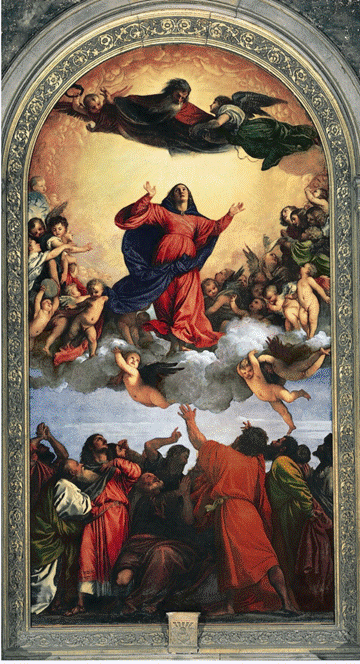
The recording of history has always been used as a vehicle for projecting specific viewpoints, often as a means of political, social and cultural control. Western art history, as a product of Western white men, is perhaps unsurprisingly a chronological celebration of the European male. As a singular congratulatory narrative, it has been criticised for omitting acknowledgement of a pertinent subtext of systematic gendered exclusion and Eurocentric ideological domination. So embedded is the idea of an innate Caucasian and masculine capacity for greatness within the arts (and, of course, beyond), without a nod to the weighted relevance of context, that inevitably a lasting and biased cultural legacy still exists.
In the late twentieth century, feminist art historians and theorists began to highlight the insight that to understand the gendered assumptions reinforcing ideas of ‘art’, it is essential to explore the work women create in relation to their male counterparts. Rather than painting female artists into a (more) marginalized corner, a common criticism, naming women’s work is a means to recognise and reclaim it from an often hostile culture of invisibility and erasure. Art is art and artists are artists, yes, but there is also a gendered historical, social and cultural framework in which it is produced and received, which has ongoing implications on issues of value and recognition. The masculine term ‘master’, for instance, and the ideal of lone male genius, still underpin the omnipresent Western concept of ‘the artist’.
Intended to counter such pervasive mythology, EXPORT’s feminist evaluation created waves that would add to the growing tempest of the Women’s Liberation Movement. The artist highlighted male dominance in the arts as entrenching gendered norms in wider society, while stating that a lack of autonomy for women in representation was simultaneously insidious and normalised. For centuries notions of womanhood were presented to the world by artists who had no knowledge of what it is to be female. Linking the lack of autonomic women’s representation to more general female oppression, EXPORT argued that this has enabled ‘woman’ to become a vessel for male fantasy and control.
Over the latter part of the 20th century, academics and theorists continued to challenge the Western male viewpoint as the template for art history. The view that women’s absence from the canon is due to their incapacity for genius has been contested, citing a necessity to re-evaluate context, such as consideration of social structures, educational and economic access, patronage and resources. Examination of authorship and representation, reception and evaluation, utilising gender as a tool of analysis, has also explored how genres, conventions and techniques became associated with evolving cultural ideas of femininity and masculinity. All, in turn, have been considered in terms of the sanctioning of social power relations, and a lasting ideology surrounding the artistic production of both men and women.

Despite theorists challenging an inherent misogynic environment pervading the arts and its history, the ongoing activism of feminist pressure groups such as the Guerilla Girls, reflect that the 21st century has not yet fully addressed the sexism and racism of the mainstream art world. For example, of the major US museums criticized for giving zero solo exhibitions to women in 1985, each gave only one solo show to female artists in 2016. A legacy from EXPORT’s era of early post-modernist challenges to the establishment is one of organised self-sufficiency, as feminist groups, black arts movements and grassroots communities set out to create their own independent galleries, studios and publicity machines, thus bypassing the institutionalised and oppressive limitations of the established systems of art. Such inventiveness translated to the modern era, in turn, can be exemplified by the use of social media as an invaluable contemporary tool enabling access and promotion for those who have been unjustly marginalized by society.
My own online project #WOMENSART was created with the simple premise of raising the profile of women artists. By highlighting their diverse historic and global work, the project clearly reflects that ‘women’s art’ is not a category in itself, yet it does indicate genres to which women are more culturally and socially linked. #WOMENSART also creates an integral opportunity to promote women’s self-representation and to explore the female rather than much more scrutinized ‘male gaze’. Commonly women artists have employed strategies to support their own presentation as active subjects, as opposed to passive objects of male consumption. In a contemporary pornography-saturated internet culture, female-centric perspectives are still rare, still considered daunting or radical, and yet are an obvious antidote to androcentrism (a term introduced by early 20th century feminist writer Charlotte Perkins Gilman to describe the normalized practice of placing male human beings at the center of culture and history).
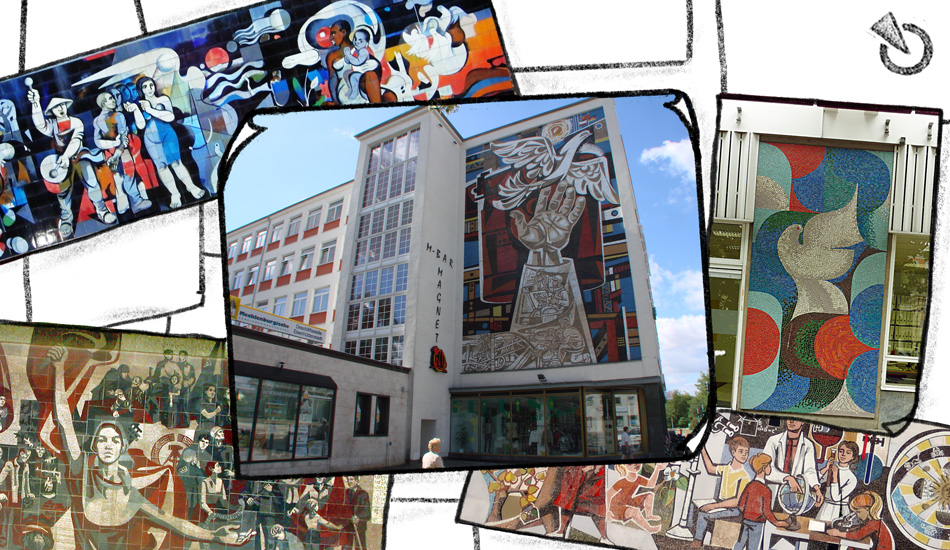
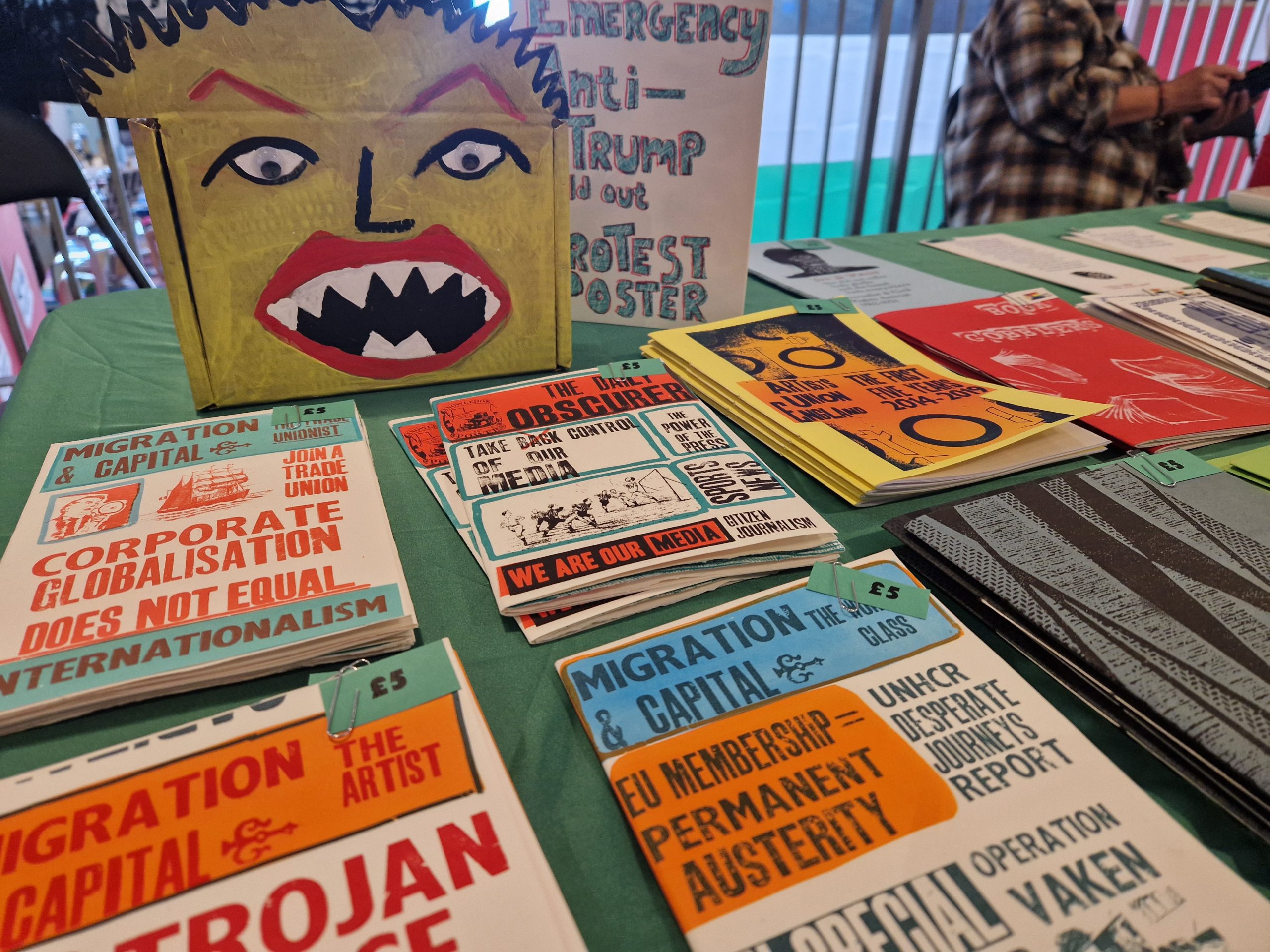
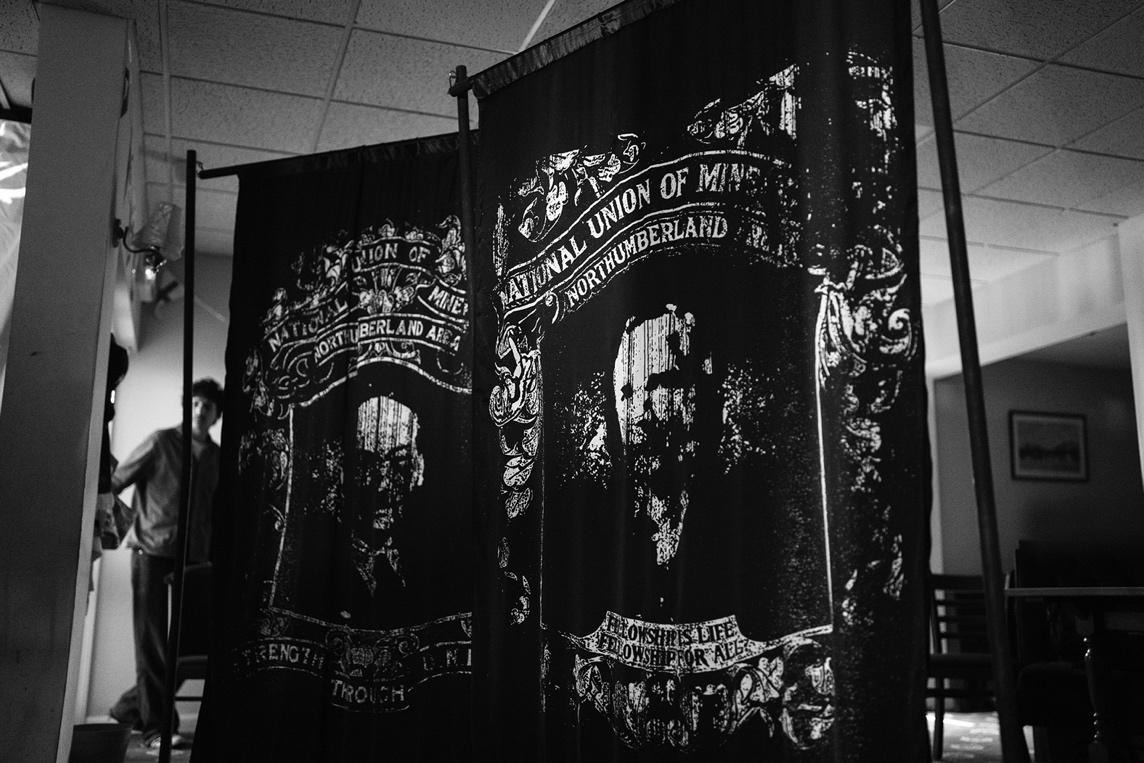
In turn, specific exploration of the artwork of women has enabled insights into areas including capitalism, migration, class, globalization, ethnicity, disability and so on, from an unusual, uniquely female perspective. In doing so this has exposed a subtext of experiential and biological connections between women, as issues relating to girlhood, motherhood, abortion, body image, pregnancy, infertility, social role, violence against women and so on, are highlighted as common historic and global themes in their work. In addition, the #WOMENSART project has enabled consideration of genres such as textiles, ceramics, zines, crafts and street art rather than focusing solely on the Western definition of ‘high art’ (sculpture and painting), therefore challenging the hierarchical limitations of a system historically based on discrimination rather than ability.
Utilising social media as an outreach facility has, in turn, proved quite a leveller, as it provides access to/for artists, genres and audiences that the establishment may ignore. The autonomy of the format enables an online ‘curator’ to highlight (unashamedly) specific promotion. This avoids the accepted tokenism of space for a few female artists amongst a majority of males, so often the formula of contemporary mainstream presentation. Online galleries also do not necessarily require commercial success, in which case there is no reliance on the ‘blockbuster exhibition’ inevitably featuring established and safe ‘superstar’ (typically white male) artists. The relative success of such online initiatives, therefore, perhaps lies in the fact that they are free to challenge expectations and assumptions, generating genuine intrigue.
As the #WOMENSART project demonstrates, despite the social, economic and cultural restrictions imposed on them, women have continued to create, often as radicals, rebels and pioneers. VALIE EXPORT’s manifesto, however, remains a valid and relevant document in terms of ongoing white male control of the arts. Her rallying call for women to produce their own means of expression, thus influencing social consciousness, is being answered, as female artists, curators, filmmakers, media editors and so on are creating a growing impact on culture. In fact, in order to curb female erasure and their continuing struggle for human rights, enabling women’s own voices, whether by brush, camera of any other media, remains vital. The consequence of which could be to overturn EXPORT’s disturbing conclusions on the progressing construction of a male-centric reality, thus facilitating a culture of human truths.