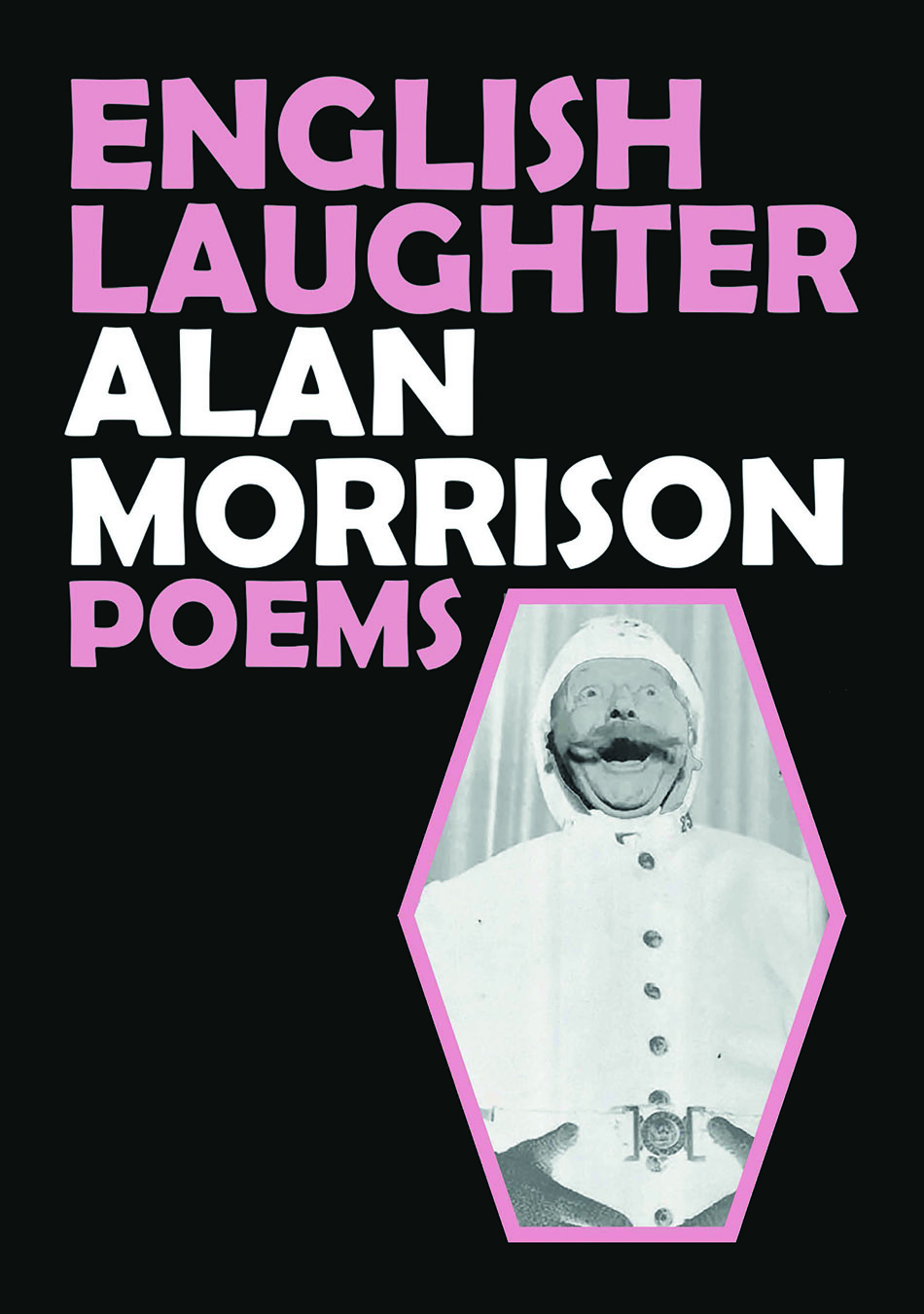
Cover image is adapted from a publicity still of English
music hall performer Charles Penrose posing as the
eponymous ‘Laughing Policeman’ (Columbia Records, 1926)
In Alan Morrison’s fourteenth poetry collection, and his second with Cyberwit, war and conflict are tackled, both contemporary and historical, and how cultural figures get caught up in them. There are poems concerning how war trauma affected men of letters after active service, those who survived it—First World War poets Ivor Gurney, David Jones, G.A. Studdert Kennedy (‘Woodbine Willie’)—and those who did not—Spanish Civil War poet Christopher Caudwell, and Second World War poet Drummond Allison.
There are verse-studies of two wildly different figures who each tried to escape their all-encompassing reputations, French poet prodigy Arthur Rimbaud, and English scholar-turned-desert idol T.E. Lawrence (‘of Arabia’). There are valedictions to Welsh luminaries, poet Dylan Thomas, and screen actor and supreme poetry reciter, Richard Burton. A more incidental theme concerns sound and hearing—bells, telephones, trumpets, tinnitus, and music, including tributes to filmic composers Jerome Moross and Malcolm Arnold.
Most fundamentally, English Laughter is concerned with the resurfacing of fascism and the normalisation of racism across the twenty-first century West, with poems addressing the rise of Faragism and the far right ‘Raise the Colours’ flag campaigns in the UK. As with much of Morrison’s work, there is a hauntological aura of rose-tinted pasts and long-postponed futures.
www.youtube.com/@EnglishLaughterPoems/shorts
Some sample poems from the book
His Dreams Empirical
i.m. Thomas Spence (1750-1814)
Thomas Spence span radical ideas far ahead of powdered-wig times
He inhabited—manifestos promoting common ownership
Of land under ‘democratic parishes’ administering rents
Mandated as ‘social dividends’, &, anti-landlordism:
Advocating universal income as compensation for commons
Sequestered as private property by ancestral robber Barons.
Saloop! Ambrosial brew flavoured with sassafras—utopian soup
Poured by Spence into cups from makeshift stalls, or storefronts,
Edifying drink supplementing his polemical penny pamphlets;
Notwithstanding proscription, & sporadic imprisonment, his social
Conscience never left him—born & buried in penury, his dreams
Empirical pick-me-ups of unripe Republics, postponed Spensonias.
Left Behind Book Club
1.
Musty emporiums display casebound relics
Of class-conscious curios: a scoop of Victor
Gollancz’ burnt orange Left Book Club Editions
Stood like dusty bricks behind a glass partition,
Dialectical antiques of the proto-welfare state,
Rubicund shrubs once published & circulated
Among amicable libraries of self-improving minds;
But now these decrepit card-&-paper spinsters,
Foxed widowers, are grown stiff in their blanched
Cheesecloth covers, embalmed air-tight in state,
NOT FOR SALE TO THE PUBLIC reverberates
Self-sabotaging rubric, missed opportunities
To proselytise social gospels to a rapt proletariat
While ideas inside them were still fresh to germinate.
2.
Now those tomes look quixotic, smell sourly
Odourless like long-mummified bandages
Once the wounds have rotted beyond cognition,
Beyond the need for healing, past putrefaction,
Encrusted into gore-red colophons, crushed-rose
Emblems, bossages of haemoglobin, crimson
Sealing waxed apocrypha, political poultices
Decomposed to brittle mottled tissue…
The camphor of stumped polemic dissipates
To simplistic platitudes, purple resins
Of wilting potpourri, the past as represented
In a bowdlerised obliterating bouquet,
A redacting scent that edits out the detail
But retains a mystique of the elliptical.
English Laughter
Can you hear that caterwaul like a rattling can?
That’s the sound of English laughter,
It rattles like phlegm & Aspergillus in the lungs,
It’s contagious, & sometimes tubercular;
It’s slightly deranged, occasionally hysterical,
Unfortunately infectious to those who hear it,
& always deeply puzzling unless it is satirical:
Because there’s no amusement when there’s no exit
From the dead-end arcade of coin-pushing slot machines—
So little to laugh about, at least, authentically;
Yet the English always laugh at everything,
They effortlessly find something to tickle them pink;
They are famed for their riotous sense of humour,
While their sarcasm commands diplomatic respect,
Tongue firmly in the cheek with stiff upper lip—
From fag-yellow Music Hall to End-of-the-Pier,
Saucy postcards, Punch & Judy, Philistine cheer
(The Laughing Policeman trumps The Laughing Cavalier),
Stand-up clubs, grubby pubs & a gottle of geer—
Tristram Shandy, Lewis Carroll, Swift, Wilde, Edward Lear,
Noël Coward, Charles Jolly, George Formby, Max Miller,
Norman Wisdom, Thomas Handley, Ronald Shiner, Tommy Trinder,
Frankie Howerd, Talbot Rothwell, Tommy Cooper—
& so many other garden-Variety entertainers
(Only lugubrious would-be highbrows in homburgs
& Bertrand Russell-thumbing bohemian bedsitters
Acquitted themselves, removed their wood veneers)—
The Anglo-Saxon grin is slightly unhinged;
The English comedy is a festering tumour—
KEEP SHTUM & CARRY ON through immiseration
Waving paper flags into bunting-strung oblivion—
Bowed to blue-blood crowns, spoon-fed by red-top clowns,
Migrant-claimant scapegoats for targets in fairgrounds—
Jam tomorrow promises crease them up each time
Spouted by some straw boater in seersucker stripes—
After initial resistance, permanent austerity
Is first met with hysteria, then unabashed hilarity,
Ventriloquists’ dummies wheeze Goodnight Vienna
Through clenched wooden teeth tar-stained burnt sienna,
Now Palatine Park has become the new Prater—
& after least resistance, a fair bit after,
Fascist attractions are met with English laughter.
English Laughter can be ordered from the publisher Cyberwit (India/US) here