by Brett Gregory
I first encountered David Archibald, Professor of Political Cinema at Glasgow University, in 2023 after I reviewed his latest publication about the iconic British film director, Ken Loach.
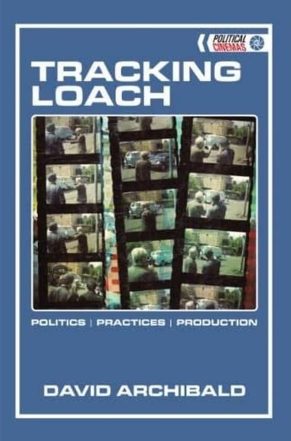
My review of ‘Tracking Loach: Politics, Practices, Production’, published by Edinburgh University Press, can be read here: https://tinyurl.com/523cmjku
or listened to on Spotify here:
Delighted with the review, David and I exchanged a number of emails between Glasgow and Manchester, and I soon discovered that not only was he an hard-working academic committed to the future of Scotland’s film culture, but also the founder and lead singer of a radical post-punk, folk-rock band called ‘The Tenementals’.
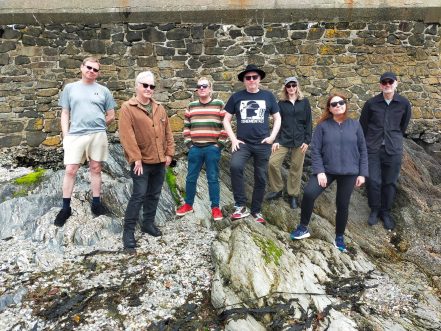
As a wayward, well-read, working-class waif from the 1970s, I have always been drawn towards culturally rebellious men – from George Orwell to Charles Bukowski, William Friedkin to Ken Russell, Aneurin Bevan to Tony Benn – and so I was fascinated by what David and ‘The Tenementals’ were getting up to.
Consequently, I interviewed him at length about the creative and political origins, values and trajectory of his band and, by doing so, learned of the strong historical ties between Scotland and Spain and, in particular, Glasgow’s active support for the Republican government during the Spanish Civil War between 1936 and 1939.
This interview, ‘Songs of Protest: Scotland, Spain, and Santiago’, can be read here:
or listened to on Spotify here:
‘The Tenementals’ debut album, ‘Glasgow: A History (Vol I of VI)’, was released on vinyl, CD and digital download on 22 November 2024 by Strength in Numbers Records, a label which specialises in Glasgow-based artists.

I personally found this 9-track album to be learned and lyrical, industrial and ideological, pastoral and polemical and, much more importantly, highly original.
You can find out more about its release on the Strength in Numbers Records’ Bandcamp page here:
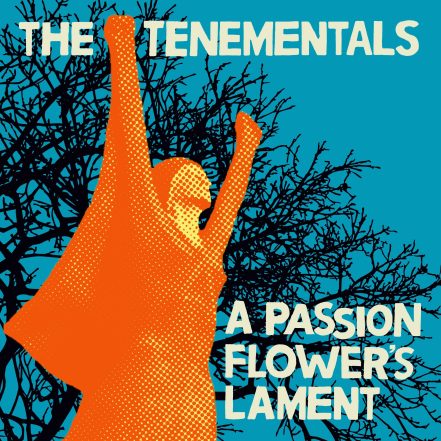
One of their songs, ‘A Passion Flower’s Lament’, a lilting elegy about the complexities of the Spanish Civil War – including the in-fighting which occurred between those who were in the thick of fighting fascism – was re-released on April 1st 2026 along with a new video featuring a montage of archive footage from the historical conflict.
It should be noted that April 1st is the anniversary of the day Franco, the right-wing military dictator, declared victory in the civil war.
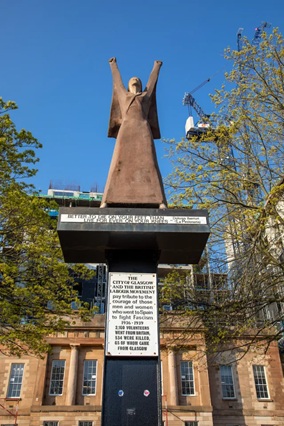
The narrative of the song is told from the perspective of the statue of the Spanish Republican politician and anti-fascist leader, Dolores Ibárruri (‘La Pasionaria’), which was erected on Clyde Street in Glasgow in 1979. Moreover, carved into its plinth is the renowned revolutionary rallying cry for freedom, dignity, and defiance against oppression:
‘Better to die on your feet than to live on your knees.’
As David Archibald observes:
‘The video [also] includes footage from within the walls of Castle de Castelldefels, near Barcelona, which was used during the civil war to house dissident members of the International Brigades, including Alec Marcowitch, a Jewish Communist from The Gorbals [a district in Glasgow] who arrived in Spain in October 1937.
‘Marcowitch came into conflict with the British battalion commanders on his own side after he raised complaints about what he saw as the different treatment and privileges that they received in comparison to the rank-and-file soldiers. Marcowitch was subsequently disciplined and spent two terms in the make-shift prison.’
Of course, it is no coincidence that this song has been re-released in direct response to the seemingly unremitting rise of far-right principles and policies which are currently delineating the dubious democratic governments in both the UK and the US, degenerating the day-to-day desires, dreams and destinies of millions of conscientious citizens around the world as a consequence.
Once again, however:
‘Better to die on your feet than to live on your knees.’
‘A Passion Flower’s Lament’ can be watched and listened to on YouTube here: