
In this edition of Our Culture, Geoff Bottoms examines the Church as a cultural and political institution, tracing the gap between the radical inclusivity of the early Jesus movement and the hierarchical forms that later emerged. Starting from a simple welcome notice in a Cornish church, the piece asks whether Christianity can recover a more democratic, justice-centred faith rooted in everyday life.
St German’s Priory is a large Norman church in the village of St Germans in south-east Cornwall. In its porch is the following notice:
We extend a special welcome to those who are single, married, divorced, widowed, gay, confused, filthy rich, comfortable or dirt poor. We extend a special welcome to wailing babies and excited toddlers. We welcome you whether you can sing like Pavarotti or just growl quietly to yourself. You’re welcome here if you’re just browsing, just woken up or just got out of prison. We don’t care if you are more Christian than the Archbishop of Canterbury, or haven’t been to church since Christmas ten years ago.
We extend a special welcome to those who are over 60 but not grown up yet, and to teenagers who are growing up too fast. We welcome keep-fit mums, football dads, starving artists, tree-huggers, latte-sippers, vegetarians, junk-food eaters. We welcome those in recovery or still addicted. We welcome you if you are having problems, are down in the dumps or don’t like ‘organised religion’. (We’re not too keen on it either!) We offer a welcome to those who think that the earth is flat, work too hard, don’t work, can’t spell, or are here because granny is visiting and wanted to come to church. We welcome those who are inked, pierced, both or neither. We offer a special welcome to those who could use a prayer right now, had religion shoved down their throats as kids or got lost on the coastal path and wound up here by mistake. We welcome pilgrims, tourists, seekers, doubters ….. and you!
What a wonderful vision of an inclusive Church, yet the present reality can seem so far from that early Jesus movement, which arose in response to the class-divided, exploitative agrarian society of that time, dominated by a ruling imperial elite. Jesus was a fervent and charismatic religious leader who offered a radical vision of a new world order, ruled in the interests of the poor and the oppressed. Jesus expressed this in terms of the “Kingdom of God,” which in turn threatened the interests of the ruling class and led to his crucifixion.
While the Emperor Constantine ended the persecution of Christians with the Edict of Milan in 313CE, following his conversion to Christianity, the Church quickly became entwined with the state. The Catholic Church already had a well-established hierarchy, but now it had the blessing of the imperial state, matters of faith and order quickly became formalised and institutionalised, to the point whereby it was transformed into a power structure in its own right, alongside that of the secular power with which it was intertwined.
This goes some way to explaining the evolution of the hierarchical and patriarchal Church, and its historic role as the spiritual arm of the state, reflecting and reinforcing the interests of the ruling class, yet the different expressions of church following the Reformation in the sixteenth-century have produced systems of governance that are closer to the spirit of the Christian Gospel.
Democratic decision-making
During the Commonwealth of 1649 to 1660 the hierarchy of the Church of England was abolished and replaced by a form of congregationalism, while religious pluralism led to other denominations, such as the Baptists and the Quakers, who were similarly non-hierarchical. Although the Anglican hierarchy was restored in 1660, it wasn’t until 1919 that the Church Assembly involved the laity in the Church’s decision-making process. This was replaced by the General Synod in 1970 with its three Houses of Bishops, Clergy and Laity, all requiring a majority vote, although its measures still have to be agreed by Parliament.
Similarly, the annual decision-making Methodist Conference is democratically represented by clergy and laity from the local churches, circuits and districts, although it elects its president and vice-president to serve for one year, while each local Baptist church is independent and self-governing, supporting one another through voluntary associations. On the other hand, the United Reformed Church has a three-tier conciliar system with authority held by councils rather than a single leader, while Quakers make decisions collectively through discernment and consensus.
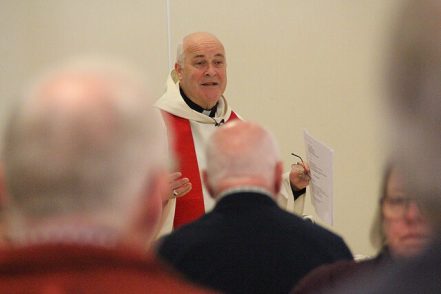
Both the Roman Catholic and Eastern Orthodox Churches are hierarchical, in that authority rests with the bishops. In the West the Pope has supreme authority as the successor of Peter, while Patriarchs of national churches in the East are elected by Synods of Bishops, with the Ecumenical Patriarch of Constantinople as first among equals.
Things are beginning to change in the Roman Catholic Church with the synodal process launched by the late Pope Francis. This aims to bring bishops, clergy and laity together to listen to one another and discern the way forward for the Church. It was a process that began in October 2021 culminating in two major assemblies of bishops in October 2023 and 2024. This is currently in a three year phase focusing on the evaluation and implementation of the Synod’s final document, leading to a major Vatican Assembly in 2028.
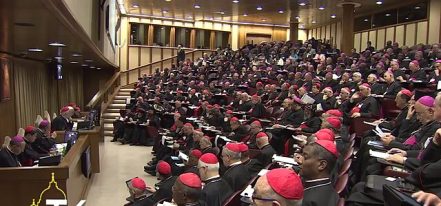
Meanwhile a synodal way of working is now seen as the way forward for the whole Church although there are disagreements on how that might be organised. The recent differences of opinion between the more progressive German bishops and the more conservative Vatican power structure indicate that it won’t all be smooth sailing. Yet dialectically the present polarisation within the Church between the traditionalists and the progressives could lead to a transformed and more dynamic Church that is true to its roots yet constantly open to movement and change. In this way the faith it professes and practices would be grounded continually in contemporary material reality. Certainly there is a case here for devolving more power from the centre to the local diverse churches along the lines of subsidiarity, while safeguarding the unity of the whole Church.
A church for the poor
Yet there is still a long way to go from the religious Left’s point of view if democratic socialist principles are to be applied to the Catholic Church in particular. Surely this must involve a more diverse and inclusive Church that reflects the radical nature of that early Jesus movement that wasn’t afraid to overturn the existing order. A Church that truly exercises “a preferential option for the poor” must first assess if it it is still fit for purpose, and that requires the kind of bold action we see in the early Church before it became intertwined with secular power structures.
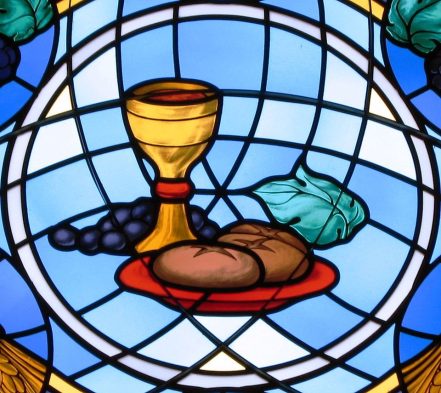
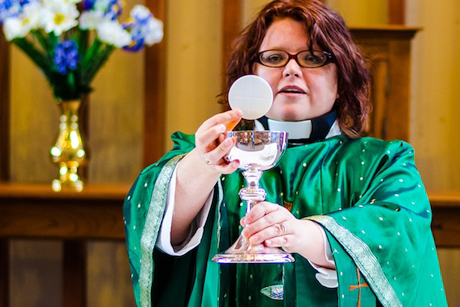
A good start would be to recognise the priesthood of all the baptised, and to move away from the clericalism that still dominates the thought and praxis of the Church. Mass should be seen as the celebration of the whole Church, with the priest presiding, rather than exercising some kind of special power in consecrating and offering the bread and the wine, which are believed to signify and convey the risen presence of the crucified Jesus of Nazareth. At the end of the day, faith sees the Eucharist as the action of the same Jesus working through the assembled People of God, who are celebrating with and through the priest as equal members of the Church.
Majority voting on parish and diocesan pastoral councils, with the power to elect bishops, together with greater transparency and accountability in matters of finance and leadership, would give all members of the Church the sense of truly belonging and having a real voice. As would allowing both lay men and women to preach, conduct Services of the Word with Holy Communion, take funerals, and lead parishes. Then there needs to be pastoral care in every parish for members of the LGBTQ+ community, and survivors of abuse by trained members of the congregation. And why not provide ceremonies recognising the commitment that same-sex couples make to one another, whether it is a blessing of a civil partnership or a marriage, or even more controversially a marriage itself? As for married clergy, the principle has already been conceded in some parts of the Church, so why impose celibacy?
When it comes to the vexed question of women’s ordination, a commission already exists to look into the possibility of women deacons, and it is also one of the areas identified by the recent synodal process. While Pope Benedict XVI ruled out the possibility of women priests for good, a ruling which was confirmed even by the late Pope Francis, this must never be the end of the matter. The argument that Jesus became a man, and therefore priests who represent him must be a man, is fallacious, as Christians believe that Jesus, first and foremost, became a human being. In the context of his day he could not have been anything other than a man, although his attitude to women was revolutionary at that historical juncture. The positive experience of other churches which ordain women must surely be taken into account, although many women priests still suffer abuse and discrimination even after thirty years since the first woman was ordained. Yet again the Church, defending its patriarchal authority, reflects the oppression of women in a class society based on exploitation.
A unified but diverse and inclusive Church
In conclusion, the future must lie in all the churches coming together in their rich diversity if the radical programme of the Jesus movement is to be fully realised in making another world possible. While there may be certain contentious issues still keeping Christians apart, there is more that unites them than divides them, and the ecumenical movement has made steady progress on many fronts. In many ways it has matured from a rather utopian vision of a monolithic church, that has never existed, to one where Christians walk together, enriched by each other’s traditions, seeking that outward unity for which Jesus prayed while working together on matters of social justice.
Meanwhile relations between individual churches have advanced through agreed doctrinal statements, leading to a deeper understanding of one another, a shared concern for peace, justice and the environment, resulting in positive action, local ecumenical partnerships committed to providing a strong witness.
There is much to celebrate while recognising there is still some way to go. The sharing of each other’s places of worship, experiencing each other’s ministries, and participating in the rich evolving tapestry of the many different ways of worship, would be a good place to start, and provide a powerful witness to a broken and divided world looking for the liberation of that early radical Jesus movement.
Finally, how can Christian churches intervene more effectively in political life? The key to this lies in the churches coming together and getting their hands dirty by speaking truth to power with one voice, and aligning themselves with social and progressive movements, led by the mass organisations of the working class, to form a united front around a progressive, left-wing programme challenging the present system.
This begins by being fully part of the communities they serve, and identifying with bread-and-butter issues affecting ordinary everyday lives, and to use community projects, often centred on the local church, to advocate for change. To some degree this is already happening, especially in disadvantaged areas and sectors of society, but it needs greater co-ordination similar to agencies acting on an international level addressing overseas development and emergencies. They also take up political positions such as tackling climate change, defending human rights, cancelling unjust debts, and building fairer food systems.
Read the rest of the editions from the Our Culture series:
Culture as Class Struggle: An Interview with Jenny Farrell
Our Culture: RIP British Working-Class Cinema (1935 – 2025) by Brett Gregory
Our Culture: The Uncomfortable Truth About Public Libraries
Our Culture: Breaking through the Class ceiling with bread and roses
Our Culture: Games and Class Struggle – with Scott Alsworth
Our Culture: Prize-winning Poetry Only Please! with Andy Croft











.jpg)

