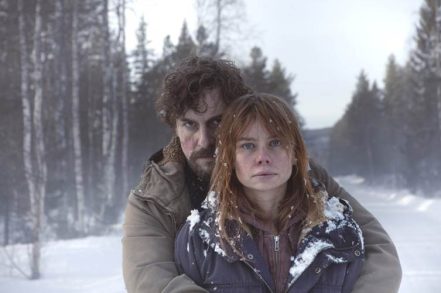
My Brother, from Sweden
By Dennis Broe
The best way to sum up this preview of Spring’s streaming series preview, drawn from Series Mania, the largest television festival in the world in France’s Lille, is to quote that well-known authority on streaming TV Voltaire from Candide. To paraphrase:
“How many dramas have you at the festival, sir?” asked Candide.
“Fifty one,” replied the festival organizers.
“That’s a lot” said Candide.
“How many are any good?” asked Martin, the journalist-cynic.
“Three or four.”
“That’s a lot,” said Martin.
Bland was the word this year for so much of what was on offer, though there were also really horrible series and a few exceptional ones. On a panel titled “What’s New From Ireland,” what was new from usually politically astute and hard-hitting Irish series (like last season’s The Bog) was bland, “wacky” comedies with any series that did not fit that description labelled “off kilter,” a telling expression, meaning that anything that strayed from the neoliberal mainstream even an iota, and nothing strayed much, was marked off as for a specialized taste.
Of the 17 series I saw, 3 and a half were good, 8 were bland, 4 were not just bad but disgusting, and 1 was “off kilter,” or unclassifiable. This blanding out was the effect in the aesthetic realm of the dominance of American streamers applying a commercial formula which has been absorbed by European television.

Candide and Martin pouring over the latest TV series in Paris
The Good
Best series at the festival by far was the Swedish My Brother, about the return to a small rural Northern town of a woman trying to save her alcoholic brother and trying to herself make peace with a troubled family past. A model for how to use flashbacks, not in the American C.S.I. mode of simply smothering the audience with plot, but of illuminating and deepening character in a trenchant critique of the Western family structure.
The Australian series Dustfall, filmed in Queensland, has the superb Anna Torv (The Last of Us, Fringe) as a caring cop investigating what appears to be a series of rapes in an uncaring and primitive masculine environment which in its unrelenting exploration of this milieu recalls Jane Campions’ Top of the Lake.
HBO France checked in with Privileges, where a black female inmate in a prison release program is indoctrinated into the ways and wiles of rich Parisian hotel clients whose whims must be catered to. This is the modern A propos de Nice which lays bare the inequality that structures modern life and stands in contrast to a blander approach on the same top in TFI and Netflix’ Summer of ’36.
Finally, there was the first half of the conclusion of the Peaky Blinders saga, The Immortal Man, where Tommy Shelby returns from a guilt-plagued retirement to combat a Nazi master plan to end the war. The first half has something major at stake but the second half, where even creator Steven Knight seemed to be bored, dissolves in a haze of personal anguish which even the strongest series afficionados are finding hard to swallow.
The Bad
Worst series in the festival, which will probably be a hit in the U.S., is the Succession-inspired

The Audacity: tech bros behaving badly
The Audacity, a truly repulsive application of the Succession formula of following disgusting characters, there in the media industry, here applied to Silicon Valley. The leads, including an entrepreneur trying to keep his start-up afloat, are all neurotic power-hungry pampered denizens, including a psychotherapist, who populate this world separate from the rest of humankind. The problem though is we are asked to loathe their personal foibles rather than to understand how these personal insecurities lead to a global grab for power and control. This is not Silicon Valley, where Mike Judge satirized and laid bare this structure. Here loathing is simply a new way of attempting to maintain our fascination with a class that tightens its grip on our lives every day of the week.
The equally repulsive HBO series Paolo asks us to sympathize with a lower-class brutal murderer, with the pilot beginning and ending with his rampage, as he worms his way into the campaign of an equally repulsive “populist” candidate. It’s a replay of Martin, George Romero’s experiment in asking the audience to sympathize with a sociopathic murderer who otherwise is a nice guy. In each case, why bother?
Bienvenue a Kingston Falls falls flat as an exercise in French Canadian humor as an “off-kilter” detective investigates a murder where the victim’s derriere is attached to a plow. The opening image is not funny and the series goes downhill from there as one character after another in the Quebec countryside competes for the prize of “wackiest.”
Worse yet, though no less innocuous is Das Manko, a German series that purports to be a satire of work in a modern office in a series of vaudeville vignettes which may have worked on the German stage but fall exceedingly flat on screen. This is no The Office or Mike Judge’s Office Space, satires of actual office power politics, rather here the series most often punches down, making the workers the butt of the joke. The slapstick has been compared to Jacques Tati’s satires of France’s consumerist culture of the 1950s. The comparisons are apt, but unfortunately this series, which purports to capture modern office life, instead simply looks ancient, that is, it recalls office life in the 1950s, 75 years behind modern techniques of office manipulation.
The Bland
Blandest of the bland was The Testaments which squanders the subversive cultural cache of Chase Infinity from One Battle After Another in this sequel to The Handmaid’s Tale. The heavy-handedness and mirthless self-righteousness of the story, in contrast to say actual resistance depicted in The Hunger Games, slows this series—which focuses not on the working-class female victims of the theocracy but on their privileged daughters—down to a crawl.
The Japanese sci-fi series Queen of Mars sets space travel back years by making Mars—in the series conceit inhabited for many fruitless decades—so boring that even Elon Musk might cancel his Space X plans for conquest of the red planet after seeing it.
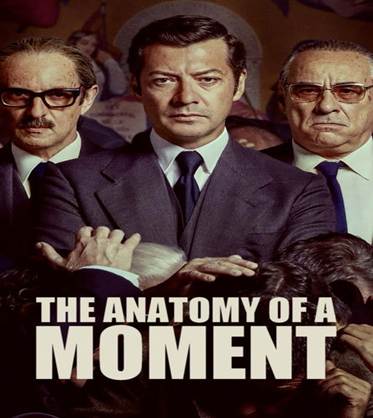
A plea for democracy from above
The supposedly tense Spanish political series, billed as the epitome of European democracy and resistance to fascism, Anatomy of a Moment, in fact focuses on a political manipulator who makes sure that Spanish democracy, in fighting an attempt by Francoist forces to reinstall the dictatorship, is fashioned cautiously from above. Makes for low not high drama, but in its depiction of a democracy fashioned from on top is perhaps an accurate view of that form in Europe today.
The Swedish series Burden of Justice, about compromised defense attorneys taking on equally compromised clients asks us to wallow in their combined corruption. This is not lawyers taking on a failed system as in The Verdict. It’s just privileged attorneys acting badly, in a Swedish version of LA Law. No thanks.
The French series Enchaines has at least the virtue of being shot on the French still-colonial island tropical paradise of Reunion, but features the most half-hearted, mealy-mouthed slave almost-rebellion ever put on screen. It makes Roots look like Spartacus. The former had the virtue of depicting slave exploitation without the angst,while the latter depicted an open slave rebellion.
The BBC’s Small Prophets, with ex-Monty Python-ite Michael Palin traces the dull, drab existence of a hardware store employee who still mourns the disappearance of his girlfriend many years earlier. He doesn’t care much about his life, so why should we?
Finally, The Best Immigrant is a Belgium series which purports to be a satire of a totalitarian Flemish state which banishes all those not native born. It takes place sometime in the future, or in the present, in Trump’s America. The problem is that through the disingenuous device of staging a reality TV show where the winner gets to stay in the country, the series partakes of the same kind of exploitation it purports to lambast.
Unclassifiable was the French series Comrades about the ’68 founding of the experimental University of Vincennes, a hotbed of leftist questioning and debate. What could have been simply making fun of a bygone radical period turns into a bit more not only because of the liveliness of the debate, where every aspect of academic life is questioned, but also by the fact that these debates are witnessed by a sex worker torn herself between being a part of this openness or betraying it in following her cop boyfriend. There is a tragedy behind the playfulness, not fully realized, but that throws light on the current state of an academia high on neoliberal “principles” but low on actual radical zeal.