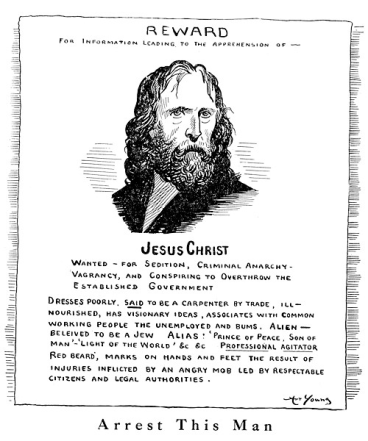
The Masses, 1917 political cartoon by socialist Art Young
Geoff Bottoms offers a commentary on Good Friday
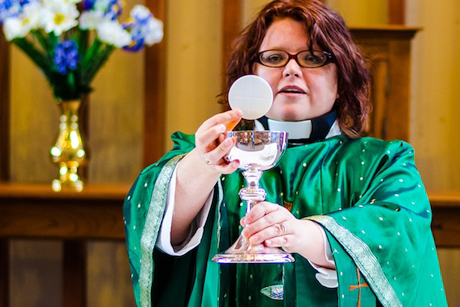
In the award-winning film Conclave, based on the book by Robert Harries, Cardinal Lawrence, the Dean of the College of Cardinals, delivers an impassioned homily at the start of the electoral process for a new Pope on the importance of doubt. “There is one sin I have come to fear above all else: certainty,” he tells his fellow cardinals. “Certainty is the great enemy of unity. Certainty is the deadly enemy of tolerance. Even Christ was not certain at the end. ‘Eli Eli, lama sabachtani?’ He cried out in His agony at the ninth hour on the cross. ‘My God, my God, why have you forsaken me?’ Our faith is a living thing precisely because it walks hand in hand with doubt. If there was only certainty, and if there was no doubt, there would be no mystery, and therefore no need for faith.”
In reality, Lawrence argues, living out one’s faith genuinely is a messy thing; we often swing between states of belief and disbelief. Rather than welcome those with questions, the church sometimes ostracises them for fear that such mindsets will spread—an act that ironically keeps people away from the very community that they may need. And so he rebuffs the security that certainty seemingly provides, instead proposing that it is an embrace of our doubts that will lead to greater flourishing in our political and spiritual lives. It echoes the words of Pope Francis when he said, “If one has the answers to all the questions—that is the proof that God is not with him…. The great leaders of the people of God, like Moses, have always left room for doubt. You must leave room for the Lord, not for our certainties; we must be humble.”
Indeed, having doubt is a reminder that we are people bound by time and space. It’s natural to question, given our limited understanding, and it can be through our questioning that we increase our knowledge and exercise our faith. Conclave reminds us that reform is in the church’s DNA. Towards the end of the conclave in response to Cardinal Tedesco’s reactionary and violent outburst, Cardinal Benitez, a relatively new cardinal from Kabul, argues that the church should not be stuck in the past but be about “what we do next.” He claims that what the world needs is not a church that doubles down on doctrine in ways that are isolating and unwelcome, but one that seeks to embody Christ in the way he expanded the scope of love and grace.
And isn’t this what we see on the Cross, as Christ at the height of his suffering cries out those words from Psalm 22, which end on a note of triumph? Today the Church identifies with her Lord and Saviour as we relive the darkness and doubt of that first Good Friday. Indeed many of us will identify with those words in the midst of our own troubles, sufferings and wobbly faith. “My God, my God, why have you forsaken me? Deserted me, abandoned me?” Yet they are a call to let go of our certainties and let God open up new possibilities for us. They are a challenge to be a renewed people reflecting the all-inclusive God and embracing the world in all its mess and glory.
In the words spoken by Dr Who in a dim and distant episode: “You can try to make something better of the world you’ve got. You humans can end the arms race, you can treat people with different coloured skins as equals, you can stop exploiting and cheating each other, and you can start using the Earth’s resources in a rational and sensible way.” Those could be words from the Cross too.