Commons image
By John Pateman
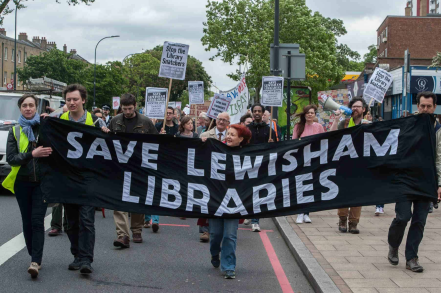
My first article, Decolonising Public Libraries, explained the history and context of public libraries. This second article, Building a Library Campaign, covers the barriers to library usage by working-class people and how to overcome them. It tells you what you can do to help remove these barriers and make the public library open to all. It introduces a toolkit which will enable you to campaign effectively in support of public libraries – not just when they are threatened with cuts and closure, but on an everyday basis to transform them into cultural tools in the class struggle and weapons in the battle of ideas and the fight for cultural democracy.
Working-class usage of libraries
The UNISON report, ‘Closing Chapters’, reveals that library staff across England have been cut by almost half since 2010, leaving services stretched and communities without vital support after years of austerity. Staffing levels fell by 47% between 2010 and 2025. Libraries directly employed 17,902 staff in 2010/11. That figure fell to 9,497 by 2024/25, amounting to a loss of 8,406 full-time roles. Job cuts in public libraries are to be regretted but the claim by UNISON that ‘staff manage rising demand with fewer resources’ does not pass scrutiny. Public libraries are actively used by just 26 per cent of the population, which is a decline from 48 per cent in 2005. 82 percent of library visits in 2024 were made by just 9 percent of the population.
A recent study found that 61% of respondents do not use the library. 44% had not visited a library in the last year. Only 16% considered themselves regular users and just 18% had visited a library within the last month. 44% said ‘I don’t need to use public libraries’. The figures are even more stark for working-class men, who make up 32% of library non-users. The vast majority (82%) of working-class men over 55 are non-users. Just 11% use libraries regularly. Almost half (48%) do not think libraries are relevant to them. Only 4% selected libraries as a place they would visit during their free time. The crisis that public libraries face is not just about job cuts. It is also about relevance – to local communities in general and the working class in particular.
Lenin understood that public libraries and culture were central to winning the battle of ideas and building a socialist society: ‘We must raise culture to a much higher level. A man must make use of his ability to read and write; he must have something to read, he must have newspapers and propaganda pamphlets, which should be properly distributed and reach the people, ceaselessly propagating the idea that political education calls for raising the level of culture at all costs.’
Identifying and overcoming barriers to library use by working-class people
Before you start devising your library campaign, you need to consider the circumstances of your local communities and the reasons why some people do not make any, or full, use of the library. Some of the main barriers to working-class people using public libraries are:
Institutional – e.g. unsuitable or unduly restrictive opening hours or restrictions upon the availability of library services;
Personal and social – e.g. lack of basic skills in reading, writing and communication;
Perceptions and awareness – e.g. people who don’t think libraries are relevant to their lives or needs;
Environmental – e.g. difficult access into and within buildings
Making public libraries relevant to working-class people requires a combination of capability (having the knowledge and skills to use a library), opportunity (having the time and resources to visit a library) and motivation (feeling the need or desire to visit a library).
Speaking to working-class people and identifying the real and perceived barriers to them using the public library is an important starting point for planning your local library campaign, which should focus on removing or lowering these barriers.
Raising awareness of what the library has to offer working-class people
Your library campaign can raise the profile of public libraries by making working-class people aware of what their local library has to offer. This campaign should be focused around four key areas:
Reading and digital services – explaining how libraries provide resources and activities which help to give local communities access to books and digital services;
Health and wellbeing – explain how libraries provide resources and activities which support the health and wellbeing of communities;
Culture, creativity and community – explain how libraries are a place where people can experience diverse cultural and creative activities and events;
Personal skills and career development – explain how libraries are a place where people can access education, career information and support.
This stage of your library campaign should focus on: increasing capability by making it clear what libraries can offer working-class people; creating opportunities by supporting working-class people in feeling able to use libraries; motivating library use by building the personal appeal and relevance of public libraries to working-class people.
Identify the working-class communities in your local area
Public library non-users are more likely to be male, older, working full time, without a degree and working class. Your library campaign should be based on a profile of working-class communities in your area. You can then determine how many local working-class people do not currently use the library. By engaging with these non-users you will be able to identify the local barriers to using the public library, and build your campaign around these factors. Every library campaign should be tailored to meet the needs of its local working-class community. There is no one-model-fits all solution as each library campaign will be shaped and determined by local material conditions and circumstances.
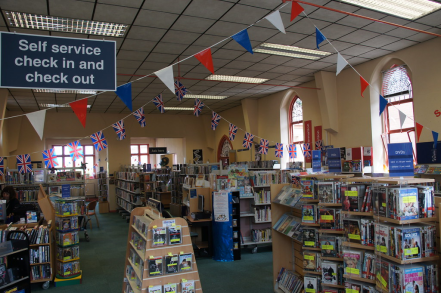
Southborne public library. Commons Image.
Assess and review current library services
Your library campaign will be based on the services that are currently provided by the local library. The key questions are: how far do these services meet the needs of working-class communities?; and, which services might attract working class non-users into public libraries? For example, research has identified several potential ‘pull’ factors, including: comfortable and inviting spaces (cited by 38% of library non-users); extended opening hours (35% of non-users, particularly those who are employed); up to date book collections (24% of non-users, particularly older adults); access to technology (33% of non-users, especially young people); and dedicated work and study spaces (26% of non-users, particularly younger people).
Develop objectives and priorities
Once the community needs have been established your library campaign should consider how they can best be met. You may want to take an all-embracing approach, aiming to increase working class use of the library across the community. Or you may choose to take a more limited, targeted approach, maybe focused on the highest priority areas of social need. Whatever approach you need, you should develop objectives and priorities, and the actions required to achieve them. Your choice of approach will be dependent, in part at least, on your capacity, which can be increased by building alliances and partnerships.
Build alliances
You cannot tackle lack of use of public libraries alone. You must build alliances with a wide range of groups including library services (e.g. staff and managers), trade unions (e.g. UNISON), local councillors, library campaign groups (e.g. The Library Campaign) and local community organisations. Partnership working is not easy and comes with many challenges. Before deciding who you are going to work with, you should develop some principles and criteria which you can then apply to each potential partner. For example, most successful partnerships are based on shared aims, objectives and values.
Measure impact
At every stage of planning your library campaign, you must keep its end goals in mind. For example, if you plan to widen the library’s reach by seeking to engage non users through social media, street stalls or print media, you need to think about how best to use these methods to reach working-class non-users. This could include consideration of the types of messages and content shared as well as thinking about who you can work with to reach nonusers.
You then need to measure the impact of these actions – how many working-class people did you reach, how many of them used the library as a result of these actions, and how many of them have continued to use the public library on a regular basis? This quantitative analysis should be accompanied by a qualitative assessment of the success of your library campaign. This means talking to working-class people who your campaign has persuaded to use the library to get their reactions on the ways in which using the library may have improved or changed their lives – for example, by learning new skills, improving literacy, getting a job, going back into education etc.
Make sure it lasts
Building resilience and sustainability into your library campaign is another factor which has to be considered during the early planning stages. While a campaign to save a particular library will begin when the threat to close the library is first known and end when the library is either saved or closed, a more general campaign to encourage working-class people to use public libraries will not have a set start and end date. This kind of campaign is an ongoing process with no end in sight, which means that you must constantly review your campaign to make sure it is meeting the goals you set and, if this is not happening, make changes to bring it back on track. It also means trying different things out to see if they work or not – if they do work, keep them and improve them; if they don’t work try something else. Keeping the library campaign fresh and injecting new ideas into it on a regular basis will be key to its success and longevity.
Summary and conclusion
As I outlined in Decolonising Public Libraries, public libraries were not a gift to the working class from the ruling class. They were a form of social control and ‘soft power’ which, like public museums, galleries and parks, were designed to police and manage the idle time of the proletariat, instil them with bourgeois values, and stave off revolutionary change. The public library was an example of cultural power which was designed to turn the masses away from ‘alehouses and socialism’, encourage the reading of ‘healthy literature’ and teach them their rightful place in class society. This ‘soft’ or cultural power was more effective than the deployment of legal and military power, which tended to produce counterproductive results and make the working class even more angry and rebellious.
The problem with this approach was that, whereas legal and military power were imposed by force, cultural power was only effective if working-class people willingly succumbed to it. But, from the outset, working-class people, and working-class men in particular, saw through the ruling class ploy and stayed away from public libraries by voting with their feet. Today one of the largest groups of library non-users continues to be working-class men.
By developing a library campaign you will fulfill what Lenin called ‘the strange, incomprehensible and barbaric aim of making these gigantic, boundless libraries available, not to a guild of scholars, professors and other such specialists but to the masses, to the crowd, to the mob!’
Your library campaign will build use by the working class of public libraries, raise the level of cultural and political awareness within the proletariat and transform libraries into a working-class tool in the class struggle:
In the short term, your campaign will attract more working-class people into the library and develop a solid core of regular working-class users which can offset the predominance of middle-class users
In the medium term, your campaign will create a critical mass of working-class library users who can put pressure on the public library to make it more relevant to their needs and everyday lives
In the long term, your campaign will enable working-class people to transform the public library into an inclusive, equitable, community-led and needs-based service.