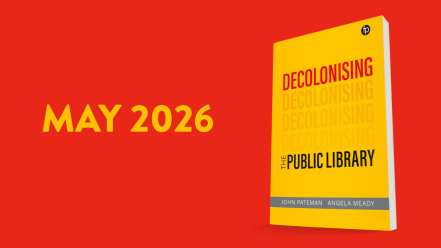
The book will be available here
By John Pateman
Public libraries are not what they appear to be. The public library is often presented as a safe, welcoming, inclusive institution that is neutral, apolitical and non-ideological. But beyond this appearance there is what Marx called the essence, and this is what I explore with Angela Meady in Decolonising the Public Library (Facet, May 2026). In this first article for Culture Matters, I summarise the analysis of the problems in that book, and in the second article I will outline some case studies and practical steps to take to tackle the problems identified.
In order to understand the modern public library, and why so few working-class and Indigenous people use it, we need to understand its history and, in particular, the foundational myth that public libraries were a gift from the ruling class to the working class.
A close examination of the debates which led up to the 1850 Public Library Act, and an analysis of the speeches made at the opening of England’s first public libraries, tell a very different story. Public libraries were designed to control the reading habits of the workers, instill middle class values in the masses and police the idle time of the industrial proletariat.
Healthy Stimulant
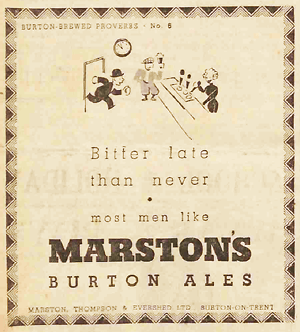
Public libraries, it was claimed, would provide a ‘healthy stimulant’ to the working classes and turn them away from ‘alehouses and socialism’ (see A New History of the English Public Library: social and intellectual contexts 1850-1914 by A. Black, 1996). This was a reference to the workers’ libraries that sprang up in pubs in industrial cities like Nottingham in the second quarter of the nineteenth century. In these libraries the workers, many of whom could read, circulated and read out loud ‘seditious literature’ calling for radical changes in the economic and political system.
It was from these workers’ libraries that the Chartist Movement emerged in the 1840s and posed a significant threat to the ruling class and its middle-class supporters. In 1848 revolutions swept away the royal families and aristocracies of several European countries. The ruling class responded to this threat by inventing the public library as a weapon in the class struggle.
Not only would public libraries – along with public museums, galleries and parks – take workers off the streets and gather them into places where they could be monitored and policed, but these institutions would also control their leisure time by providing a range of ‘healthy’ reading and other pursuits.
Capital and Labour
Charles Dickens gave the ruling class game away when, at the opening of Manchester Public Library in 1852, he claimed that public libraries would teach the working man that ‘Capital and Labour are not opposed, but are mutually dependent and supporting’.
Across the Atlantic, Andrew Carnegie, the Scottish American steel baron, was preaching a similar message that public libraries would ensure ‘that the ties of brotherhood may still bind together the rich and the poor in a harmonious relationship’.
Carnegie believed that public libraries provided an ideological and material alternative to communism, which he represented as ‘nothing less than a revolution that attempts to alter human nature’.
Carnegie and Dickens viewed public libraries as an antidote to the ideas contained in the Manifesto of the Communist Party which, when it was first published in 1848, made it clear that the class interests of the proletariat and the bourgeoisie were irreconcilable, and that the only resolution to this contradiction was revolution and the overthrow of capitalism. So it is no coincidence that the public library movement began immediately after the publication of the Communist Manifesto and culminated two years later in the 1850 Public Library Act.
So what?
You may ask, ‘But what has this got to do with the public library of today?’ To which I would answer: ‘Everything.’ The basic operating model of what I call the traditional public library has not changed significantly since its inception in the mid-nineteenth century.
The public library evolved from the Mechanics Institute which, according to Engels, ‘for the working man, is merely a constant sermon upon quiet obedience, passivity and resignation to his fate. The mass of working men naturally have nothing to do with these institutes, and betake themselves to the proletarian reading rooms and to the discussion of matters which directly concern their own interests’.
Exactly the same thing happened when public libraries started to appear. They were shunned by the very people they were designed to indoctrinate: working-class men. If we fast forward to 2025 we discover that working-class men still account for a significant proportion (32%) of non-users of libraries.
The Class Essence of libraries
In its analysis and report on What works to engage library non-users, IPSOS took a segmented approach to library non-users: ‘armchair supporters’ (24% of non-users) were middle-class and from less deprived areas ; ‘digital and community seekers’ (25% of non-users) were young, female and middle-class; ‘enthusiastic adopters’ (19% of non-users) were female, graduates and middle-class; ‘the disengaged’ (23% of non-users) were old, male and working-class; ‘dismissive non-users’ (9% of non-users) were young, male and working-class.
IPSOS suggested that, because ‘the disengaged’ demonstrated ‘a low likelihood of future library use’, resources should be focused on other segments; similarly, engaging with ‘dismissive non-users’ was ‘likely to be challenging’, and libraries ‘may need to consider carefully whether a significant effort to convert this group’s views is worthwhile’.
In other words, public libraries should not bother with the one third of non-users who are predominantly male and working-class. Instead, they should focus on segments with ‘the greatest potential for engagement’, such as the ‘enthusiastic adopters’ and the ‘digital and community seekers’ who are mostly female and middle-class.
Here we have proof that the class essence of public libraries is alive and well in the twenty-first century and continues to shape and determine public library strategies, structures, systems and organisational cultures or ‘the way we do things around here.’
And so?
At this point you may ask, ‘But what has this got to do with decolonisation?’ And my answer, once again, is ‘Everything.’ Because the traditional class-based model of the English public library was exported around the world and became a key cultural tool in the settler colonialism project.
When public libraries were established in Canada, Australia and New Zealand they served a triple purpose: they represented the values of the English ruling class and its middle-class supporters; they continued their mission of trying to convert the working man to the benefits of capitalism; and they were used as a tool of oppression in the processes of assimilation and cultural genocide of Indigenous peoples.
So, when we talk about decolonising the public library, we can draw a straight uninterrupted line between their invention as agencies of social control in Victorian England and their ongoing role in the racial and class struggles of cities like Thunder Bay, Ontario, where I was CEO and Chief Librarian of Thunder Bay Public Library (TBPL) from 2012-22.
Revolution
During that period a revolution took place at TBPL, spearheaded by a 5 Year Strategic Plan that placed decolonisation, anti-racism and social justice at its core. In this context decolonisation meant decentering the white middle-class hegemony, which had existed since the public library was founded in Thunder Bay in the late nineteenth century, and centering the working-class perspective and Indigenous world view.
In practice this meant:
- tackling racism in the library workforce through a programme of inter cultural competence development;
- creating Indigenous positions, filled by people with lived experience of settler colonial racism;
- creating an Indigenous Advisory Council, which was the first of its kind in Canadian public libraries, to lead the decolonisation process;
- creating Indigenous Knowledge Centres (another Canadian first) which represented Indigenous history and culture;
- creating partnerships with Indigenous organisations, and sharing space with them in library buildings, to challenge and break down the racial divides that had turned Thunder Bay into ‘the race hate capital of Canada’; and
- responding to the Calls for Action from the Truth and Reconciliation Commission.
The aim was to create a community-led and needs-based public library which could forge an alliance between working-class and Indigenous people and enable them to form a united front against the white racist settler colonial power structure. As you might expect, this led to some significant resistance from both within and outside TBPL. This inevitable resistance was anticipated, planned and responded to within the transformation process.
Class Struggle
In conclusion, the class struggle and decolonisation are inextricably linked. The public library has always been, and remains, a bastion of the ruling class and its middle-class supporters. For the public library to be decolonised, its class-based essence must be acknowledged as the starting point for its transformation into an agency of social justice and liberation.
The public library was invented by the bourgeoisie which, as Marx and Engels noted, ‘produces, above all, its own gravediggers. Its fall and the victory of the proletariat are inevitable. They have nothing to lose but their chains. They have a world to win.’
You can help them to win it by decolonising your public library – how to do this will be the subject of my second article for Culture Matters.