By Dennis Broe
The streaming television industry has a nice way to cover the massive cutbacks in viewing time, in series and in personnel, which have become common for both the streamers and broadcasters.
While the period before the collapse of 2022 was labelled “peak TV,” the current retrenchment is labelled “post-peak TV,” which is designed to remind us that there was once, a few years ago, a new Golden Age, but also that what has followed is not a hollowing-out but a slight course correction, that in the end may, in another delusional way of presenting a full-scale crash, favor “quality over quantity.”
This is a difficult characterization to stomach considering the lack of series of substance, and their replacement with cheap documentaries, taking advantage of the True Crime phenomenon – reality series of every flavor and stripe. There has also been a general lowering of not only the quality of the series, but also a blanding out, partly the influence of the streamers, of even ambitious content, as seen most strikingly in the TF1/Netflix French series Summer of ’36.
These are observations from the recent Series Mania conference in Lille, France, the largest television festival in the world. Here, the European industry was confronted with mergers, including the mother of all mergers, Paramount and Warners, with the always looming threat of AI to replace writers and actors. There is also the new dominance of social media, in particular YouTube, which has now leaped from 8th to 3rd in terms of advertising revenue as streamers and broadcasters find themselves in increasing competition for these revenues.
As a sign of cutting back, the festival this year highlighted 51 series, a decline of 20 percent from last year, with far fewer series submitted. The number of episodes and the length of episodes are also decreasing, and it is more difficult than ever, both in Europe and the U.S., to achieve a second season.
The influence of the American streamers is growing and constitutes the lion’s share of growth in investment in new series, with the reach of the streamers in Europe and across the world increasing with Warners, Disney, Amazon, Netflix, Comcast and Paramount all operating in 40 or more European markets. And it must be pointed out that their competition, after the Americans having for the most part silenced indigenous European streamers, is public TV, which still constitutes the majority of viewing besides the streamers in Europe.
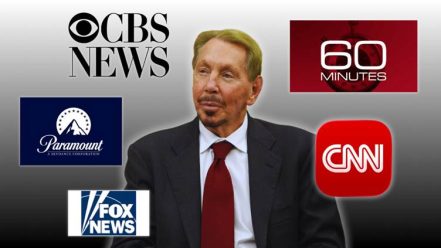
Imagine the panic then as two of the top five streamers, Warners and Paramount, are about to merge into a single entity, all controlled by the heavily ideological Zionist Larry Ellison and son David, who are attempting already to reshape CBS, the most popular broadcasting channel in the U.S., into a pro-Trump, pro-Israeli network.
It is necessary to point out the folly of both the Writers’ Guild and certain left media in not taking a side in the merger, which will entirely reshape not only news – the Ellisons now adding cable news’ CNN – but also streaming content, no doubt now also seeking to reshape even HBO, long a pillar of at least adult content but soon to be buffeted by this takeover.
The argument against Netflix controlling Paramount was that the streamer would cut back on Warners’ movie theatre business. This is a pitiful argument and utterly misunderstands both the conjuncture, the historical moment, and the mercenary quality of Ellison enterprises, with Larry, the owner of Oracle, recently cutting up to 30,000 employees to put another 8 to 10 billion in the pockets of its owner, and with the merger being backed by a Saudi wealth fund in a Zionist-Monarchist coalition.
The company, aside from its ideological bent, exists for profit and would be no more likely to defend the dying business of moviegoing than Netflix, whose profit is made entirely from its ability to market series and films.
The European response has been twofold. There have been some mergers to attempt to keep from drowning, with Banijay and Redbird IMI, which itself recently acquired All3Media, in an $8 billion merger which includes reality powerhouse series such as Survivor, Big Brother and The Traitor. Even state-owned media, fighting for its life, is getting in on the act with Germany’s ZDF partnering with a UK international and social media streamer Little Dot, which features several YouTube channels.
The other response was a type of government merger, in the form of the creation of a European Council for TV Series, which is talking about pledging $8 billion to allow series producers to acquire cross-country investments. There was an official signing at the conference with each of nine member countries affixing their signature to support the initial initiative in a ceremony that had both a decorous and a desperate air about it.
There were nine signatories including France, Greece and Italy but also including the powerhouses of Malta, Luxembourg and Montenegro, and there is some talk in the parliament already of diluting the measure by increasing the payout but allowing the American streamers, who the measure is designed to thwart, to be eligible for funds. Can you say lobbyists?
The dreaded AI
The second major challenge is AI. Last year, at the conference, the talk was also about AI helping writers and producers. Not this year. The panel this year on Generative AI, a major threat to creation, was about regulation and creators hanging onto their rights. The panel pointed out the courts are divided on the subject of AI appropriating creation and then spitting it back out at the creators with, in the U.S., not only The New York Times but also Universal studios filing lawsuits against this appropriation.
A Slovakian lawyer, Jana Vozarova, characterized the struggle over copyright as attempting in the courts to reverse the burden of proof. Instead of that burden being on the creators to prove their work was appropriated, the burden should be on the shoulders of the AI companies to prove they are not stealing the work.
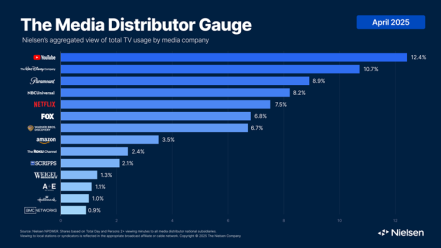
The best attended session of the festival was that featuring YouTube, with the company’s representative Justine Ryst, who said she came from the world of TV producing, attempting to show how the social media site, which now leads in audience daytime ratings, with Netflix leading at night, could aid series’ producers in drawing attention to their series.
She urged them to begin the practice of posting the first episode of their series to the channel, an increasingly popular practice. Of course, this posting also boosts YouTube’s ratings, leading to an increase in its advertising revenue to where the channel now ranks third among digital outlets in Europe, exceeded only by Comcast (Peacock, NBC and Sky) and Netflix.
The major streamers are everywhere present in Europe, producing original series in several territories. They are tough for public channels to compete with, because of their outsized budgets, many of which are not dependent on the streaming business. Thus, there is Paramount/Warners soon to be backed up by Oracle, whose owner Ellison alternates with Elon Musk as the world’s richest person, Amazon as the largest company by revenue in the world, and Apple, the largest manufacturing company in the world.
Meanwhile, Disney has just named its director of amusement parks and cruises, a huge moneymaker for the company, as its new head. These companies then can afford to see streaming as a growing business which their other endeavors support.

Summer of ’36: the working class shunted aside for a focus on the rich
The streamers are “co-proing,” establishing partnerships with the public broadcasters who have decided that since they can’t beat them… These partnerships have led to a general degradation of European series production, seen most vividly at the festival with a French series Summer of ’36, with not a government backed but rather the leading commercial station TF1 teaming with Netflix. The series begins admirably as a typical French social realist series about the moment in 1936 when, because of the Leon Blum Popular Front government and the factory strikes that followed it, French workers won the right to two weeks of summer vacation.
The series then recounts their appearing in the glamorous French Riviera capital of Nice where they elicit fear from the returning rich, who do not want to share their class paradise. So far, so good, but what then ensures and takes over the series, to the detriment of the class struggle, is a typical murder with the first episode instead devoted to arranging suspects.
What promised to be A propos de Nice, Jean Vigo’s 1930s laying bare of the class subjugation of the service workers by hostile or oblivious hotel patrons, instead turns into Knives Out, Netflix’s hit whodunit which was turned into a franchise.
And so, the onslaught continues with the American streamers presenting themselves as willing partners but actually, along with their AI and social media outlets, inching a little at a time into increased domination of the European market, in another area where Europe is in danger of losing its sovereignty.