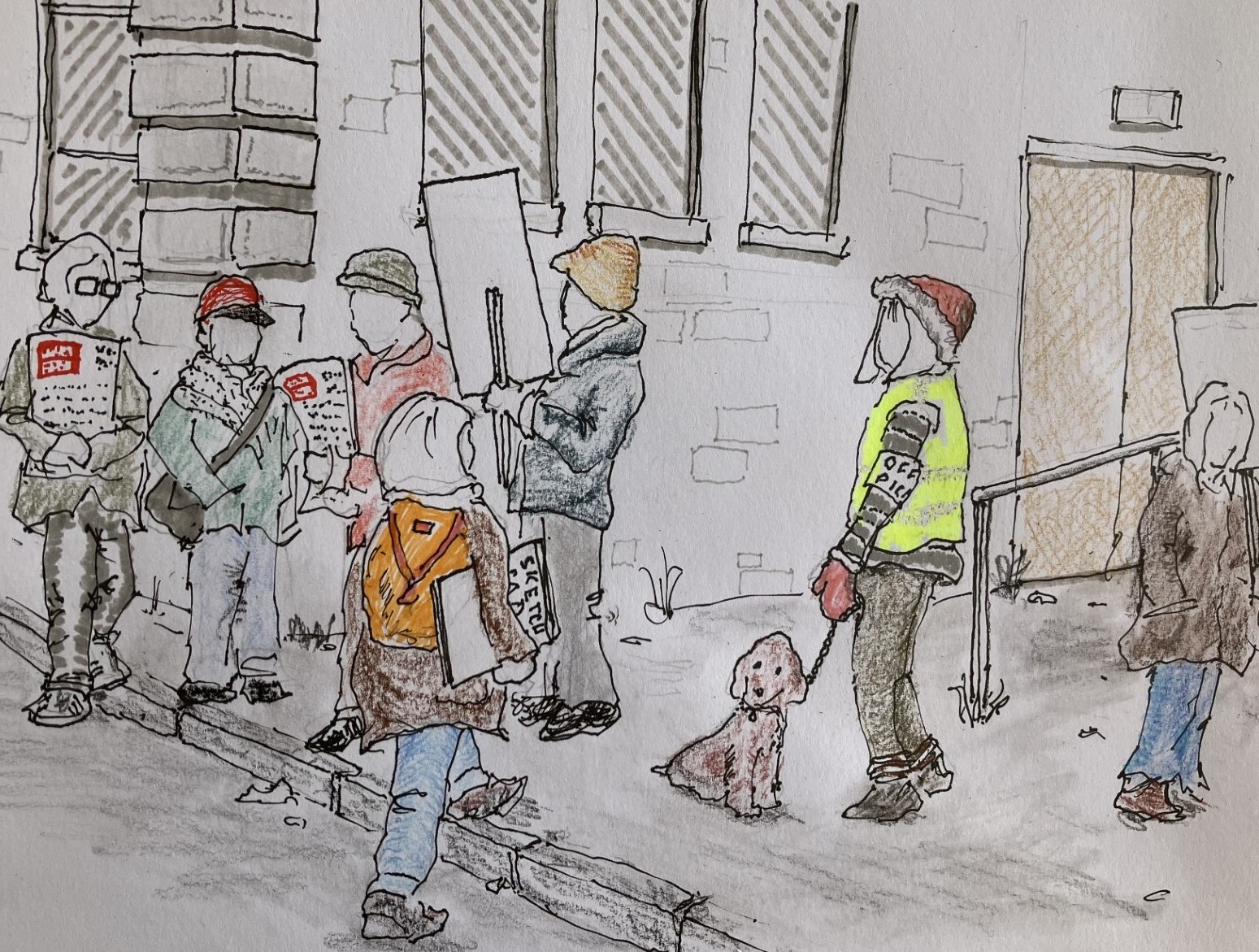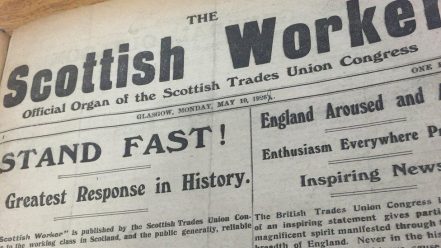
One hundred years after the General Strike shook Britain, members of Unite Community Edinburgh Branch have produced a documentary exploring the events of 1926 through the lens of Edinburgh’s workers, streets, and political memory.
Made collectively by volunteers using phones, borrowed equipment, archival material, and a great deal of commitment, the film stands as both a historical reflection and an example of contemporary working-class cultural production. In a time saturated by individualistic influencers and AI sludge, there is something refreshing about a trade union branch making a film themselves.
Culture Matters spoke with those involved in the project about history, collaborative filmmaking, and why the General Strike still matters today.
PO: Peter Olech, Secretary of Edinburgh Unite Branch
SM: Dr Stuart Moir, Community Educator
MH: Margaret Hepburn
RS: Richard Shillcock
1. What inspired you to make this video about the General Strike, and why did you choose this format?
PO: We wanted to do something to commemorate the centenary. The only response from our Edinburgh Trades Council was the previous Secretary (Des Loughney) dug out a DVD that had been produced for the 75th anniversary. We picked up on the ‘film clips’ and thought we could expand into a longer project. We then approached Stuart Moir to draft a script for us to put things in context and link the DVD clips into a longer narrative.
SM: I’ve had a long-term academic and teaching interest in using the history of working class struggles to raise people’s awareness and critical consciousness to encourage activism. So I was keen to get involved in a local grassroots project to commemorate and explore the strike. The original film gave us a good opportunity to do that and a solid base to build our film on.
2. How challenging was it to source suitable footage? Did copyright restrictions shape or limit what you were able to create?
PO: Material available on the Internet plus we had the DVD and we did some original filming.
SM: The content and structure of the original film was basically sound. As a result we didn’t have to do a lot of work to create something new, just amend and develop an existing resource. For the new footage we just filmed our own, which was easily done, as was sourcing still images from the internet to supplement our own footage. All the material sourced was open source, so no problems there.
MH: The guidance and knowledge of both Peter and Stuart filled us with confidence!
3. Did members of your group have to learn new skills during the process? How did they find that experience, and what might have made it easier?
PO: I hadn’t done anything like this. One of the best and most enjoyable union activities for ages.
SM: I’ve had experience of working with groups to make videos like this before, so was familiar with the process and knew how effective it can be. But, as noted by Peter, I found it a very enjoyable and social creative process, with everyone contributing and working together in a comradely way. Whilst I did know a bit about the strike, in my research for the script I did learn a lot more about the strike that I wasn’t aware of.
The key learning for me was the similarity of some of the key issues between then and now, such as long hours, low wages, and precarious employment. In particular, the repressive way the state works in the interests of capital and how they took control of the BBC to promote their own agenda and exclude dissenting voices.
MH: I have never done anything like this before. It was a great experience and I thoroughly enjoyed it. The supportive environment in the group helped a lot, which made it easier for me. We had fun and bonded as a Branch.
RS: It was impressive to see the project taken through to completion. I only played a minor role, but it was enjoyable to be out filming in the locality. I think we’re now in an era when we need more of this type of communication. Any rough edges to the final film only add to its authenticity and will encourage others to try the same acquisition of new skills.
4. Making a film about a historic event like the General Strike can be both a cultural act (filmmaking) and a political one (reframing history). How did your volunteers see it? And are you planning to make more projects like this?
PO: I have learnt more about the strike by being involved than the very narrow version of events I had previously been made aware of.
SM: This is very much how I understood the whole project. Brecht’s statement about art not being a mirror reflecting society, but a hammer with which to shape it, informs my own understanding of this project. I think it’s well understood that cultural initiatives are powerful vehicles for political learning, engagement, and expression. They can perhaps be more easily interpreted and understood in a vicarial and immediate way, rather than through the reading of more theoretical texts or lectures, although that’s not to say that theoretical texts or lectures are not useful.
As to other projects, we are keen to offer out the film to other trade union branches or trades councils as an educational and discussion resource. I’m also involved in other cultural and educational initiatives, such as a city democracy tour.
MH: Taking part inspired me to read more about the General Strike. It was important to film in the Edinburgh of today as it set the scene and context for how events in 1926 played out in Edinburgh.
RS: I’d be happy for us to film more of our activities as social documents of current politics in Edinburgh. People recognising the place they live is a real plus in getting political messages across.
5. Do you think trade unions should participate more in these political and cultural types of activities? What did you gain from it as a group?
PO: Yes. It was a great team exercise. We want the film to be used by people who would not normally go to a lecture or listen to a history podcast. The plan is now to offer it as a free download, plus Stuart has put together a page of links to reading materials and questions to assist anyone who wants to use the film as the basis of a meeting.
SM: Yes, trade unions should, and I know they do, participate in political and cultural initiatives as part of their core activities. There is a long-established tradition of this work across the movement, but perhaps this tradition needs to be promoted and reasserted more at times.
I don’t think it is separate from trade union work in defending and developing members’ rights in the workplace, but rather should be seen as an integral and complementary part of how the labour movement as a whole advances the cause of labour and social, economic, and political justice for working people.
MH: Definitely, I think trade unions should participate more in activities such as these. It may inspire or appeal to new or existing branches to consider that trade union activity isn’t always sitting in meetings. It’s a useful vehicle to get sometimes quite difficult messages across in an accessible way.
I believe our approach brought the General Strike alive for all of us and gave us pause for thought in terms of what has and has not changed since 1926 in relation to the state approach and methods used to suppress collective action.
You can watch the film here. Please share the word and suggest a similar activity in your union branch. If you do, contact us at Culture Matters and let us know about it!