The book is available here
By Razia Parveen
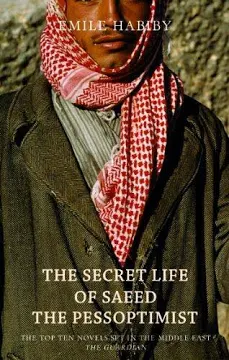
The Secret Life of Saeed: The Pessoptimist tells the story of Saeed, a Palestinian man who stays behind in Haifa after the mass displacement of 1948 and ends up working as an informant for the new Israeli state. Throughout the book, Saeed claims to be visited and eventually abducted by aliens, weaving these encounters in alongside his account of love, marriage, and the dangers of his double life. These strange, almost absurd episodes make the reader increasingly unsure how much of Saeed’s story we can actually trust. Is any of it real, or has Saeed, worn down by everything he’s been through, started blurring the line between truth and fantasy?
I couldn’t read this book without thinking about what’s happening in Gaza right now. Habiby wrote about 1948 — the mass displacement of Palestinians, families losing their homes and land almost overnight, people trying to survive inside a system that seemed built to make them disappear. Decades later, the images coming out of Gaza — flattened neighbourhoods, families displaced again and again, entire communities cut off from food, water, and safety — feel less like history repeating and more like history that never actually stopped. Whatever your politics, it’s hard to read Saeed’s story of a man trying to hold onto some scrap of dignity and survival inside a system stacked against him, without also seeing something of the present moment in it. That’s part of what makes this book feel less like a historical comedy and more like something painfully, urgently current.
You can feel that fusion working on you as you read, and I don’t think it’s an accident. Habiby isn’t just telling us a sad story with some laughs thrown in. He’s showing us how people cope — how they make a catastrophe bearable enough to survive it, even funny enough, when survival is the only option left.
A prime example comes right at the beginning, when Saeed tells the reader:
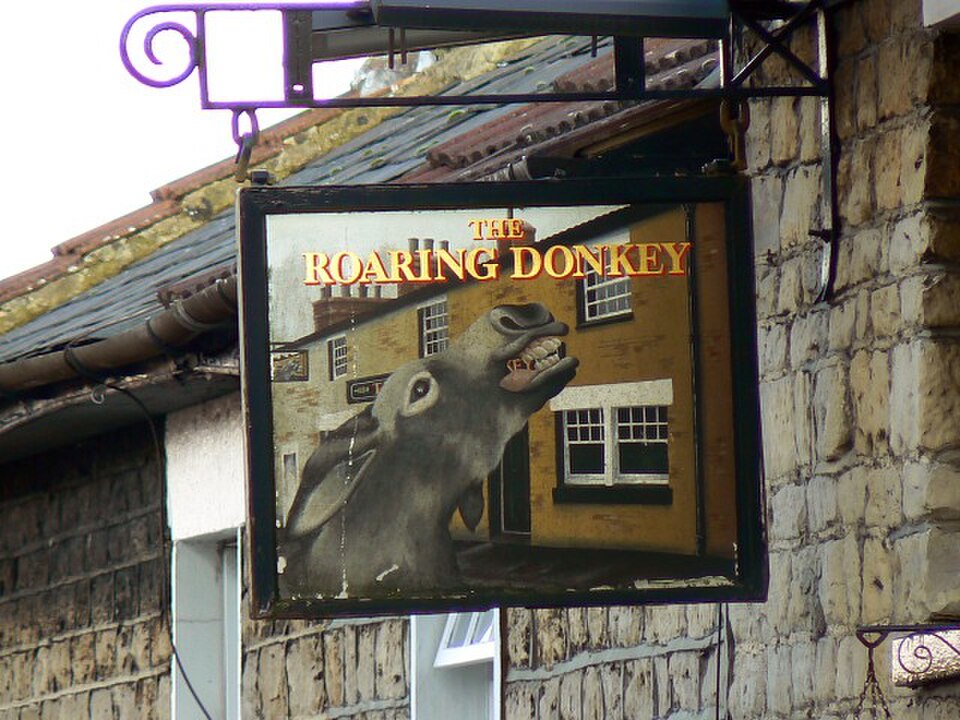
During the fighting in 1948, the waylaid us and opened fire, shooting my father, may he rest in peace. I escaped because a stray donkey came into the line of fire and they shot it, so it died in place of me. My subsequent life in Israel, then, was really a gift from that unfortunate beast. What value then, honoured sir, should we assign to this life of mine?
Read that a couple of times and it gets darker, not lighter. His father’s death and a donkey’s death end up sitting side by side, almost weighed against each other, like Saeed is genuinely trying to work out an exchange rate between them. That’s the horror hiding in the joke: under occupation, a life — human or animal — gets treated like something you can price, substitute and trade. Saeed can only make sense of his own survival using the exact same cold, transactional language of the system that killed his father in the first place.
Saeed doesn’t leave Haifa in 1948, when almost everyone around him does. Somehow he ends up as an informant for the new Israeli state — not because he’s cunning or has some master plan, but because he’s stumbled into the realisation that the only way to keep breathing is to stay agreeable to whoever currently holds the power to decide whether he keeps breathing or not. It’s less that he chooses to collaborate and more that he’s backed into a corner where there’s genuinely nothing else left for him to offer except himself — his information, his obedience, his silence.
You start to realise that his “pessoptimism” — that mashup of pessimist and optimist he names himself — isn’t really a personality trait at all. It’s what happens to someone’s mind when they can’t fix their actual situation — can’t get their land back, can’t bring their father back — so instead their whole way of thinking splits in two and stays that way, permanently bracing for both the worst and the best at once.
Here’s the thing that got me, though: Habiby won’t let you just decide Saeed is a bad guy and move on. Part of you wants to — he’s literally collaborating with the people erasing his own community.
My friend wept to see the road ahead And realized that it to
Caesar led I told him
Allow not your eyes to weep for we
Our kingdom back must get or die and pardoned be.
Even in these few lines of verse, you can hear the politics loud and clear. “Our kingdom back must get” isn’t wistful sighing about the past — it’s a flat demand to take back what was stolen. The weeping friend has given up, resigned himself to defeat; the speaker snaps back: don’t cry, fight, or die trying. It’s the whole tension of the book compressed into four lines — do you accept things as they are, or keep pushing back?
The book is framed as letters Saeed writes, supposedly from inside an asylum — though by the last stretch you start wondering if “asylum” is code for something closer to outer space, or maybe just a stand-in for a mind that’s finally run out of room to hold everything it’s seen. It moves in loose, jumpy episodes rather than a tidy plot — think Candide, if Voltaire had been writing from inside an actual, documented history instead of a satirical one. But that comparison only goes so far: Voltaire was mostly mocking an idea, the fashionable philosophy that everything happens for the best. Habiby isn’t mocking an idea. He’s naming real massacres, real years, real stolen land. Saeed’s ridiculous voice is the vehicle Habiby uses to show you how thoroughly people can be made to accept, even joke about, their own dispossession.
The village destructions, the Kafr Qasim massacre in 1956, the chaos of 1967 — none of it is softened by being fictionalised. At one point he says: “I dreamed that history would remember me as it had our ancient astronomers. This dream of time survived right up to the time they ambushed my father, may his soul rest in peace, and established the state of Israel.”
There’s something devastating in how casually those two things get put together — a boyhood dream of being remembered by history, and then, in the very same breath, his father’s murder and the founding of a state. There’s no separating the personal from the political here. Saeed doesn’t get to have a private dream that exists outside of what’s happening to his country. History just walks straight through it. If anything, hearing it filtered through Saeed’s spiralling voice makes it land harder, because you’re laughing right up until the floor drops out.
Saeed’s no hero, and the book has zero interest in giving you one. It cares more about the uglier question: what do ordinary people actually do to survive a system built to erase them? And how thin, really, is the line between “collaborating” and just “enduring,” once disappearing entirely is the alternative? Habiby isn’t interested in the comforting fantasy that a braver person would have simply resisted no matter what. He’s asking us to sit with how blurry the line really is between “going along with it to survive” and “actively helping the people crushing you” — especially once the alternative is just not existing anymore.
The ending — Saeed getting whisked off by an alien who, like him, doesn’t quite belong anywhere — sounds absurd on paper, and structurally plays like a punchline. But by the time you get there, it doesn’t feel like a cheap way out. Saeed has felt like a stranger in his own life for the entire book — cut off from his community, his land, even himself — so having him carried off by an actual alien isn’t really an escape from that feeling. It’s just the feeling finally made literal. Total loss doesn’t leave you anywhere to belong, not even in the human world anymore.
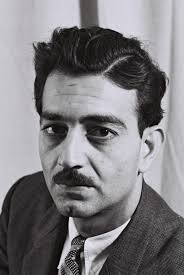
It helps to know Habiby lived a version of this tension himself — a Palestinian citizen of Israel who spent years as a member of the Knesset for the Israeli Communist Party. He wasn’t writing this from a place removed. He was inside it: a Palestinian, a communist, operating within the very state structure he’s critiquing — exactly the kind of impossible, contradictory position he gives to Saeed.
Coming up on fifty years old now, The Secret Life of Saeed still feels like one of the strangest, most formally daring novels the Arabic literary tradition has produced, and a strong contender for the defining Palestinian novel of the twentieth century. It is painfully apt for today’s situation in Gaza. It’s not a comfortable read, and it was never supposed to be one. Habiby wrote a book about one catastrophe, but he ended up writing something that keeps explaining the next one, and the one after that. Almost fifty years later, it still reads like it was written yesterday — because in the places that matter most, very little has actually changed.