Facebook Twitter Instagram
  • Home
  • About Us
  • Arts Hub
    • Architecture
    • Fiction
    • Films
    • Life Writing
    • Music
    • Poetry
    • Theatre
    • Visual Arts
  • Culture Hub
    • Clothing & Fashion
    • Cultural Commentary
    • Eating & Drinking
    • Education
    • Festivals/ Events
    • Religion
    • Science & Technology
    • Sport
    • TV, internet and other media
  • Contributors
  • Books
  • E-books
  • Support Us
0 0
Shopping cart (0)
Subtotal: £0.00

Checkout

Free delivery in the UK.

  • Home
  • About Us
  • Arts Hub
    • Architecture
    • Fiction
    • Films
    • Life Writing
    • Music
    • Poetry
    • Theatre
    • Visual Arts
  • Culture Hub
    • Clothing & Fashion
    • Cultural Commentary
    • Eating & Drinking
    • Education
    • Festivals/ Events
    • Religion
    • Science & Technology
    • Sport
    • TV, internet and other media
  • Contributors
  • Books
  • E-books
  • Support Us
Facebook Twitter Instagram
0 0
0 Shopping Cart
Shopping cart (0)
Subtotal: £0.00

Checkout

Free delivery in the UK.

Return to previous page
Home Blog Culture Hub Religion

Caudwell on Religion

Caudwell on Religion

26 November 2015 /Posted bymojohand
Post Views: 2,381

Ben Stevenson outlines Christopher Caudwell’s historical materialist analysis of religion.

Poet, activist and theoretician Christopher Caudwell wrote extensively on issues of philosophy and idealism in culture and science. His contribution to a Marxist understanding of the way in which religions – in particular the early philosphy of Christianity – has been shaped as a product of the societies they spring from is best encapsulated in his essay “The Breath of Discontent: A Study in Bourgeois Religion”.

Caudwell squarely places the development of philosophy within the context of the type of society and the class divisions that produced it.

Caudwell was born Christopher St. John Sprigg in 1907. He left school at 15 and began working as a journalist in Bradford. In the mid 1930s he became interested in Marxism, moving to Poplar, East London, in 1935 and joining the Communist Party. He threw himself into Party activity in the Borough, which saw a great deal of anti-fascist activity at the time. When the Spanish Civil War broke out he drove the ambulance his branch raised money for to Spain. Upon arriving he immediately signed up with the international brigades. He was killed at the Battle of Jarama in 1937, covering a retreat with machine gun fire. His Marxist works were published posthumously under the pseudonym Caudwell so as not to interfere with his reputation as a writer of thrillers.

In analysing the transition from magic to religion in this article, Caudwell shows how various forms of worship are always rooted in the material reality that confronts the practitioners. For instance, where societies practice rain dances to entice the gods or spirits to water their crops, they do so at the time of year that experience tells them the dance will yield results.

Rain dances also show the extent to which magical and religious practices are and were bound up in production. Religious and class structures developed with the division of labour in the production process. For instance, it is wrong to claim that Christianity was ascendant simply because it was more attractive than other religions, rather it was the worldly content of Christianity – the Kingdom of heaven would come on earth, led by the revolutionary Christ. Christ emerged at a time when the Roman Empire was in decay, its social relations becoming a fetter on the production process. Thus people were immediately drawn to the revolutionary Christian ideology.

Caudwell however points out a reformist strain within Christendom from the start. Despite Christ’s constant denunciations of the rich he hesitated before declaring himself messiah, yet when he did so turned his back on seizing power in favour of assuming it through prayer. This was contrary to the Jewish conception of the Messiah and thus he lost the nationalist support of the Jewish working class in doing so (it should be noted here that Roman society did not correspond to the class divisions in society today, thus when Caudwell speaks of the ‘working class’ he more refers to the poor and exploited than those selling their labour power to the bourgeoisie). Caudwell traces the step into reformism in Christ’s refusal to allow Peter to use violence – whipping the money lenders out of the temple but not out of the state.

The church subsequently became much like early cooperative societies, caring for the poor and holding property in common. The strongly decentralising tendency within the movement made it a threat to the Empire, as it attracted the local ruling class who were opposed to excessive taxation by the Roman state. Emboldened by those Caudwell likens to the modern petite bourgeoisie the movement began to openly challenge the Roman concept of the ‘God-Emperor.’

The first emperor to accept the new Christian religion was Constantine, who, claims Caudwell, allowed the Christian’s leaders to betray them in precisely the same way the leaders of social democracy have betrayed the working class in capitalist countries. Under Constantine the revolutionary elements of Christianity became organs of state power, the Kingdom of Heaven was entirely shifted into the ‘next world’.

Caudwell goes on to trace the development of Christianity with the emergence of capitalism and the expressions of class divisions in the various schisms in the Christian faith. ‘The Breath of Discontent’ is a highly recommended read for an illuminating dialectical materialist analysis of religion.

Tags: caudwell, christianity, further studies of a dying culture, mysticism, religion, review
Share Post
  • Twitter
  • Facebook
  • Pinterest
  • Mail to friend
  • Linkedin
  • Whatsapp
Art and the Bolshevik Revoluti...
Godless revolutionary: the lif...

About author

About Author

mojohand

Other posts by mojohand

Related posts

Culture Hub
Read more

Revolutionary Renewal: Christian teachings and democratic socialism

Posted byGeoff Bottoms
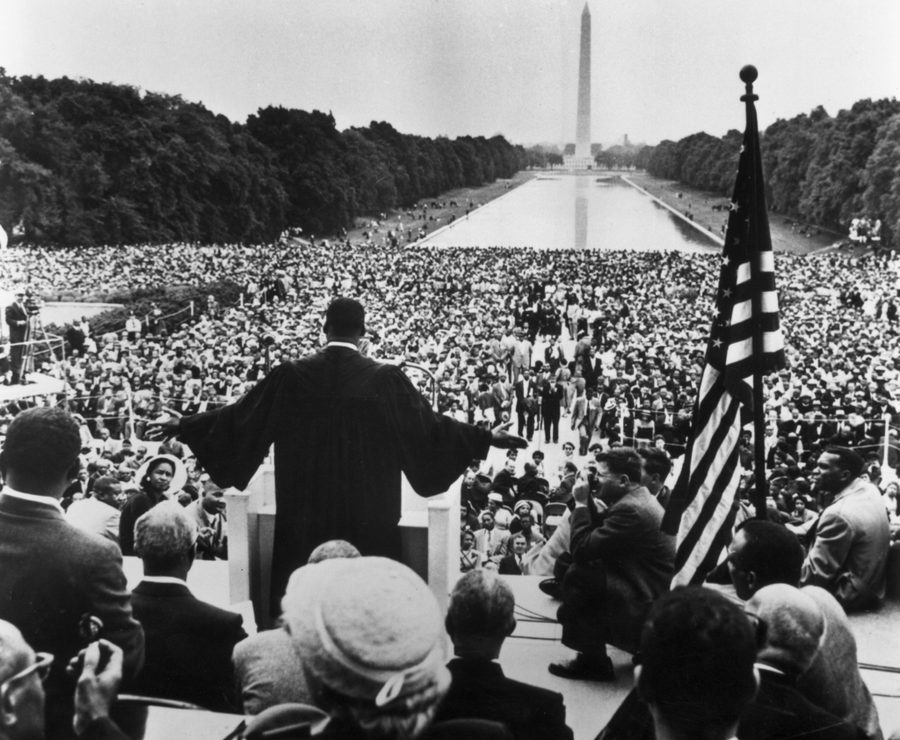
Post Views: 249 Photo of Dr. Martin Luther King Jr. addressing the crowd during the 1957 Prayer Pilgrimage for Freedom. Image: Public Domain By Geoff... Continue reading
Culture Hub
Read more

“The point is to change it”: Christian social teaching and socialist principles and practices

Posted byGeoff Bottoms
Post Views: 404 By Geoff Bottoms                                                                                                  In applying the Jewish and Christian scriptures to contemporary social and political issues, the various churches recognise that... Continue reading
Culture Hub
Read more

Our Culture: Can the Church Be More Democratic?

Posted byGeoff Bottoms
Post Views: 307 In this edition of Our Culture, Geoff Bottoms examines the Church as a cultural and political institution, tracing the gap between the... Continue reading
Culture Hub
Read more

Pope Leo and ‘Dilexi Te’: an ally in the struggle for solidarity and against accumulation

Posted byGeoff Bottoms
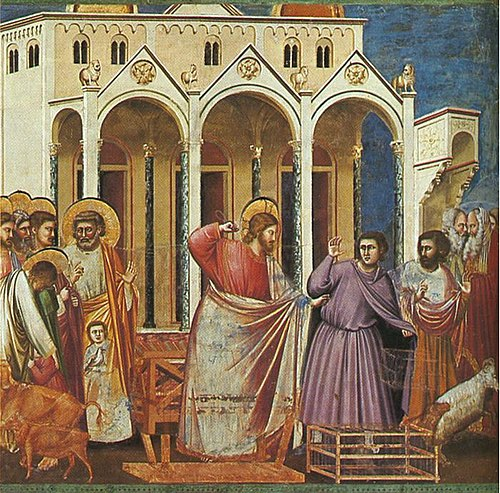
Post Views: 551 Jesus casting out the money changers from the Temple by Giotto, 14th century By Geoff Bottoms Just as the late Pope Francis... Continue reading
Culture Hub
Read more

Solidarity, love and Christmas

Posted byGeoff Bottoms
Post Views: 269 Christ in the Rubble By Father Geoff Bottoms I recently celebrated a humanist funeral for a comrade of mine, and at the... Continue reading

Categories

  • About us
  • Architecture
  • Arts Hub
  • Clothing & Fashion
  • Cultural Commentary
  • Culture Hub
  • Eating & Drinking
  • Education
  • Festivals/ Events
  • Fiction
  • Films
  • Life Writing
  • Life Writing
  • Music
  • Poetry
  • Religion
  • Round-up
  • Science & Technology
  • Sport
  • The 1917 Russian Revolution
  • Theatre
  • TV, internet and other media
  • Visual Arts
Recent Popular

Poetry as lived contradiction

9 February 2026 Comments Off on Poetry as lived contradiction

THE EPSTEIN FILES

9 February 2026 Comments Off on THE EPSTEIN FILES

Inspiration

9 February 2026 Comments Off on Inspiration

Reflections on Minneapolis After a Root Canal

9 February 2026 Comments Off on Reflections on Minneapolis After a Root Canal

Contributors to Culture Matters

17 October 2017 Comments Off on Contributors to Culture Matters

The radical imagery of William Blake

2 March 2021 Comments Off on The radical imagery of William Blake

Music and Marxism

7 June 2016 Comments Off on Music and Marxism

When the Council owns the building you ...

1 December 2024 Comments Off on When the Council owns the building you live in

Tags Cloud

bbc Black Lives Matter Boris Johnson Brecht communism Covid19 Cultural democracy cultural struggle Donald Trump English Revolution Gaza Gaza genocide Genocide in Gaza George Orwell Hitler IDF Iran Israeli bombing Israeli war crimes jeremy corbyn Jesus Karl Marx Keir Starmer Levellers Marx marxism Miners' Strike Miners' Strike 1984 Netanyahu Netflix Palestine Action poetry Raymond Williams Reform UK refugees Rishi Sunak Russian Revolution Shakespeare socialism Spanish Civil War Starmer Starvation in Gaza by Israel Trump Ukraine william morris

Search

Print

follow us on our Social Networks

Facebook Twitter Instagram Youtube

Copyright © 2016 - 2024 Culture Matters Co-operative Ltd; FCA Registration No: 4347; Registered office: 30 Glenbrooke Terrace, Gateshead, NE9 6AJ. All rights reserved.

Home
Support Us
Books