Image by Scott Alsworth
By Deirdre O’Neill
The far right is winning the battle of ideas almost everywhere. How do we explain this contradiction? Why are the arts so easily boxed into the negative clichés of elitism and obscurity? Why has the left’s cultural hegemony been so ineffective at challenging the far right? And what can any of us do about it?
What appears to be a contradiction – that the far right is winning the cultural struggle, the battle of ideas, yet it has no artistic culture to speak of – is, I want to argue, not really a contradiction. It’s the result of using one word, ‘culture’, for two different things, and missing the connection between them.
The first meaning is culture as a way of life. As Raymond Williams argued, culture is ordinary, it is a whole way of life. It shapes what people take for granted: who they blame when things go wrong, what counts as realistic, who ‘people like us’ are and where our loyalties lie. None of this requires a single novel, poem or film.
The second meaning is culture as the arts: film, music, poetry, theatre. For Williams, these are ordinary too, because they grow out of a way of life and feed back into it. This is the connection that is often missed: the arts are not separate from a way of life. When a way of life is dismantled, the arts don’t just lose an audience; they lose a foundation. And a movement that is winning on the first kind of culture can then point at the second and say – that’s not for you.
The right is winning in the first sense, and it doesn’t need the second to do so. It shapes common sense through tabloids, GB News, podcasts, memes and social media, and through symbols such as the flag and appeals to ‘common sense’. It may be true that the right has no artistic culture of its own. But what the right has done is to build or buy its own cultural infrastructure: Murdoch’s newspapers, think tanks, wealthy donors, platforms such as X. The question then is who owns the means of cultural production. The left’s problem is the loss of an infrastructure that once connected the arts to the culture of working-class life.
The right’s power is largely negative, and that is how it works. Its cultural project is defined against the elite, against so-called ‘woke’ institutions, the metropolitan class and migrants. As a result, people hit hardest by deindustrialisation, in communities devastated by Thatcherism, aim their resentment at cultural institutions with which they have no connection, rather than at neoliberalism. The arts are an easy target because they are dominated by the middle classes, which allows the right to portray them as the cultural wing of the elite. A right that defines itself through opposition has no need of creative content to mobilise people.
The arts are vulnerable to this stereotyping because of what has happened to working-class cultural life. That cultural life grew out of industrial communities: the miners’ institutes, the unions, workers’ education, local theatres. These gave working-class people a political language and forms of expression that reflected the reality of their lives fostering and sustaining a culture of opposition. That culture was always under threat from conservative forces, but it was the collective response of an organised working class. When the miners, the print workers and the dockers were defeated, much of the infrastructure that supported it went with them. In its place is a rage that has no organising voice and the right has been quick to channel that rage into scapegoating.
What remains of the arts is concentrated in cities, mostly London, where the funding, institutions and audiences are. The sector has become more professionalised and more middle-class. Unpaid internships, expensive training and scarce grants mean that a career in the arts increasingly depends on the bank of mum and dad. It is not difficult to see why the charge of elitism is so easy for the right to weaponise.
Gramsci offers a useful way of understanding what is happening. He argued that every class produces its own ‘organic intellectuals’, that is, people who emerge from that class and speak from within it. The working class has lost most of its organic intellectuals. In the public sphere, working-class knowledge, and the ability to articulate it, is treated as not worth listening to. What we have is what Gramsci called ‘traditional intellectuals’: liberal-left ‘creatives’ who do not come from the working class and have little experience of working-class life, and so misrepresent it.
Cuts to arts education in schools, the closure of arts and humanities degrees at universities and the loss of local funding have made the situation worse.
And the blurring of the left and liberalism has made it worse still. Much of the arts world, the so-called creative industries, is liberal – it’s not socialist. Liberalism is committed to tolerance, diversity and the celebration of difference, superficial freedoms that have little to say about economic power and pose no threat to it. That is why liberalism easily accommodates neoliberal politics.
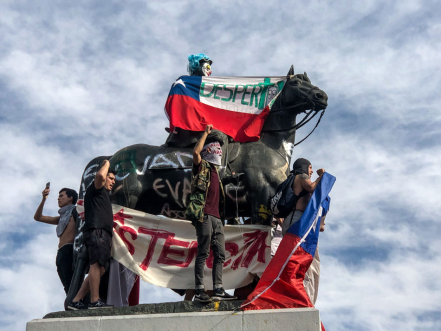
As a result, the arts establishment is for the most part disconnected from the material conditions of working-class life. Many working-class people who turn to the right do so because of job insecurity, poor housing, low wages, food banks and falling life expectancy, while at the same time they are vilified and excluded.
Cultural work is necessary, but not sufficient: we need economic change. We also need to be clear about what a socially committed arts culture can achieve. It can explain the hardships working people face in the context of power and economics, rather than leaving that explanation to the right. It can offer a framework through which working-class struggle can be understood. What we have now are representations of the working class filtered through left liberalism, representations that exist to satisfy middle-class assumptions about working-class life and working-class people.
Here I want to mention the work of the Inside Film project as an example of what a different approach might look like. Inside Film goes into prisons and teaches serving prisoners to script, shoot and edit their own films, within a framework aimed at raising class consciousness. Access to the means of cultural production is important because the skills involved are not neutral. Having control over how a story is shot and edited is control over who gets to define what is real.
Prisons are full of working-class people from communities hollowed out by deindustrialisation and austerity. The aim of the project is to create a space in which participants can author their own narratives and situate them in a wider political context, rather than seeing them, as they are encouraged to, as personal failures. This shifts the narrative from individual blame to the economic and political explanations that the culture of the left should be engaging with.
Giving serving prisoners authority over how they are represented also challenges the caricature of the arts as an elite preserve. Work with prisoners cannot easily be dismissed as the cultural wing of the metropolitan class. And unlike much of the arts sector, which offers little critique of neoliberalism, Inside Film ties cultural production directly to the material conditions of working-class life.
That it takes place inside an institution of state coercion, where the casualties of neoliberalism are warehoused out of sight, is not a contradiction. It is an example of what Gramsci called a ‘war of position’: a long struggle for influence within existing institutions, rather than a single assault on them from outside. I am not suggesting that the project is a substitute for economic change. It operates on a small scale and has always depended on external funding. But it does demonstrate what rebuilding the ties between culture and working-class life might look like in practice.
People who can tell their own stories, and represent themselves, are in a much stronger position to make political demands, and it is political representation that brings about economic change. But that will only happen if the left makes a commitment to building a different relationship between the arts and the working class, and to understanding the complexities of culture itself.
Contribution to the panel discussion at the ‘Artists Against Fascism’ conference held in London on 10 October