Facebook Twitter Instagram
  • Home
  • About Us
  • Arts Hub
    • Architecture
    • Fiction
    • Films
    • Life Writing
    • Music
    • Poetry
    • Theatre
    • Visual Arts
  • Culture Hub
    • Clothing & Fashion
    • Cultural Commentary
    • Eating & Drinking
    • Education
    • Festivals/ Events
    • Religion
    • Science & Technology
    • Sport
    • TV, internet and other media
  • Contributors
  • Books
  • E-books
  • Support Us
0 0
Shopping cart (0)
Subtotal: £0.00

Checkout

Free delivery in the UK.

  • Home
  • About Us
  • Arts Hub
    • Architecture
    • Fiction
    • Films
    • Life Writing
    • Music
    • Poetry
    • Theatre
    • Visual Arts
  • Culture Hub
    • Clothing & Fashion
    • Cultural Commentary
    • Eating & Drinking
    • Education
    • Festivals/ Events
    • Religion
    • Science & Technology
    • Sport
    • TV, internet and other media
  • Contributors
  • Books
  • E-books
  • Support Us
Facebook Twitter Instagram
0 0
0 Shopping Cart
Shopping cart (0)
Subtotal: £0.00

Checkout

Free delivery in the UK.

Return to previous page
Home Blog Culture Hub Cultural Commentary

500 years of being unrealistic

500 years of being unrealistic

28 September 2016 /Posted byJohn Storey
Post Views: 1,600

500 years after the publication of Thomas More’s Utopia, and days after Jeremy Corbyn’s election victory, Professor John Storey explains how utopian thinking seeks to place hope, optimism and imagination at the core of politics. 

Karl Marx and Friedrich Engels called it the ruling ideas, Antonio Gramsci hegemony, Herbert Marcuse one-dimensionality, and Louis Althusser ideological state apparatuses. What all of these different concepts of power have in common is an insistence that power always produces a particular version of reality. To remain within this reality we are required to be realistic; realistic about this and realistic about that, but above all, realistic about what is possible and what is not.

Like everything else, there is a struggle over the meaning and experience of reality and the demand to be realistic is always an attempt to control desire. But desire is one of the things that make us human. Advertising tries to colonize and satisfy it with commodity solutions. Buy enough of the right things and all your dreams will come true. But humans have always sought to expand it beyond the here and now in search of something or somewhere better. Five hundred years ago in 1516 Thomas More named this desire Utopia.

If we want to describe something as unrealistic the word that is often used is utopian. Marx and Engels used it to describe a version of socialism that thought it could be achieved by mental effort alone. But there was another side to Utopian Socialism, one that Marx and Engels acknowledged and admired – its ability to encourage people to imagine the world in a different way. As they explained in the Communist Manifesto, ‘They attack every principle of existing society. Hence they are full of the most valuable materials for the enlightenment of the working class’. Enlightenment or what Miguel Abensour calls the ‘education of desire’ is at the very core of the political power of utopianism.

The role of utopianism is to make change conceivable and to encourage the organisation that might make it possible. It allows us to imagine differently and to think about the boundary between the possible and the so-called impossible in a new way. It can take many forms, both written and practiced, but at its core is the seeking of somewhere or something better. Does this make utopianism hopelessly unrealistic?

Well, only if we think that reality is something beyond human intervention. If instead we understand that what we call reality is a human construct that can always be constructed differently, it becomes difficult to resist Muhammad Ali’s observation that ‘Impossible is not a fact. It’s an opinion’.

Utopianism always challenges the current ordering of the possible, knowing that the impossible (a historical category) is always open to change. It continually confronts the existing with the possible. In doing this it can expose when the impossible (so called) is little more than an ideological screen in place to discourage demands for social change.

Of course there are what we might call objective conditions of possibility that clearly limit and constrain desire, but often what is presented as objective conditions of possibility are little more than ideological obfuscations designed to force desire to bow down before the twin gods of realism and impossibility.

Unrealistic is always put forward as an absolute, as if reality were fixed and unchanging and always beyond the reach of human intervention. However, once we recognize that reality is a historically variable human construct, the charge of being unrealistic seems far less conclusive and far less persuasive.

Utopianism has what Bertolt Brecht called, in a very different context, an alienation effect. It makes us see the familiar as suddenly unfamiliar. This making strange can have a shattering impact on what Antonio Gramsci called ‘common sense’ – that which hides from criticism as the self-evident, the habitual and the taken for granted. It is this aspect of utopianism, rather than the presenting of blueprints for a new society, that points to its political potential. By challenging the certainty of reality and expanding the range of the possible, it encourages us to desire differently. It points to the unrealized possibilities of human society.

In other words, utopianism promotes a realism that is unrestrained by prevailing versions of reality. It gives us the resources to imagine the future in a different way. Although utopianism cannot change the world, it can produce a demand for change, one that frees desire from commodity solutions and the confines of the prevailing structure of power, with all its realism and limited possibility, allowing us to embrace with Raymond Williams the optimism that ‘Once the inevitabilities are challenged, we begin gathering our resources for a journey of hope’.

None of this might be what Thomas More intended when he published his little book in Latin in 1516. But when he named a desire to imagine and construct alternative realities, that has since manifested itself in both writing and practice, he began a way of thinking and acting that has sought to place hope, optimism and imagination at the core of politics.

We have to first imagine what is possible and then organise to make it happen. Perhaps in the future when you hear or see something described as utopian you will ask the critical question, ‘Against whose version of reality is it unrealistic?’
Share Post
  • Twitter
  • Facebook
  • Pinterest
  • Mail to friend
  • Linkedin
  • Whatsapp
Class, CAMRA, craft ale and th...
Long live those who died like ...

About author

Avatar photo

About Author

John Storey

John Storey is Emeritus Professor of Cultural Studies at the Centre for Research in Media and Cultural Studies, University of Sunderland, UK. He has published extensively in cultural studies, including twelve books. He is currently working on a thirteenth book, Refusing to be Realistic: Cultural Studies and Utopian Desire, to be published with Routledge.

Other posts by John Storey

Related posts

Cultural Commentary
Read more

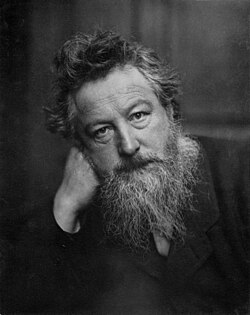
William Morris: Art, Revolution, and the Dream of a Different Society

Posted byJenny Farrell
Post Views: 98 By Jenny Farrell It is 1890. While Britain is aggressively expanding its global empire, its domestic industries are increasingly dominated by mechanised... Continue reading
Cultural Commentary
Read more

Ten Books to Make Sense of the 2026 Labour Party Conference

Posted byMark Perryman
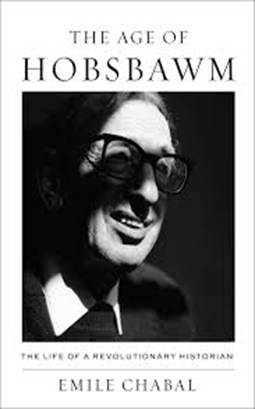
Post Views: 291 Mark Perryman’s annual selection this year ranges from Eric Hobsbawm to Rocking against Racism  Emile Chabal The Age of Hobsbawm: The Life... Continue reading
Cultural Commentary
Read more

Culture Is Never Fixed: Why Cultural Studies Matters in a Migrating World

Posted byTarique Ahmed
Post Views: 499 Commons image By Tarique Ahmed Culture is often treated as something we inherit: a language spoken by our grandparents, food prepared in... Continue reading
Cultural Commentary
Read more

A HOMAGE TO THE UNHOMED: ‘NATION OF STRANGERS’ BY ECE TEMELKURAN

Posted byJim Aitken
Post Views: 1,138 Nation of Strangers is available here By Jim Aitken For a number of years now Ece Temelkuran has been warning us about... Continue reading
Cultural Commentary
Read more

The Light of Perfection: Why Walter Benjamin Matters

Posted byOmar Sabbagh
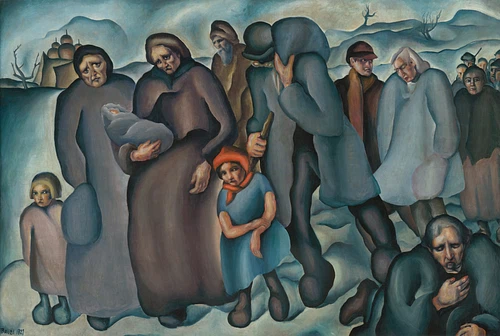
Post Views: 2,169 Refugees by Konštantín Bauer By Omar Sabbagh How should we view the past? How do we do justice to the stories of... Continue reading

Categories

  • About us
  • Architecture
  • Arts Hub
  • Clothing & Fashion
  • Cultural Commentary
  • Culture Hub
  • Eating & Drinking
  • Education
  • Festivals/ Events
  • Fiction
  • Films
  • Life Writing
  • Life Writing
  • Music
  • Poetry
  • Religion
  • Round-up
  • Science & Technology
  • Sport
  • The 1917 Russian Revolution
  • Theatre
  • TV, internet and other media
  • Visual Arts
Recent Popular

Reality is the new fiction

5 October 2026 Comments Off on Reality is the new fiction

People Who Get Up Early in The ...

4 October 2026 Comments Off on People Who Get Up Early in The Morning

one inch

4 October 2026 Comments Off on one inch

William Morris: Art, Revolution, and the Dream ...

3 October 2026 Comments Off on William Morris: Art, Revolution, and the Dream of a Different Society

Contributors to Culture Matters

17 October 2017 Comments Off on Contributors to Culture Matters

The radical imagery of William Blake

2 March 2021 Comments Off on The radical imagery of William Blake

Music and Marxism

7 June 2016 Comments Off on Music and Marxism

About Us

23 December 2015 Comments Off on About Us

Tags Cloud

bbc Black Lives Matter Boris Johnson Brecht capitalism communism Covid19 Cultural democracy cultural struggle Donald Trump Fascism Gaza Gaza genocide Genocide in Gaza George Orwell Illegal war on Iran Iran Israel Israeli bombing Israeli war crimes jeremy corbyn Jesus John Berger Karl Marx Keir Starmer Marx marxism Miners' Strike Miners' Strike 1984 Netanyahu Netflix Palestine Palestine Action poetry Raymond Williams refugees Rishi Sunak Russian Revolution Shakespeare Spanish Civil War Starmer Starvation in Gaza by Israel Trump Ukraine william morris

Search

Print

Sponsored by:

follow us on our Social Networks

Facebook Twitter Instagram Youtube

Copyright © 2016 - 2026 Culture Matters Co-operative Ltd; FCA Registration No: 4347; Registered office: 30 Glenbrooke Terrace, Gateshead, NE9 6AJ. All rights reserved.

Home
Support Us
Books