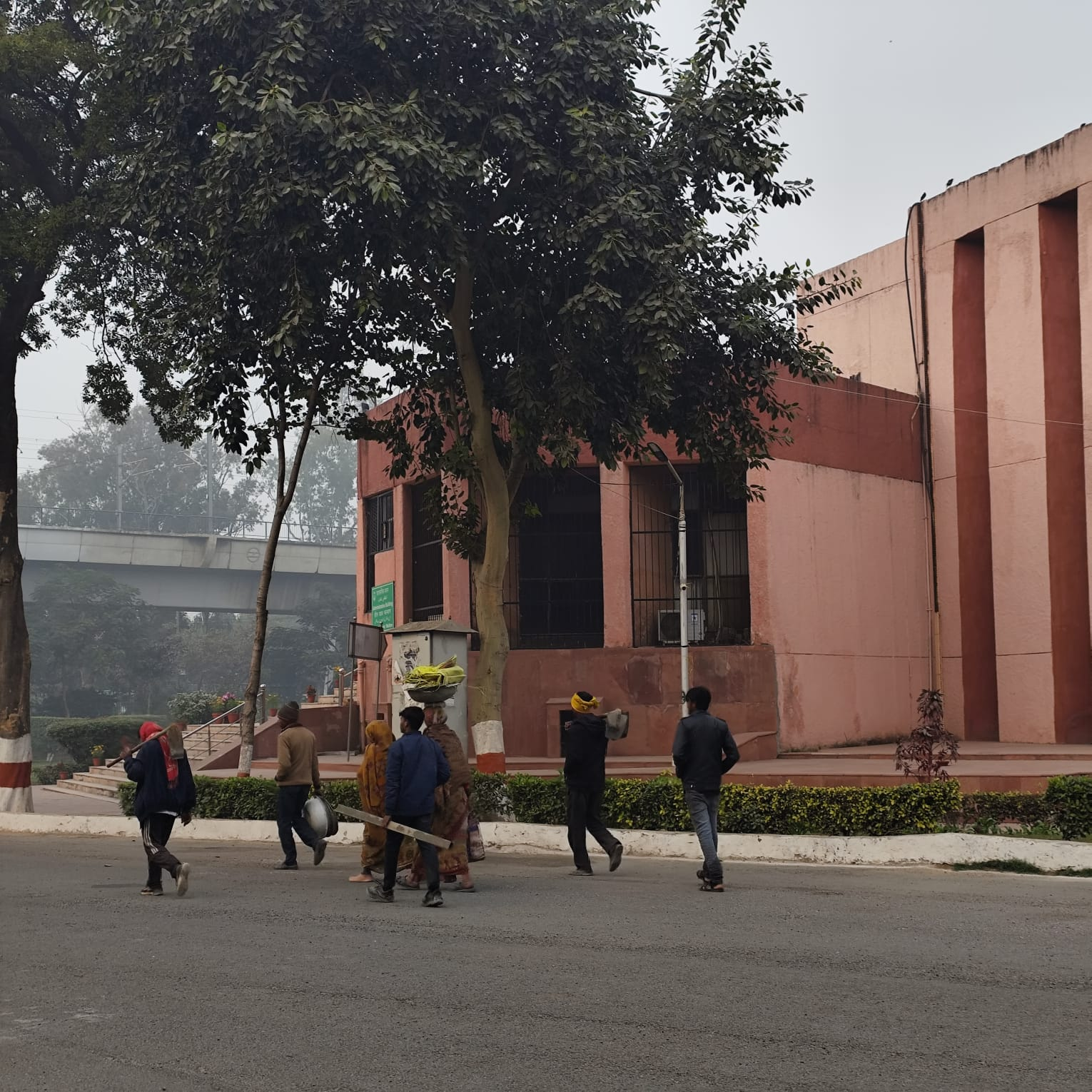
Cover pic: still from the American mockumentary The Office
Will Kitchen introduces his new book
In his book The Great Cat Massacre and other Episodes in French Cultural History (1984), Robert Darnton tells the story of a group of print workers in eighteenth century Paris who subvert an order from their master. The employees are instructed to get rid of some stray cats in the street outside the shop, and use this as an opportunity to get revenge on their employer by also killing his wife’s pet. Darnton describes a ‘carnivalesque’ event which subverts the master’s authority through ritual display and symbolism, and uses this as an example of how to interpret revolutionary ideals in popular culture.
It’s a classic essay in ethnographic and popular history, a field which Darnton helped to establish around the 1970s and 1980s, along with figures like Jacques Rancière and E. P. Thompson. Reading this essay a few years ago, I was interested to adopt a more conservative reading for this kind of ‘carnivalesque’ event.
The historian Harold Mah wrote a famous rebuttal to which dealt with the issue that I found troubling. Mah reveals how Darnton’s account must exclude certain aspects of history in order to construct the argument. The facts can also be interpreted to produce a political result entirely opposed to Darnton’s positive view of carnival. What the author of The Great Cat Massacre excludes from his account is the re-establishment of employer authority after the event, and the negotiations which take place in a new equilibrium of labour relations.
The carnivalesque moment ends and the social totality goes on as usual, having been purged of unruly elements. This is a reframing of the carnivalesque moment as a kind of ‘safety valve’ – letting-off steam for systematic maintenance, rather than any kind of genuine revolution.
Mikhail Bakhtin’s concept of the ‘carnivalesque’ evokes the liberating spirit of carnival time, when a performative equality exists between participants. It marks an interruption of the working calendar; a playful distortion of social categories; an intrusive celebration of unproductivity; a joyous, temporary inversion of high and low. Associated with the traditions of poststructuralism and Marxism, the carnivalesque has been interpreted in various ways by political and cultural studies practitioners. That Rabelaisian moment when ‘the cart is put before the oxen’ has been applied to phenomena from eighteenth century masquerade balls to contemporary TV sitcoms.
The interpretation which makes most sense to me, however, is an idea perhaps most rigorously developed by Michael André Bernstein in his book Bitter Carnival: Ressentiment and the Abject Hero (1992). Bernstein suggests that the carnivalesque is actually a conservative idea: a ritual of integration and catharsis that allows for potentially revolutionary energies to be displaced in a controlled way, and thereby maintaining the continuity of the social order.
The underlying thesis of my new book – Culture, Capital and Carnival: Modern Media and the Representation of Work (Bloomsbury, 2025) – comes from acknowledging a connection between (1) Bernstein’s conservative interpretation of Bakhtin’s carnivalesque and (2) the appropriation of critique by neoliberal capitalism described by economic sociologists like Luc Boltanski and Ève Chiapello in their book The New Spirit of Capitalism (1999). I wanted to explore how these ideological tensions operate within the sphere of cultural production, specifically in relation to the representation of labour, i.e., working behaviours and the values that give them meaning.

Dog Day Afternoon, Warner Bros., 1975
Let’s look at how this analysis works in the example of Dog Day Afternoon (1975). A couple of bank robbers find themselves at the centre of a media circus. The robbery goes wrong, they end up surrounded by police and news cameras. Sonny, the leader of the gang (Al Pacino), stands up to the police and tries to make the best of the situation. Sidney Lumet’s film has a long-standing reputation as a left-wing, socially critical text; it is famous for its engagement with police violence and comparatively positive representation of homosexuality and queer themes. Dog Day Afternoon embodies something of that waning countercultural spirit of America in the early 1970s, associated with the fallout from Vietnam and the civil rights movement, and a gradual turn to resentment during the conservatism of the following decades. But in order to tell the story successfully, the narrative creates an interesting tension around the values of working behaviour.
Sonny must take charge of a complex, dramatic situation and deal with a host of stressful problems ranging from hostage negotiation to PR, and even a bit of human resources. Sonny essentially becomes the manager of the bank. In addition to its critical content, therefore, the film can also be seen to uphold and validate a certain system of values – values grounded in character sympathy and audience engagement – that are easily accommodated by the world of mainstream work and social order that the outsider criminals invade. The process of telling the story requires Sonny to take up and embody certain qualities which are deemed praiseworthy. Just like the ideal manager of neoliberal capitalism which would soon become a dominant force in the global economy after 1975 (returning to that more ‘Schumpeterian’ image of the Romantic entrepreneur), Sonnyis what Boltanski and Chiapello describe as a precarious, intuitive leader; a charismatic visionary, and a ‘vector’ for the connection of disparate spaces.
These values are emblematic of the so-called ‘New Leadership’ paradigm which overlook the post-war image of the business leader as the head of a rigid and pyramidal bureaucracy. So, in Sonny ‘the rebel against corporate culture’, we see a fairly typical representative of an emerging economic agency: a dynamic, porous and precariously mobile agent, all too familiar to neoliberal management discourse. By looking at films such as Dog Day Afternoon, as well as TV shows and books, Culture, Capital and Carnival sets out to try and understand the cultural carnivalization of labour values.

Henry James, Library of America, 2025
Another chapter is inspired by Henry James’ novella ‘The Lesson of the Master’ (1888). James tells the story of an aspiring young writer who meets a very successful novelist (rather like James himself), and is impressed by his wealth, his big home, his wonderful wife; and the young author wants to learn how to be a similarly successful artist. The Master’s advice, however, is to stop chasing the things which seem so enviable about his own life. The money, family contentment, success – all these things, the Master claims, are sapping the literary qualities which he prises above everything else.
Although presented in sober, Jamesian prose, ‘The Lesson of the Master’ displays the same comforting, cathartic, liberating inversion of social values characteristic of the carnivalesque. The strange thing is, however, that when the young artist takes the Master’s advice – renouncing worldly cares and privilege in order to pursue his artistic ideals – the story raises the possibility that the advice was a trick. During the student’s ivory tower seclusion, something precious is stolen from him by the Master. It may have been an unhappy coincidence. Yet the young writer begins to suspect the Master’s motives in sharing his Lesson. Unlikely as it may seem, did he lay a trap for his trusting pupil?
James’ story provides a model for a cultural trope which I call ‘the Lesson of the Master’. The Lesson characterises any representational scenario in which a person whose life appears to be worth envying – because of wealth, success, power or prestige – is undermined in a carnivalesque way. The values that support that initial judgment of envy become inverted. In essence, the Lesson which is seen to be expressed by any such text amounts to: ‘You don’t need to feel guilty or resentful about not having as much as your Master. Their life is not as pleasant as it seems. Be content with your situation, and work’.
This is an extremely prevalent trope which can function as a form of ideological mystification supportive of maintaining inequality, and we can see it at work in a whole range of cultural texts, novels, oral history, journalism, historiography, and particularly films and TV shows. We see what trials powerful and successful people must go through to maintain their privileged situations, and we think: ‘I’m glad I’m not like them. Lets’ leave the rich to suffer their riches, then.’ We see that it is not so great to be promoted and powerful after all. And we absolve ourselves of the guilt of not being more successful than we are.
Culture, Capital and Carnival: Modern Media and the Representation of Work is published by Bloomsbury Academic (2025).