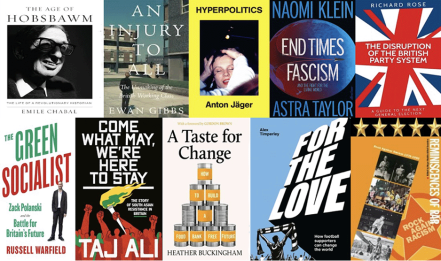
Mark Perryman’s annual selection this year ranges from Eric Hobsbawm to Rocking against Racism
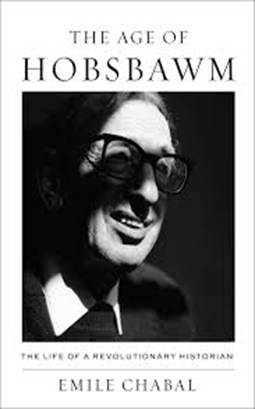
Emile Chabal The Age of Hobsbawm: The Life of a Revolutionary Historian
In the October 1983 edition of the magazine Marxism Today Eric Hobsbawm described Labour’s landslide defeat in that year’s General Election as Labour’s Lost Millions. It was this essay, combined with Eric’s September 1978 essay The Forward March of Labour Halted, also published by Marxism Today, that resulted in him being dubbed ‘Neil Kinnock’s favourite Marxist’. The pair of them celebrating this apparent intellectual togetherness at the 1983 Labour Conference to speak at a Fabian Society Fringe Meeting. Who would Andy Burnham choose as his intellectual best mate?
Emile Chabal’s magnificent biography-which-isn’t-a-biography locates the formation of Eric Hobsbawm as a thinker absolutely in his formative experiences, most notably the rise of fascism, the Popular Front and 1956. And in the process deepens our understanding of how not just Neil Kinnock, but for a broad cross-section of those seeking a way out of Labour halted and lost, found Hobsbawm such a compelling author of ideas.
The Age of Hobsbawm isavailable here
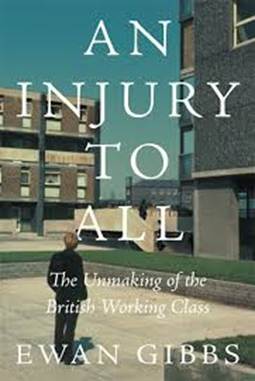
Ewan Gibbs An Injury to All: The Unmaking of the British Working Class
Class has raised the temperature of what passes for debate, on the fringe if not in the main hall where an event that still passes itself off as a ‘conference’ but in reality is a glorified rally addressed by Cabinet Minister after Cabinet Minister.
An avowedly conservative version of class politics was adopted by the ‘Blue Labour’ faction around a combination of radical economics with social conservatism. The more recent faction ‘Restoration‘ focuses on reviving Labour as a ‘working class party’ defined as populist patriotic and communitarian.
Into this fray enters the labour historian Ewan Gibbs, distinctly unimpressed by how Blue/Restoration Labour seeks to close down a debate before it has barely begun, let alone made it on to the aforementioned conference floor. An Injury to All in contrast is a primer for how to combine the ‘old’ social forces, in particular the trade unions with both new(er) social forces, race in particular, and social subjects. The chapters on how housing and consumption have a complicated relationship with class are particularly strong.
A book that treats ‘class politics’ as a means to ignite debate not close it down. A most welcome change, for the better.
An Injury to All is available here
Anton Jäger HyperPolitics: Extreme Politicization Without Political Consequences
For many commentators Anton Jäger’s is the most important book on politics of 2026. Will he be invited to address Labour Conference about the threat posed by ‘Hyperpolitics’? You’re joking. In the Corbyn era he would have been the star turn at the Labour fringe festival of ideas The World Transformed but that’s packed its bags and departed Labourism for, well it isn’t exactly clear where. Check the conference listings but I suspect you’ll look in vain for Anton Jäger’s name as a speaker. Even the more open-minded groups, the likes of Compass looking for Labour MP after Labour MP to be the fount of all wotsit. Ralph Miliband’s Parliamentary Socialism anyone?
For Jäger politics is at one and the same time everywhere and nowhere. We drool over the celebrification of the news while at the same Black Lives Matter and LGBT Pride fill the streets, public figures wear their angst over Palestine on the lapels but the genocide continues its bloodied apace. Anton Jäger goes in hard on the contradictions, he finds locating the answers more complex but at least unlike too many he’s having a go and will fire up his readers to have a go too. My advice to Labour Conference-goers, nip out and grab yourself a copy.
Hyperpolitics is available here
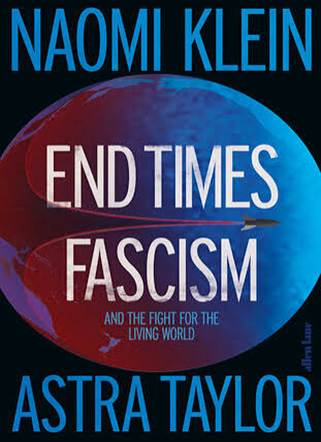
Naomi Klein and Astra Taylor End Times Fascism and the Fight for the Living World
When No Logo was published in 1999 Naomi Klein was a scarcely known author. Her ideas on the global reach and power of the ‘superbrands – the likes of Coca Cola, Macdonald’s, Nike – coincided with the Seattle protests against the WTO and Naomi Klein’s book almost immediately became a kind of ideological handbook for this fast-growing global movement. The 2026 Labour Conference will be single biggest gathering of Labour members, affiliated trade unions and socialist societies this year yet at Conference the corporate presence is everywhere, ‘No Logo’ anyone?
With End Times Fascism Klein and co-author Astra Taylor have written a book, once more, to energise with ideas. This time the new ‘popular front’ urgently needed to confront and reverse a global far right, which electorally in the shape of Reform UK poses a distinct threat to tens of Labour seats at the next General Election. The spectre of Farage at Number Ten should surely be sufficient to focus minds This book is by some considerable distance the best to fill those minds with ideas not only to defeat the far right but put something better, much better, in their place.
End Times Fascism is available here
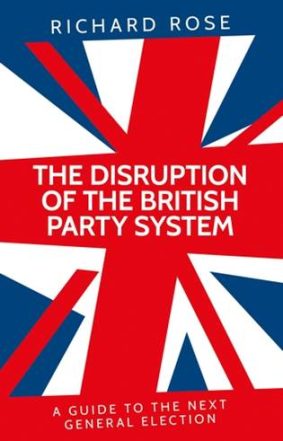
Richard Rose The Disruption of the British Party System
Unless the rumours prove correct that if Labour sees off the Zack Polanski in the Holborn and St Pancras by-election Andy Burnham may go for an early General Election to sub-title a book ‘ a guide to the next General Election’ two and a bit years out from when its due is bold indeed, if not tempting fate too. And that’s ‘s even when the author is ‘ an international pioneer in the comparative study of parties, elections and public policy’ to quite the book’s back cover blurb.
Nevertheless as Richard Rose explains in this extremely readable book the ‘two party system’ is over.
This is the insight all the self-inflated Labour hullabaloo of the 2024 ‘landslide’. When a government is elected on 33.7% of the vote, an (un)almighty swing to Labour of 1.6% from Corbyn’s 2019 ‘catastrophe’ this is not by any stretch of the political imagination a landslide. With Labour conference now overwhelmingly in support of Proportional Representation the poring over what a 5-party system (6 in Scotland and Wales) will be a major talking point on the conference fringe. While in the conference hall every effort will be made to keep Andy Burnham to stick to his pledge to put support for switch to Proportional Representation in the next Labour manifesto (a pledged his predecessor made and then dropped, as he did with all his pledges). This the book for all making and backing this case.
The Disruption of the British Party System is available here
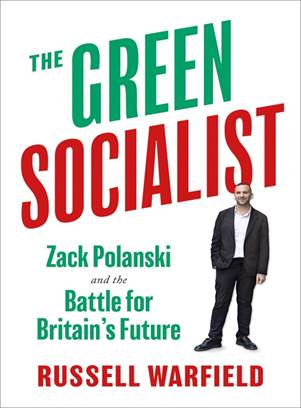
Russell Warfield The Green Socialist: Zack Polanski and the Battle for Britain’s Future
Just two-and-a-bit weeks after Labour Conference finishes the party faces arguably the most important by-election since the flurry of such contests with the SDP, mostly lost in the early 1980s. A Labour win and any kind of Green Party surge will have been well and truly slowed, if not halted. A thumping Labour victory and Andy Burnham’s leadership will get the kind of boost not even the obligatory Labour Conference standing ovations might provide. But make no mistake a Green Party win would be devastating. A contest Labour didn’t expect, or prepare for (another of Sir Keir’s pledges, made when exiting Number Ten early, was that he would see out his time as an MP until the next General Election, broken) but that is hardly a credible excuse. Zaxk Polanski’s model of eco-radicalism would by given a huge, irreversible boost. I use the term ‘eco-radicalism’ because Rusell Warfield’s otherwise very good book is misleadingly titled, however good Polanski’s politics there is little to convince this is socialism. Unfettered by ideological prejudice readers can decide for themselves whether this is a good or a bad thing. Inner city seats, university town constituencies, will be there for the Greens taking. Green MPs in double figures, 30, 40, 50 or more? But Polanski won’t be the next Prime Minister. So the question that Labour Conference should be discussing, and the Green Party conference a week later is the way forward being part of a broader progressive bloc versus Reform or do Greens and Labour stand entirely apart in un-coperation? This book will help all those asking this vital question to find an answer.
The Green Socialist is available here
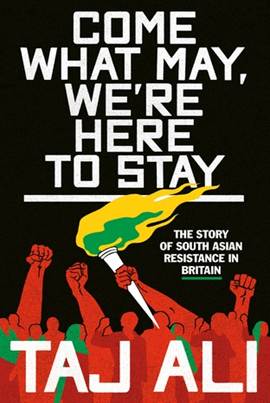
Taj Ali Come What May, We’re Here To Stay: The Story of South Asian Resistance in Britain
Race has often been the most difficult of subjects for Labourism to comprehend let alone address. The battle for Labour Party sections was hard fought, led by Bernie Grant, Diane Abbott, Keith Vaz andPaul Boateng. A victory won, but the political changes it was expected to ignite? Not so easy to identify.
“If you’re born and brought up in England and view it as home, what are you other than English? Denying people their Englishness or their Britishness because of the colour of their skin is a recipe for alienation and a two-tier society. How are children who hear this meant to feel?” Today such a statement is treated as almost ‘revolutionary multiculturalism’ rather than the good sense Rishi Sunak recently articulated. A good sense worryingly absent in Labour’s perceived need to be seen to be ‘tough’ on borders, immigration and the right to asylum.
Taj Ali’s account of what he terms ‘South Asian Resistance’ is a vibrant counterpoint to Labour’s ‘tough’ talking on race. A community resisting, not content, anything but, with being talked about, instead turning their objectification, or more often demonisation, into being the subjects, instruments of change. A history lesson that has every possible purchase not only on today but any kind of future worth looking forward to.
Here to Stay is available here
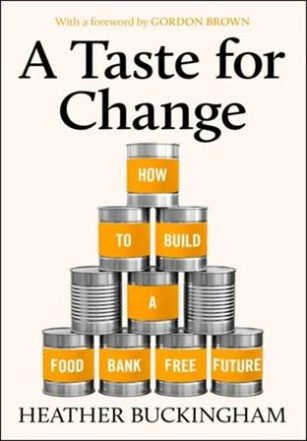
Heather Buckingham A Taste for Change: How to Build a Food Bank Free Future
If Taj Ali stylises those movements he chronicles as a ‘resistance’ some critics describe the single biggest response to the ravages of neoliberalism, food banks, as ‘collaborators’. Surely just like Victorian workhouses and child labour they should become the stuff of history not accepted as part of our local ‘amenities’? The trouble is until food poverty is abolished food banks are the only means too many communities can find to ensure none of their friends and neighbours starve.
Heather Buckingham manages to find the means to account for both ‘sides’ of what is in fact a false dichotomy. The fact that thousands, tens of thousands, of mainly unpaid volunteers manage to maintain such an effective network of local food banks should surely be a source of community pride. But speak to these volunteers and there are precious few who believe their efforts are anything more than a ‘sticking plaster’. The means to eliminate food poverty lie with governments. This is the connection A Taste for Change seeks to make. With an estimated 26,000 delegates and visitors in Liverpool for Labour’s Conference what a statement if every one of them brought an item of food (non-perishable) with them for the Liverpool food banks then gave over a conferencesession to be addressed not by MPs and Cabinet Ministersx but by a panel, of the city’s food banks providers and users. A mad idea? Read A Taste for Change to find out why its anything but.
A Taste for Change is available here

Alex Timperley For The Love: How Football Supporters Can Change the World
To include a book on football in a selection of books to understand Labour Party Conference may be drearily predictable, after all who doesn’t know Andy Burnham is an Evertonian (Keir Starmer’s support for Arsenal is one pledge he can’t be accused of breaking Boom! Boom!). But as author Alex Timperley argues football has a unique place in 21st Century British society:
” It’s pure connection, the real bone-deep joy of happiness shared communally. It’s radical and it keeps us coming back. By working together and realising our shared power, we can take this radical happiness into the community and recreate that feeling in our day-to-day lives too.”
OK it may be a bit strong to argue its only football that can spark this potential. Aditya Chakraborrty has suggested something similar via those Saturday morning Park Runs, others might point to the collective emotion music can generate. But Alex Timperley has impressive ‘form’ with football, he is the co-founder of Manchester City Fans Food Bank Support . It was in Liverpool that this extraordinary social movement, Fans Supporting Food Banks was initiated by otherwise bitter rivals Liverpool and Everton fans. If there’s one book I’d recommend to understand both Labour Conference’s host city and Andy Burnham as ‘avatars’ of a collective hope for change For The Love is it.
For the Love is available here
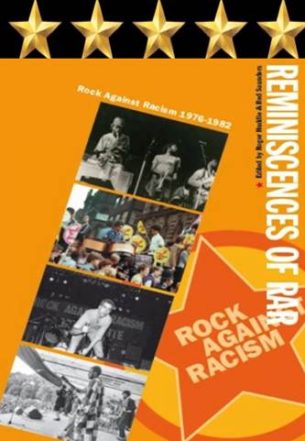
Edited by Roger Huddle & Red Saunders Reminiscences of RAR: Rock Against Racism 1976-1982
My five-gold-star choice for the book to understand Labour Conference is suitably eclectic. A read that reveals in glorious detail the absence at Conference, and in Labourism itself, of the political means and commitment to build mass, popular movement. Does this justify the Starmerite mantra ‘a party of government not protest’? No. The most famous protest in British political history, the Jarrow Hunger March, led by a Labour MP, Ellen Wilkinson. Or arguably Labour’s greatest-ever Prime Minister, Clement Attlee, who risked not only his political career, but his life, visiting the British Battalion of the International Brigades on the frontline of the Spanish Civil War. Protest while never dominant has always been part of the Labour tradition
Andy Burnham is more of The Smiths generation than The Clash but he certainly understands the power of music as a platform for ideas as well as a soundtrack for life. Fifty years ago, 1976, with a tidal rise of fascism in the shape of the Nazi National Front Rock against Racism was launched. This was the era of Punk, today almost entirely remembered as rebel music yet at the time the nihilism, the swastika as a T-shirted sign of rebellion, the fashionable flirtation with nazi chic, this was a youth movement that could easily have gone in a very different and dangerous direction. The Rock against Racism manifesto ensured it didn’t. ” We want rebel music, street music. Music that breaks down people’s fear of one another. Crisis music. Now music. Music that knows who the real enemy is.” Put into practice via carnivals, tours, gigs up and down the country in cities, towns big and small in the process bringing a new generation into a street politics required to stop the Nazis.
Today, as Labour Conference will rightly recognise the danger posed by Reform UK is different to the 1970s National Front and the 2000’s British National Party yet every bit as dangerous. Add to the racist mix these so-called patriots, dressed in black their faces covered by balaclavas, and unarguably these are considerably more dangerous times. Reminiscences of RAR isn’t a handbook to recreate a 50-years-ago movement. My Five Gold Star selection instead comes with this recommendation. The best possible read right now to think through what such a movement in 2026 stretching way beyond conference halls and the floor of the House of Commons might look like.
Reminiscences of RAR is available here
Note No links in this review are to Amazon, if you can avoid buying books from union-busting multi-billionaires please do so.