Hyperreality by Keiichi Matsuda
By Stuart Cartland
Jean Baudrillard explored the concept of hyperreality in the 1980s, describing a condition in which reality and its representations become so entangled that the distinction between fantasy and lived experience begins to dissolve. In an increasingly screen-mediated world, this idea is more relevant than ever. Repeated representations do not simply reflect reality; they shape our perceptions of it, establishing dominant narratives about what the world is, or more importantly, what it should be.
What is particularly dystopian is the growing disconnect between these idealised representations and the neoliberal reality beyond our screens. The English countryside provides a striking example. Television and film repeatedly portray village life as a timeless, cosy and bucolic sanctuary, seemingly untouched by the social and economic transformations of the modern world. These fantasies shape our expectations of rural places, yet increasingly bear little resemblance to the reality we encounter. We expect a welcoming village pub, only to find either a gastropub selling a commodified simulation of rural authenticity or a former pub converted into a private residence. We expect a Post Office, a bank, independent shops and functioning local services. Increasingly, they are gone. The fantasy persists, even as the material conditions that supposedly sustain it disappear.
This disconnect is not simply a matter of television taking artistic licence. The repeated idealisation of village life conceals the consequences of neoliberal capitalism, including the erosion of public services, the decline of local economies and the disappearance of community infrastructure. By reproducing familiar images of rural idylls while excluding these inconvenient realities, popular culture helps normalise the very conditions that have undermined them. What is absent from the screen becomes absent from our understanding of the problem. The fantasy does not merely misrepresent reality; it makes the reality it conceals more difficult to recognise.

Idealised country villages
Representations of urban life often operate in the opposite direction. Cities are routinely associated with deprivation, inequality, insecurity and failing public services, reinforcing their position as the antithesis of the supposedly harmonious countryside. These contrasting stereotypes are familiar, accessible and commercially appealing. Yet they obscure the complexities and contradictions of both urban and rural experience, while diverting attention from the wider socioeconomic structures that shape them. The countryside becomes an imagined refuge from the problems of modern society rather than a space equally affected by them.
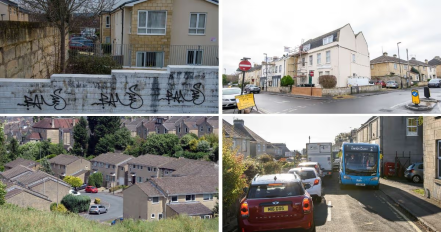
Deprived urban areas Image: Artur Lesniak
The political consequences are significant. When structural problems are detached from their economic and political causes, they become easier to explain through simplistic narratives and scapegoats. Rather than confronting the consequences of neoliberalism, public debate can be redirected towards slogans such as ‘stop the boats’, which offer convenient targets while obscuring the deeper causes of social insecurity and inequality. In this sense, the idealised countryside operates as a form of neoliberal apologism: it sustains the illusion of a world that supposedly remains intact while the social infrastructure supporting it is steadily dismantled. Fantasy displaces structural analysis, and systemic problems are recast as isolated issues with simplistic solutions.
Apple TV’s The Choir offers an illustrative example. Its representation of a small English market town relies on familiar features of village and small-town life, including a functioning Post Office, banks and other local services. Yet the production has to recreate aspects of everyday life that have increasingly disappeared from actual high streets, even using empty shops to simulate businesses and services that are no longer there. The irony is striking: television must manufacture the appearance of functioning communities because the material conditions of those communities can no longer be taken for granted. And this is not an impoverished or remote location, but in Lewes, East Sussex, a relatively affluent market town in the south of England. If even these places struggle to sustain the familiar infrastructure of the rural idyll, the gap between representation and reality becomes difficult to ignore.
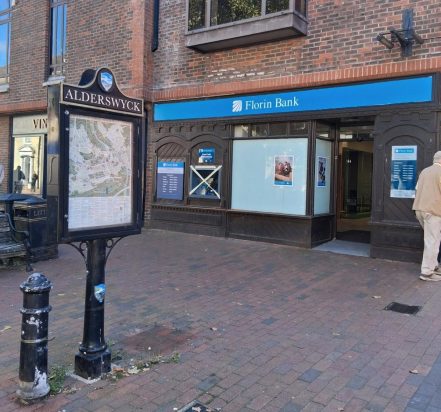
Lewes: The bank that’s actually not there. Photo credit: The Argus
The contrast between the cosy village of popular imagination and the contemporary reality of food banks, shuttered shops and disappearing public services exposes the contradictions of the neoliberal project. We are presented with a countryside of village pubs, traditional telephone boxes and thriving local communities, while the material foundations of this imagined world are progressively eroded. The familiar imagery remains reassuring precisely because it allows us to overlook what has changed.
The response to this argument might be that television is simply entertainment: it’s only a TV show, so what’s the big deal? The problem is not that individual programmes invent fictional places. It is that these representations are repeated so consistently, and draw so heavily on recognisable cultural conventions, that they become part of how we collectively imagine rural England. Their apparent ordinariness makes them particularly powerful. Unlike an obviously fantastical or Disney-esque world, these portrayals blend recognisable elements of lived experience with just enough idealisation to appear authentic. The resulting simulation is therefore more insidious: it does not look like fantasy because it resembles a reality we think we already know.
This has wider implications for how we understand the English countryside. The repeated reproduction of traditional, cosy and bucolic imagery sustains an idealised vision of rural England that excludes the inequalities, exclusions and economic pressures shaping contemporary rural experience. It also reinforces the notion that the countryside is somehow separate from the wider consequences of neoliberal capitalism. The result is a powerful but misleading cultural narrative: a rural idyll that remains vividly present in our imaginations even as its material foundations disappear.
The central problem, then, is not simply that fantasy and reality fail to match. It is that fantasy can become so dominant that reality itself is obscured. When the imagined countryside takes precedence over the lived countryside, the erosion of rural communities becomes harder to see, harder to explain and, ultimately, harder to challenge the structural processes that create social problems and injustices.
This is the essence of hyperreality. Representations become the reference point against which lived experience is understood and judged, even when those representations no longer reflect material conditions. We become more familiar with the imagined village than with the socioeconomic realities of contemporary rural life. Art does not simply imitate life; it increasingly supplies the version of life through which reality itself is interpreted.