Commons image
By Keith Flett
CAMRA was 55 years old in March 2026. Can it still curb Big Beer, and if so how?
55 years is quite an achievement for a voluntary campaign. It implies renewal through several generations of activists, something which is often hard to achieve. It now has around 150,000 members, and most will be active, at least in the sense of promoting CAMRA’s raison d’etre, which is the production and drinking of good beer.
It is not a party-political organisation or, in the main, a campaign that takes capital ‘P’ political decisions. After all, drinkers of decent beer come with all kinds of opinions and none. Having said that, politics can’t be avoided for any campaign that operates in a capitalist market economy. CAMRA is neither pro or anti-capitalist as such, but strongly in favour of a moral economy of beer. That is a society where brewers and publicans can make a fair profit but the quality, price and supply of beer are influenced by ordinary drinkers.
The Big Six – monopoly capitalism in action
When CAMRA started the outlook for beer and pubs was poor indeed. There had been a long process, much accelerated from the 1950s, of brewery consolidation. That meant takeovers and closures. By the early 1970s beer in Britain was very largely controlled by what was known as the Big Six. Giant brewing concerns such as Courage, Watneys and Whitbread.
Since the breweries also owned most of the pubs that meant a significant restriction of choice for the drinker at the bar. 55 years ago there were just two b reweries in London – Fullers and Youngs. Now, London has around 100 independent breweries.
There was also the question of the beer the Big Six were producing. With the consolidation big brewing operations brought, cost reduction was looked for. That meant a move away from traditional cask beer to pasteurised keg beer. It was much easier to transport and keep in the pub without cellaring skills.
One big problem was that for many beer drinkers this cold, fizzy beer, served under gas pressure, was either tasteless or worse had a distinctly unpleasant taste. A related problem was often that as breweries owned the pubs, there was little escape from keg. Monopoly capitalism in action!
The beer writer Richard Boston wrote in his 1970s Guardian column of areas of East Anglia where if you didn’t want the Watneys Red Barrel served in one pub, you could always try another. The problem was that also sold Watneys.
There was a lot for CAMRA to oppose and that meant it had no choice but to confront the Big Six – known as Big Beer.
Ugh! Grotnys and Twitbread!
That meant a range of campaigning tactics. The Big Six were lampooned. Watneys became Grotnys and Whitbread Twitbread. Pubs were boycotted and those that sold traditional cask ale promoted. The first Good Beer Guide to CAMRA-approved pubs appeared in 1974.
At the same time campaigning pressure was exerted on the Big Six to draw back from keg and start selling cask beer again. Over time this campaigning pressure worked. Allied breweries were first producing a cask Burton Ale from 1976. Even Watneys finally gave in and brewed Fined Bitter real ale.
CAMRA pressure on large companies had its impact. They had to change their strategies and plans. However, Capital constantly revolutionises itself, and no battle against it within its framework is ever definitively won.
The Big Six had to return to cask beer and more pubs now sold it. But the choice remained very limited. In early Good Beer Guides, symbols were used to show the range of beer available. To stretch beyond a mild, an ordinary and best or special bitter was unusual.
Beer from the remaining independent breweries – around 100 of them – was very hard to come by outside of their own local area.
CAMRA’s focus shifted to an extent to lobbying for changes in the law, under a Tory government. No easy matter, but it was achieved. The Beer Orders restricted the number of a pubs a brewery could own. That meant pubs were sold and saw the rise of pub companies. At the same time there was legal provision for a guest beer to be sold in pubs which were tied to particular breweries.
Again it was a pursuit of the moral economy strategy of CAMRA – not ending the control of capital, but tempering it in the interests of drinkers.
Capital has not stood still since. If the first wave of Big Beer had been successfully grappled with by CAMRA, a new wave appeared that posed significant new challenges.
What kind of capitalism shall we drink?
If you want a pint of Courage Best or Whitbread Bitter you won’t find one in 2026. The Big Six companies that once dominated British brewing are long gone. Even the classic and benchmark pale ale, Bass, became hard to come by but thankfully is on its way back. Its recent history however summarises well where Big Beer has now gone.
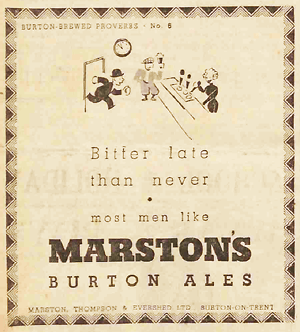
The Bass brewery in Burton is owned by Molson Coors, a US/Canadian brewing giant. The actual beer, however, is owned by another huge brewing operation, ABInBev. It is based in Belgium but has significant interests across the world, in Latin America and South Africa for example. It contracted out the brewing of the beer to Marstons, now swallowed up (sic) by another big beer company Carlsberg.
Grappling with UK brewers as CAMRA did successfully in the 1970s and 1980s is one thing. Trying to take on global brands is a rather different matter.
The focus shifted to some extent to supporting those larger regional to national brewers that remained UK owned – albeit often supporters of the Tory Party. This was more of an argument about what kind of capitalism rather than the specific nature of capital.
However Big Beer has marched on here as well. As well as Marstons, Fullers brewing operations were brought by Japanese brewer Asahi, and Greene King is now owned by a Hong Kong businessman. Nor did it stop there. Some of the larger craft brewers whose backgrounds had rested on the idea of independence from Big Beer have ended up being swallowed by it. Heineken has a 49% stake in Beavertown while ABInBev owns Camden. Finally, in 2026 what was left of Brewdog was sold to US medical cannabis outfit Tilray.
This is not a counsel of despair. CAMRA remains a large organisation with the capacity to campaign and influence. It’s clear though that on its 55th birthday the original model of promoting a moral economy of beer, not anti-capitalist but for a constraining influence on it, needs to be re-worked.
So what is to be done?
Some broad parameters and perhaps campaigning choices can be seen now.
Firstly, CAMRA could do more to combat Big Beer on a global basis. Consumer organisations like CAMRA exist in a number of European countries and the US. There are long-standing links and these could be developed and mobilised further. That is to an extent easier now, with global communication apps like Zoom. The trade union and peace movements, to name two examples, have been co-ordinating activity across the world for a while.
Secondly, CAMRA could look to build on its original campaigning focus. The revitalisation project it ran a several years ago, focused a good deal on that. The campaign is very good at lobbying MPs and Government and promoting legislative changes (or opposing them) but the protests of the 1970s about brewery closures or takeovers are now rare.
To some extent this relates to an ageing membership – something that impacts many social movements. However, with the rise in recent times of movements like Black Lives Matter and Extinction Rebellion, it’s clear that the mood to protest which was there in the early days of CAMRA is back again.
Thirdly, CAMRA needs to develop a stronger and more explicit commitment to the application of democratic socialist principles to the production and consumption of beer, and align the struggle to the struggles for democracy in other areas of culture popular with the working class, like football, and social media.
In practice all of these things could be done, but a lot does depend on managing to engage and mobilise younger drinkers in a way CAMRA did so successfully 55 years ago. The same problem, of course, affects the mobilisation of young people for any progressive political cause.
For a social movement to endure and remain active for over 50 years is historically unusual. Often activists are co-opted into related activities or simply drift away. If CAMRA can keep addressing issues in the current day and grapple with both Big Beer and engage with the newer wave of independent breweries, there is no reason why at 55 an effective campaigning future can’t be secured.